The Smarter Way to Judge Shoes Online
Running shoe spec sheets have gotten weirdly good at saying almost nothing. A polished side profile and a list of buzzwords can look convincing, then tell you absolutely zero about what happens after…
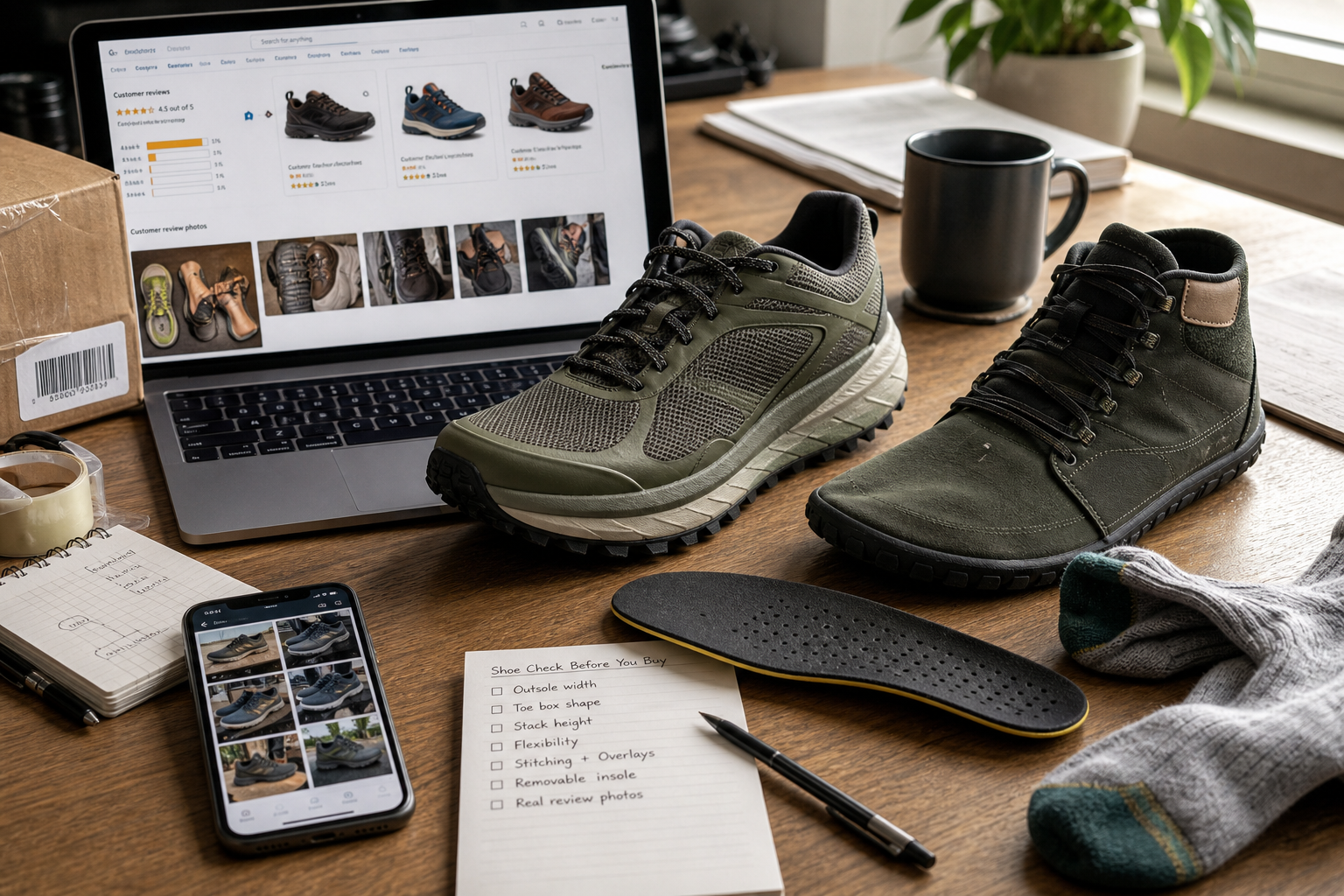
Running shoe spec sheets have gotten weirdly good at saying almost nothing. A polished side profile and a list of buzzwords can look convincing, then tell you absolutely zero about what happens after mile three, when your toes start negotiating for space and the heel hold either shows up or doesn’t.
This guide is about decoding fit, comfort, and long-run usability before you order. It is not another bargain-versus-cheap rant, and it is not a reheated version of my fake gear claims checklist. On AliExpress especially, the useful clues are usually hiding in plain sight: outsole shape, toe-box geometry, stitching, review photos, and how much friction a seller quietly builds into returns.
I test a lot of shoes, including trail pairs that look great in listings and fall apart once the run stops being short and flattering. The good news is that you can screen online shoe listings far more effectively than most people think.
Step 1: Ignore the marketing headline and start with the outsole
The outsole is one of the fastest truth-tellers in any listing. Before I read a single claim about cushioning, stability, or trail readiness, I look at the bottom shape and how far the platform extends beyond the upper.
- Check forefoot width. A wider forefoot platform usually gives you a more stable landing and often hints at better toe room.
- Look at heel flare. A slightly wider heel base can help casual runners and walkers feel steadier, but an oversized flare can feel clunky if you move quickly or lift in them.
- Inspect lug pattern honestly. Deep, separated lugs suggest actual outdoor use; shallow decorative texture often means the shoe only looks trail-ready in photos.
- Compare outsole symmetry. If the sole looks heavily pinched through the midfoot, expect less natural foot splay.
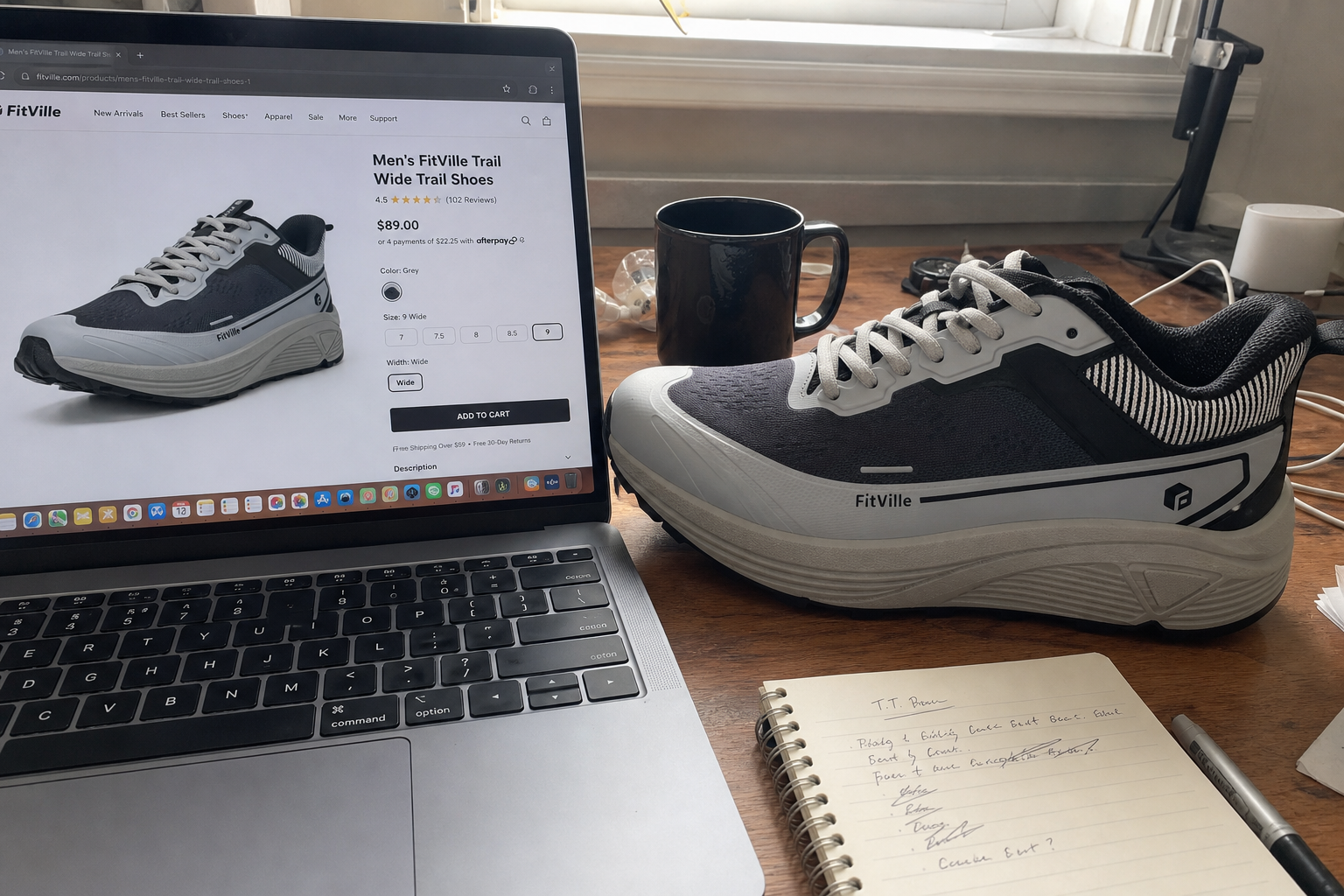
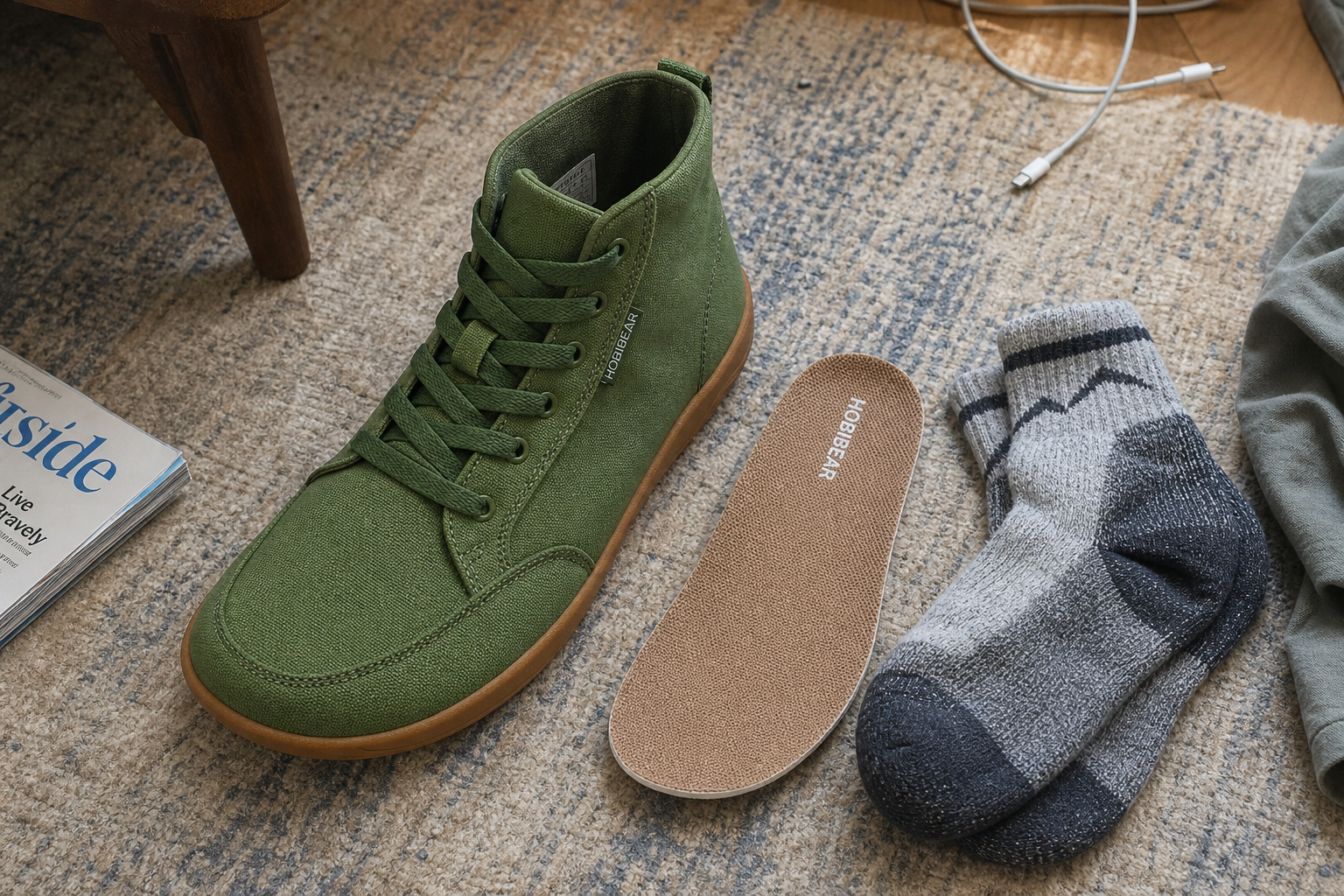
For example, a visibly wider platform like the FitVille wide sports shoes is usually more promising for comfort-focused walkers and runners than a sleek upper sitting on a narrow, tapered base. Meanwhile, something like the HOBIBEAR barefoot mid-top shows the kind of flatter, broader forefoot shape I expect from a zero-drop, wide toe-box design.
Step 2: Read the toe box from above, not just from the side
A lot of listings hide fit problems by showing shoes only in dramatic angled side shots. That is great for making midsoles look fast and awful for telling you whether your pinky toe is about to file a complaint.
- Find the top-down photo. If a listing avoids it, that’s already useful information.
- Check whether the upper follows a foot shape. Natural toe boxes look more rounded or squared off at the front, not sharply pointed.
- Watch for fake width. Some shoes have a broad outsole but an upper that caves inward early, which still squeezes the toes.
This matters a lot with “wide” labels. The wide width hiking shoes might be fine for a genuinely broad forefoot if the top-down view stays open through the toes. By contrast, the very sleek shape on some fashion-leaning “running” listings often tells me the fit is likely better for short casual wear than actual training.
Step 3: Use the side profile to estimate stack and ride
Most sellers won’t give you a meaningful ride description, so the side profile has to do the work. I’m looking for clues about stack height, forefoot flexibility, and whether the shoe is trying to be soft, stable, or just visually bulky.
- Look at heel-to-toe thickness. A dramatically taller heel usually means a higher drop feel.
- Check forefoot thickness. Thin forefoot plus thick heel often feels harsh on longer runs.
- Notice rocker shape. A heavily curved sole can help treadmill cruising but may feel awkward in lifting or casual all-day wear.
- Separate real cushioning from cosmetic foam walls. Some shoes just have sidewall bulk that makes them look softer than they are.
The mesh off-road running shoes are a good example of a listing where the side profile matters more than the naming. “Race” in a product title means very little if the heel looks soft and tall while the forefoot looks thin and stiff.
After mile three, the question is not whether the shoe looked fast on a white background. It’s whether the platform and upper still make sense once your foot warms up and expands.
Step 4: Study upper stitching and overlays for pressure points
This is the step most people skip, and it’s where a lot of online disappointments live. Stitching patterns and overlay placement can predict hot spots surprisingly well.
- Find seams near the bunion area. If a stiff overlay runs right across the widest part of the forefoot, I assume irritation risk goes up.
- Check the lace eyelet reinforcement. Heavy stitched panels can help lockdown, but they can also make the upper feel rigid if the material underneath has no give.
- Inspect heel collar construction. Thick collars aren’t automatically better; sloppy padding often means heel slip plus rubbing.
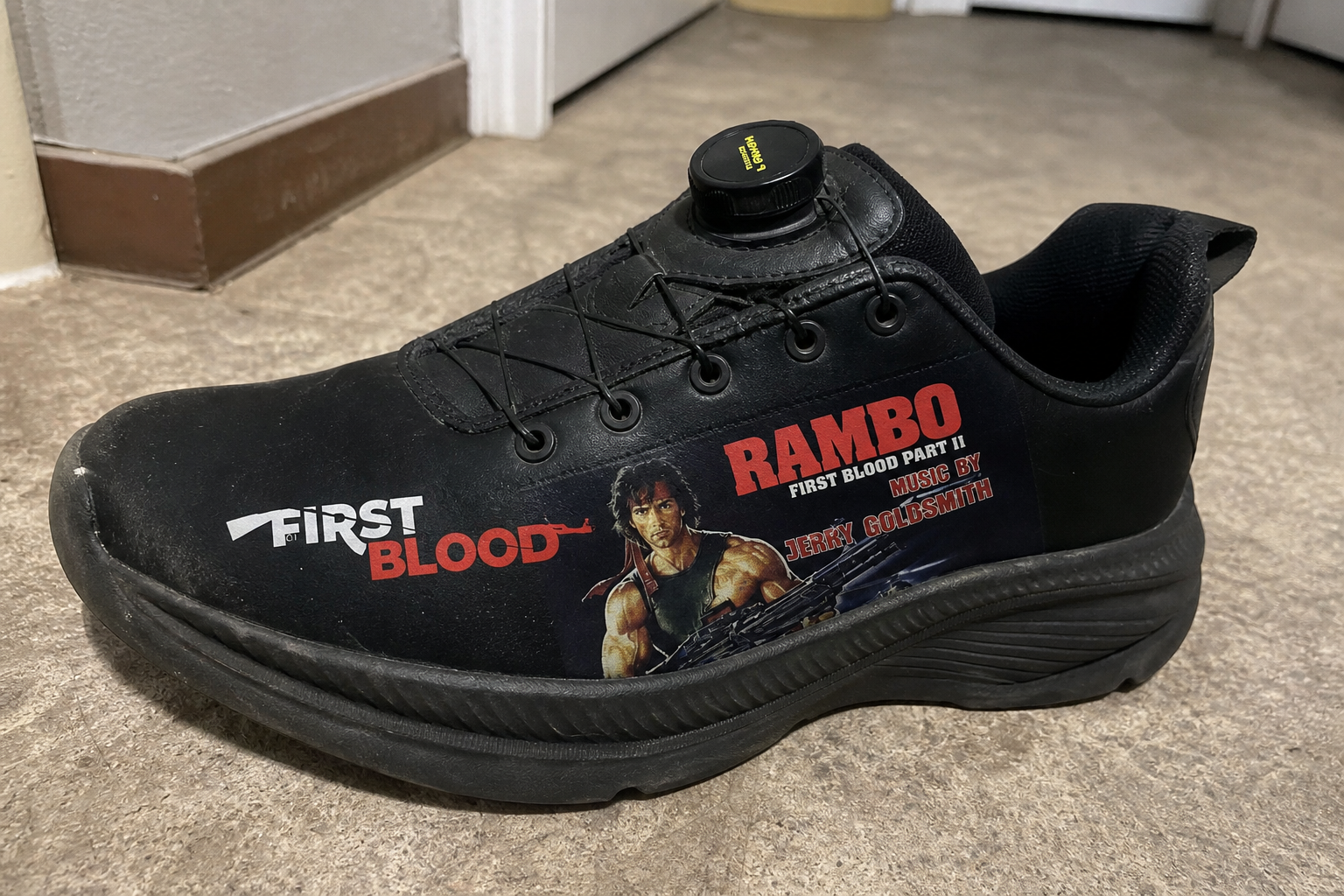
- Watch rotating or quick-lace systems carefully. They can be convenient, but they need a balanced upper to avoid top-of-foot pressure.
That’s why I’d inspect the upper closely before ordering something like the John Rambo laceless off-road shoes. A rotating closure can work, but only if the upper distributes tension evenly instead of creating one hard pressure line across the instep.
Step 5: Read the return policy like it’s part of the shoe
On platforms like AliExpress, return friction is part of the value equation. A decent shoe with reasonable return terms can be a smarter risk than a cheaper pair with vague sizing and painful return logistics.
Warning signs I take seriously:
- Seller avoids detailed size guidance and only says “choose your normal size”
- Few or no buyer comments about width, arch feel, or heel slip
- Listing photos are polished, but buyer photos are missing
- Returns sound possible in theory but messy in practice
- Product title throws in every use case from racing to trekking to fashion
If you want a broader filter for separating useful listings from noise, my post on how I spot fake fitness gear claims fast pairs well with this one. But here, I care less about wild claims and more about whether the listing gives you enough evidence to predict real wear.
Step 6: Trust review photos more than brand images
Review photos are where a shoe stops posing and starts confessing. I scroll buyer images before I read most written reviews.
- Look for top-down on-foot photos. These show toe splay and whether the upper bulges or pinches.
- Look for heel shots from behind. Crooked collapse, sloppy counter shape, or obvious inward tilt can show up fast.
- Look for crease patterns. Early deep creasing across the wrong part of the forefoot often hints at awkward flex behavior.
- Look for outsole wear. Even a lightly used photo can tell you whether the tread is real or mostly decorative.
- Look for in-home photos on normal floors. These often reveal true bulk, proportions, and finish quality better than studio images.
With something like the YUYIIN outdoor sneakers, buyer photos will usually tell you far more than the words “anti-slip” or “wear-resistant.” I want to see how the upper wrinkles, whether the heel stays upright, and whether the outsole still looks trustworthy off the studio set.
Step 7: Translate the signals by use case
This is where online shoe shopping gets more practical. The same listing clues matter differently depending on what you’re actually doing in the shoe.
Treadmill runners
- Prioritize a smooth forefoot transition and decent upper breathability
- A moderate stack can work well if the platform is not too narrow
- Watch for heel bulk that may feel fine walking but clumsy while running
- Mesh matters more here than aggressive tread
A breathable pair like the mesh off-road running shoes could make more sense for treadmill use than for actual rough trail, assuming the review photos support the fit.
Gym lifters
- Prioritize a flatter base and lower stack
- A wide forefoot platform helps stability under load
- Too much squishy foam is a negative here
- Midfoot security matters more than plushness
The HOBIBEAR barefoot shoe is the sort of listing I’d examine for gym use because a flatter, wider, zero-drop style can be more useful for lifting than a tall cushioned trainer.
Casual walkers
- Prioritize toe room, step-in comfort, and upper softness
- Moderate cushioning is often better than maximum cushioning
- Heel slip becomes very noticeable on long walks
- A roomy fit can be good, but sloppy midfoot hold is not
Something like the FitVille pair or the wide width hiking-style casual shoe can make sense here if the review photos confirm real forefoot room and not just a big-looking sole.
Light trail users
- Prioritize outsole pattern, lateral stability, and toe bumper structure
- Ignore “off-road” in the title unless the tread really supports it
- Upper security matters more once terrain tilts or gets loose
- A slightly firmer ride is often more useful than extra softness
The John Rambo off-road shoes and YUYIIN outdoor pair are exactly the kinds of listings where I’d zoom in on tread spacing and heel security before trusting the outdoor label.
Step 8: Know which fit problems are fixable
Not every imperfect fit is a deal-breaker, but some absolutely are.
Usually fixable:
- Slight extra volume over the top of the foot
- Mild heel looseness that improves with lacing changes or thicker socks
- Step-in feel that is a little firm but not structurally awkward
- Minor under-arch emptiness that a better insole can smooth out
Usually not fixable:
- Toe box that pinches at rest
- Arch support hitting the wrong place under your foot
- Heel counter rubbing your Achilles immediately
- Midfoot platform that feels unstable or too narrow for your gait
- Forefoot flex point that bends into your toes instead of under the ball of the foot
Caution: If a shoe is wrong in shape, don’t talk yourself into “breaking it in” just because the listing looked good or the price was low. I see people forgive structural fit problems that no sock or insole is ever going to rescue.
Pre-Purchase Checklist to Save Before You Order
This is the repeatable method I’d actually use before ordering fitness shoes online:
- Identify your real use case. Treadmill, lifting, walking, or light trail.
- Check outsole width and tread. Does the platform match that use?
- Find a top-down photo. If there isn’t one, treat that as a warning.
- Read the toe-box shape. Rounded and foot-shaped beats sharply tapered for most people.
- Study the side profile. Estimate stack, drop feel, and forefoot thickness.
- Inspect stitching and overlays. Watch for likely pressure zones.
- Read buyer photos first. Especially top-down, heel-back, and worn-outsole shots.
- Scan for return friction. A low-friction return process adds real value.
- Decide what you can fix. Slight volume issues, maybe. Bad shape, no.
- Ignore hype and generic star averages. Evidence beats enthusiasm.
My Verdict
Buying shoes online without trying them on first is never perfect, but it does not have to be a blind gamble. If you learn to read outsole shape, toe-box geometry, side-profile stack clues, upper construction, and buyer photos, you can screen out a lot of bad options before they ever hit your cart. The downside is that this takes a few extra minutes and some patience, especially on crowded AliExpress listings. But I’d rather spend that time upfront than waste runs on a shoe that looked great until mile three.
Disclaimer: As an aliexpress Associate, I earn from qualifying purchases.