I Replaced My Casual Shoes With 3D-Printed Pairs for a Week
The first mistake people make with printed shoes is assuming they’re either a gimmick for tech people or a weird future object that can’t possibly behave like normal footwear. I had the same…
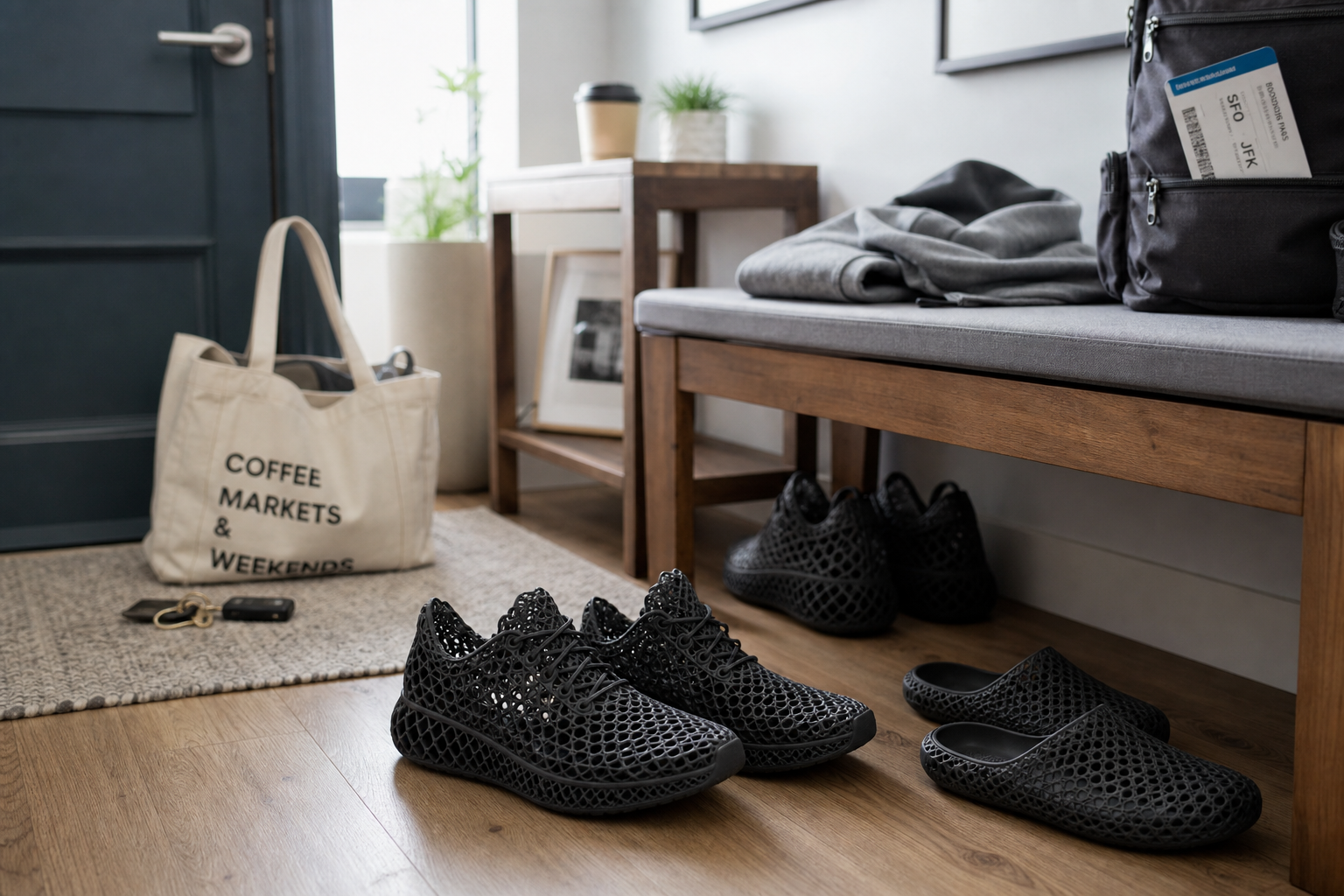
The first mistake people make with printed shoes is assuming they’re either a gimmick for tech people or a weird future object that can’t possibly behave like normal footwear. I had the same skepticism, so for one week I stopped rotating my usual grab-and-go pairs and wore only Nexbie’s 3D-printed shoes to see whether the novelty would fade into daily life or keep interrupting it.
This wasn’t a performance test, and it wasn’t a bargain hunt. I wanted the more useful answer: when you’re just living in your shoes, does the 3D-printed part stop mattering after day one?
Nexbie makes direct-to-consumer 3D-printed footwear in the kind of categories that actually fit a normal routine: casual sneakers, slippers, and even kids’ pairs. That made it possible to do a real-life trial instead of a novelty unboxing. Over seven days, I rotated the Leisure Path 3D Printed Casual Sneakers, Cloud Spark 3D Printed Sneakers, Aeroraise 3D Printed Sneakers, Aeriscape 3D Printed Sneakers, and at home the Cloud 3D Printed Slippers and AeroCloud 3D Printed Slippers.
Why I tried it
I review a lot of gear that sounds more disruptive than it feels once you actually use it. Printed shoes seemed like the perfect test case because the pitch is inherently attention-grabbing, but everyday footwear succeeds by doing the opposite. If a shoe belongs in a real rotation, it has to become boring in the best way.
I’ve written before about the smarter way to judge shoes online, and this was one of those cases where photos and buzzwords could only tell me so much. I needed coffee runs, errands, standing around, airport security, and late-night apartment laps to tell me whether the tech disappeared or not.
What I did for the week
I used the sneakers as my only out-of-house casual options and the slippers as my only at-home pairs. I didn’t run in them or force a gym test. The point was to treat them like regular life shoes.
- Coffee runs: quick morning wear, usually with whatever socks were clean first
- Long standing days: workdays with lots of time on my feet
- Quick errands: groceries, pharmacy stops, short walks
- Travel day: airport wear, security line, gate waiting, terminal walking
- Recovery time at home: post-day slippers instead of my usual soft slides
What happened in real life
Coffee runs: the novelty was loud for about ten minutes
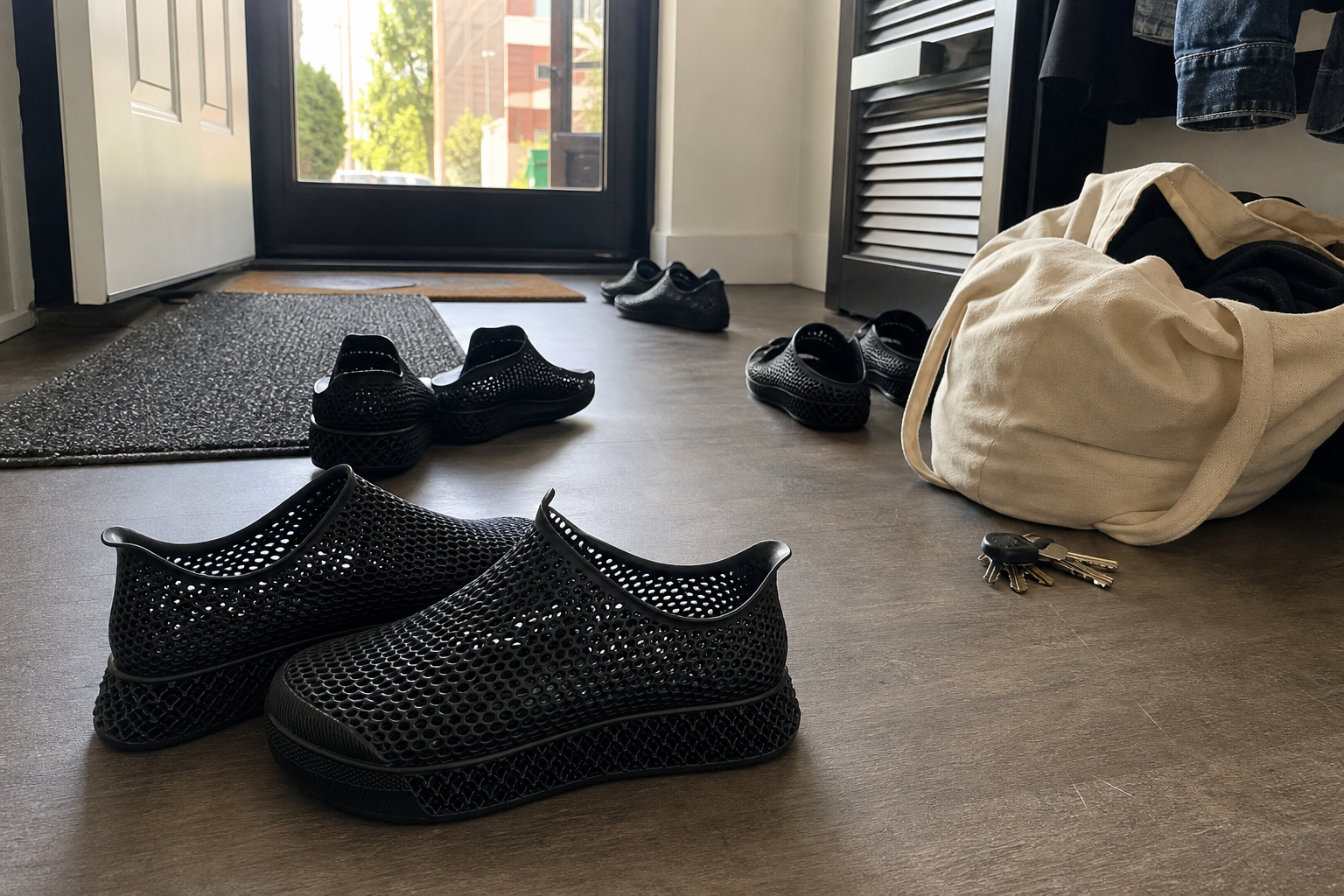
My first outing was a sleepy coffee run in the Leisure Path 3D Printed Casual Sneakers, which have an easy slip-on design and a visibly open structure. The first thing I noticed wasn’t performance; it was that my brain kept checking in on the texture. They look like shoes that should feel more experimental than they do.
That was the pattern all week: the visual strangeness arrived before the wear experience did. Once I was actually walking, the step-in feel mattered more than the manufacturing story. If I was moving, grabbing coffee, opening doors, and heading home, the “printed shoe” idea faded pretty fast.
What kept calling attention to itself was ventilation. In a good way, mostly. On short errands, that open, hollow design felt airy and less stuffy than a more closed casual sneaker. But it also meant sock choice mattered immediately, because the shoe doesn’t visually hide much.
Long standing days: this is where I stopped thinking about the technology
I wore the Cloud Spark 3D Printed Sneakers on my longest standing day of the week because they had the most everyday-streetwear look of the pairs I tried. That turned out to matter almost as much as anything underfoot. A shoe feels more normal, faster, when your outfit doesn’t have to negotiate with it.
The surprise was how quickly I adjusted to the material. I expected the one-piece printed construction to feel constantly “other,” but after a few hours the bigger story was just whether the shoe fit the day’s rhythm. During long stretches on my feet, these felt more like a modern casual sneaker with unusual airflow than a sci-fi object.
If a shoe makes me forget its origin story by lunchtime, that’s usually a good sign.
That said, standing still exposes things that quick walks can hide. Printed structures can feel visually soft and airy while still reading a bit more structured and specific than the kind of broken-in fabric casual shoe people are used to. Not bad—just less invisible.
Quick errands: easy-on pairs made the strongest case
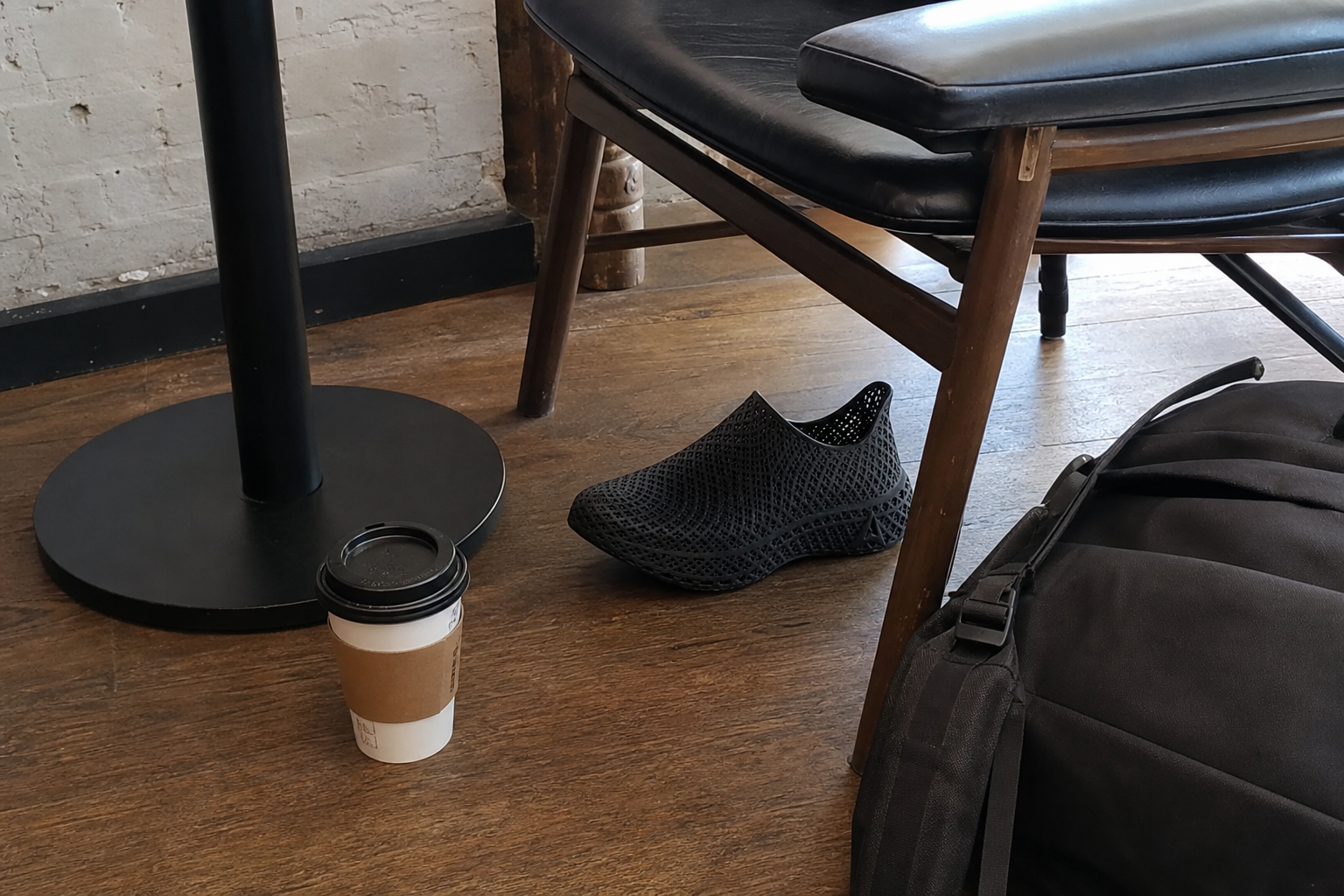
For errands, the simplest wins usually win hardest. The Aeriscape 3D Printed Sneakers and Leisure Path 3D Printed Casual Sneakers felt most natural in that role because you can treat them like true grab-and-go shoes.
That mattered more than the 3D-printing hook. On a grocery run, I don’t care that a shoe is innovative. I care whether I can step into it without thinking, whether it feels ventilated instead of swampy, and whether it looks coherent with leggings, straight-leg pants, or a hoodie-and-cap errand uniform.
In that setting, printed shoes started making everyday sense. They were at their best when I asked very little of them beyond convenience and casual wear.
Travel day: the airport is where “different” either settles down or becomes annoying
I saved the Aeroraise 3D Printed Sneakers for a travel day because airports are brutally practical tests. You walk, you stand, you sit forever, and you become very aware of anything fussy.
This was also where the open, breathable feel made the most intuitive sense to me. Travel days can make almost any casual shoe feel hot, stale, or overly enclosed. A more ventilated structure felt genuinely helpful there.
But airports also revealed one of the limits of novelty-first footwear design: if the styling is even a little more unusual than your standard pair, you notice it more when the rest of your outfit is already travel-functional and plain. Some printed sneakers integrate into a travel outfit easily; some still read like the most opinionated thing you’re wearing.
That’s not automatically bad. It just means you should decide whether you want your airport shoe to disappear or to start conversations.
At-home recovery time: the slippers made the easiest argument
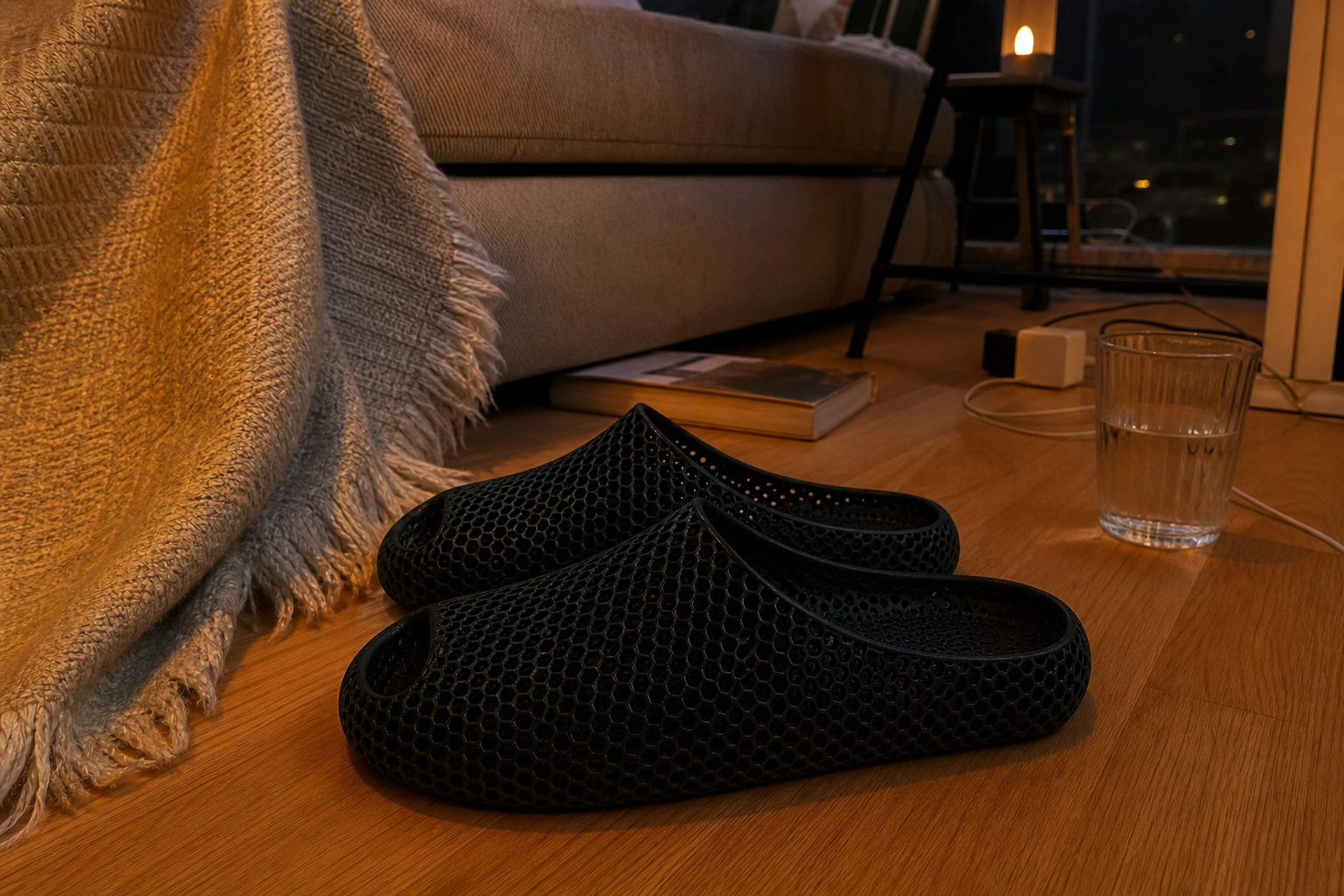
The least complicated success story of the week was the slipper category. I alternated between the Cloud 3D Printed Slippers and AeroCloud 3D Printed Slippers after long days, and the 3D-printed concept felt most at home here.
Why? Because at home, I’m more open to a shoe feeling slightly unusual if it’s easy to slide into, breathable, and comfortable enough to become part of the evening routine. Slippers don’t have to pass the same style test as sneakers. They just have to make sense between shower, kitchen, couch, and one more trip to the laundry basket.
In that environment, the honeycomb and lattice-style ventilation felt less like a gimmick and more like the whole point.
The adaptation phase: what made them feel normal
The middle of the week was less about first impressions and more about adjustment. That’s where I got the clearest answer. Printed shoes don’t always become invisible on their own; sometimes you have to style and wear them in a way that lets them settle in.
Here’s what helped most:
- Socks: simple, cleaner-looking socks worked better than anything heavily patterned, because the open structure makes the sock part of the visual design
- Outfits: straight-leg pants, joggers, leggings, and cleaner casual basics made the sneakers feel intentional instead of costume-y
- Use case: quick exits, commuting, and daily casual wear suited them better than situations where I wanted a truly low-profile classic shoe
- Routine: treating them like normal door-side shoes helped; overthinking the “tech” part made them feel weirder than they were
What didn’t help was trying to force them into every mood. On days when I wanted my shoes to disappear completely under a more polished outfit, the 3D-printed texture stayed visible and specific. That doesn’t make the design bad. It just means these pairs are better understood as rotation pieces than universal replacements.
That’s also why I’m careful with futuristic footwear claims in general. As I wrote in how I spot fake fitness gear claims fast, interesting materials and dramatic visuals can make people fill in benefits that haven’t actually been proven in their own routine. The useful test is always simpler: did the shoe make ordinary life easier, or did it keep reminding me it was unusual?
Where the novelty showed its limits
By the end of the week, I had a clearer list of situations where 3D-printed casual footwear still felt a little too self-aware.
- When I wanted a very traditional, understated sneaker look
- When the sock-and-shoe combination made the open design look busy
- When the outfit already had enough going on and the shoes added one visual idea too many
The limitation wasn’t daily comfort in a broad sense. It was visual integration. Printed footwear can absolutely work in normal life, but some pairs still ask the rest of your outfit to cooperate more than a basic leather or mesh casual sneaker would.
How the categories fit into a real household
One thing Nexbie gets right as a lineup is that the categories map pretty neatly onto different roles at home. I think that matters more than trying to rank every pair against each other.
- Sneakers for commuting and errands: The Cloud Spark 3D Printed Sneakers, Aeroraise 3D Printed Sneakers, Aeriscape 3D Printed Sneakers, and Leisure Path 3D Printed Casual Sneakers make the most sense as everyday casual pairs when you want easy wear with a conversation-starting look.
- Slippers for end-of-day comfort: The Cloud 3D Printed Slippers and AeroCloud 3D Printed Slippers are the easiest entry point if you’re curious about 3D-printed footwear but don’t want to commit your main public-facing outfit to it.
- Toddler and kids curiosity factor: If you’re a parent who likes easy-clean-looking, unusual footwear that people will absolutely comment on, the Guardian Orbit 3D Printed Kids Shoes are the kind of pair that fits that conversation-starter role without pretending to be anything other than a very distinctive kids’ shoe.
What I’d do differently
If I repeated this experiment, I wouldn’t replace my entire casual rotation for the full week. I’d be more selective and use 3D-printed shoes where they made the strongest everyday case.
I’d keep one sneaker pair for errands and travel, and one slipper pair for home. I’d also plan socks better from day one, because with open, ventilated designs, bad sock choices are much more visible than with regular casual shoes.
I also wouldn’t frame them as direct substitutes for every standard sneaker I own. That was the wrong expectation going in. They worked better as specific-use casual shoes than as universal wardrobe defaults.
Who actually benefits from owning one pair right now?
Not everyone needs 3D-printed shoes in their life, and I don’t think this category has earned automatic rotation status for every person yet. But one pair makes sense right now for a pretty specific shopper.
You’ll get the most out of them if you’re someone who:
- wants a casual shoe that feels different from the usual mesh-or-leather routine
- likes easy slip-on or quick daily wear more than formal versatility
- values ventilation and a visibly modern design in everyday settings
- doesn’t need that pair to handle every possible outfit
If you want your shoes to vanish completely into a classic wardrobe, printed footwear may still feel too visually present. But if you like innovation as long as it proves usable by Tuesday morning, one pair can absolutely earn space in an everyday rotation before it ever earns a place in a workout lineup.
The Bottom Line
After a week of wearing only 3D-printed footwear for casual life, I came away less impressed by the novelty than by the moments when the novelty stopped mattering. The best Nexbie pairs worked when they were easy to step into, breathable in daily use, and simple enough to style without a fight. The weak spot wasn’t some dramatic failure; it was that certain outfits and situations still made the printed look feel more conspicuous than a standard sneaker would. If you’re curious, I’d start with one pair for errands, commuting, or home recovery—not as a total shoe-closet replacement, but as a practical test of whether futuristic design can behave normally in your real life.
Disclaimer: This post contains affiliate links. If you buy through them, I may earn a commission at no extra cost to you.