5 Steps to Build a Sensory Reset Shelf
The hallway light is still too bright, my phone is face-down but buzzing every few minutes, and there’s a faint pile-of-laundry feeling in the room even after I’ve technically cleaned it. Most advice…
The hallway light is still too bright, my phone is face-down but buzzing every few minutes, and there’s a faint pile-of-laundry feeling in the room even after I’ve technically cleaned it. Most advice about recovery leans hard on discipline and scheduling, but a more overlooked reality is this: a lot of us skip mobility and wind-down routines because our space feels mentally noisy or physically uninviting, not because we don’t care.
That’s why I’m such a fan of a sensory reset shelf: a tiny, repeatable setup that uses touch, temperature, scent, and visual cues to help your nervous system shift before a single stretch begins. If your body gets a calming signal first, showing up for five to ten minutes of movement can start to feel instinctive instead of effortful.
I’m not talking about building a Pinterest-perfect wellness altar. I mean one small shelf, corner, crate, or nightstand area with a few affordable objects that quietly say, “We’re off the clock now.” If you’ve read my post on building a tiny home movement corner that gets used, this is the softer, evening-routine version of that idea.
Step 1: Choose one tiny location and lower the visual noise
The first job of the shelf is not storage. It’s signal. You want one spot that your brain begins to associate with downshifting, mobility, and bedtime transition.
- Pick a shelf, stool, nightstand, or the top of a small dresser near where you’ll actually move.
- Clear everything off it.
- Put back only the items that support your evening reset.
If possible, keep this setup within one or two steps of your mat, rug, or usual floor space. Distance sounds minor, but in habit design it matters a lot. The more decisions and steps between “I should stretch” and “I’ve started,” the easier it is for scroll mode to win.
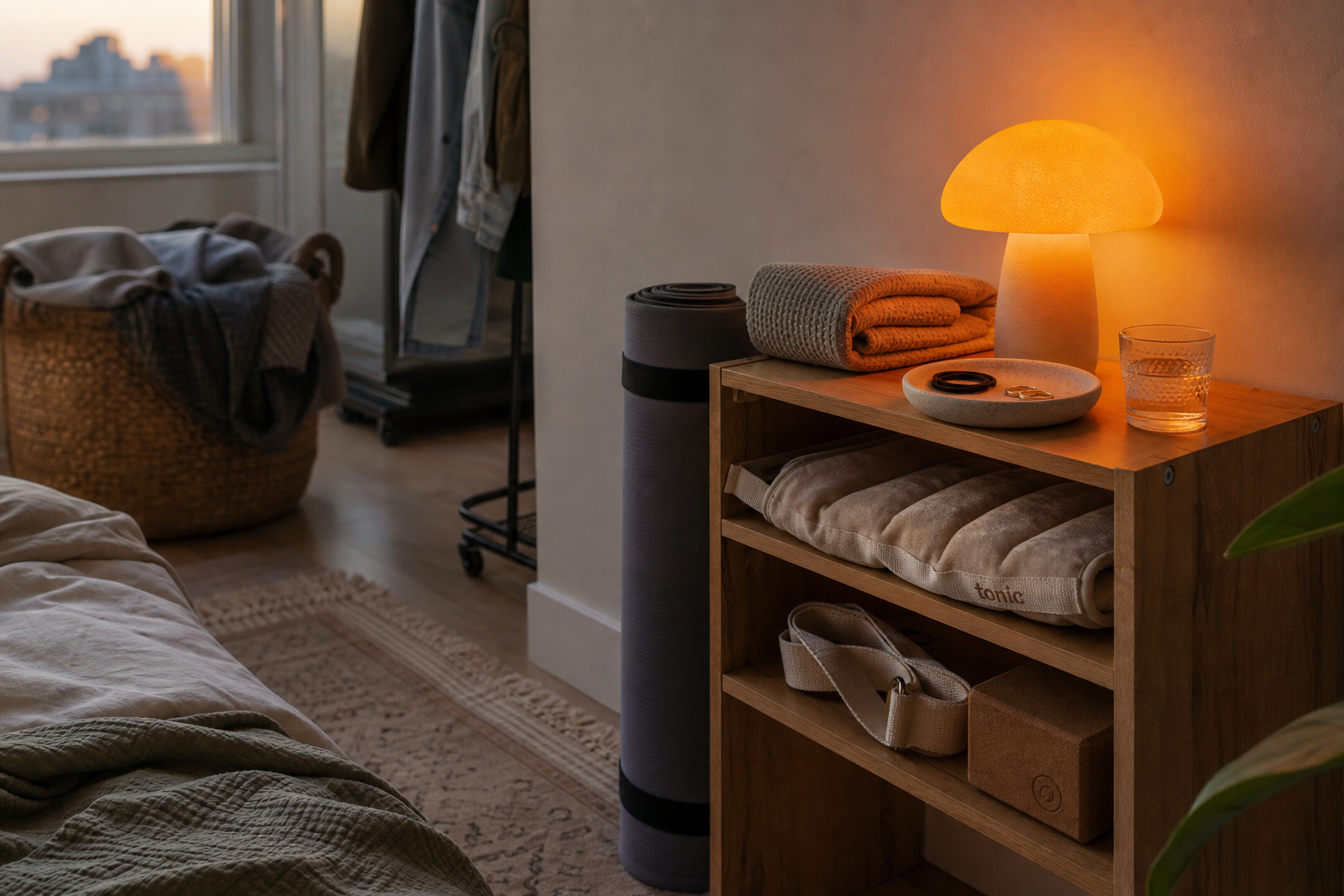
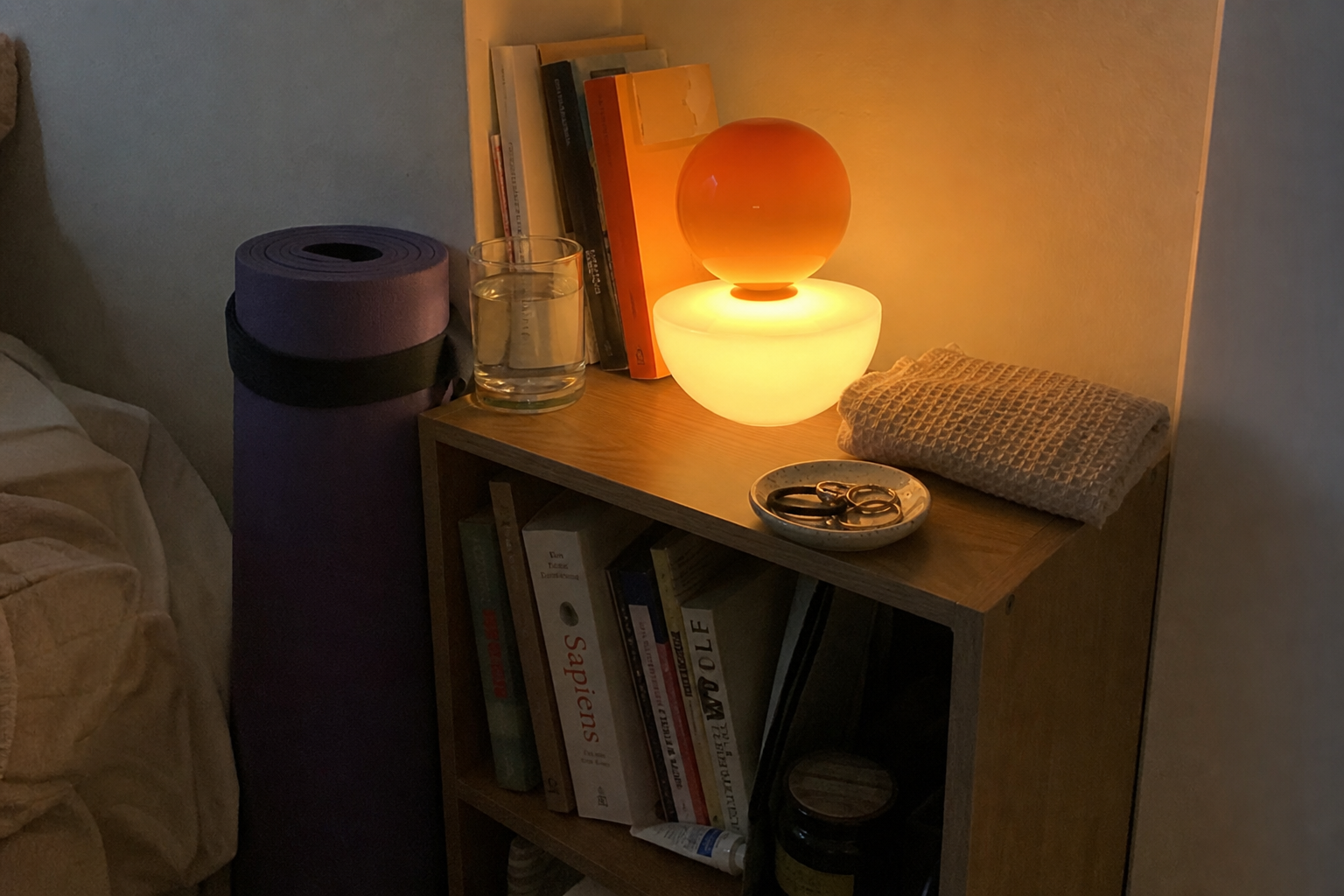
A warm light helps here because overhead lighting can keep a room feeling alert and task-oriented. A small dim lamp like this mushroom lamp works well because it creates an obvious visual cue: lamp on means the day is winding down.
Step 2: Add one cue for touch, one for temperature, and one for “put things down”
This is the part most people skip. We tend to think movement starts with the first stretch, but often it starts with what your hands touch and what your eyes stop having to process.
For touch, I like a folded towel or cloth that feels noticeably different from the rest of the room. A simple stack of soft plaid cotton cloths can work as a face towel, neck roll, or a tactile cue to wipe your hands and mentally mark the shift from work to rest.
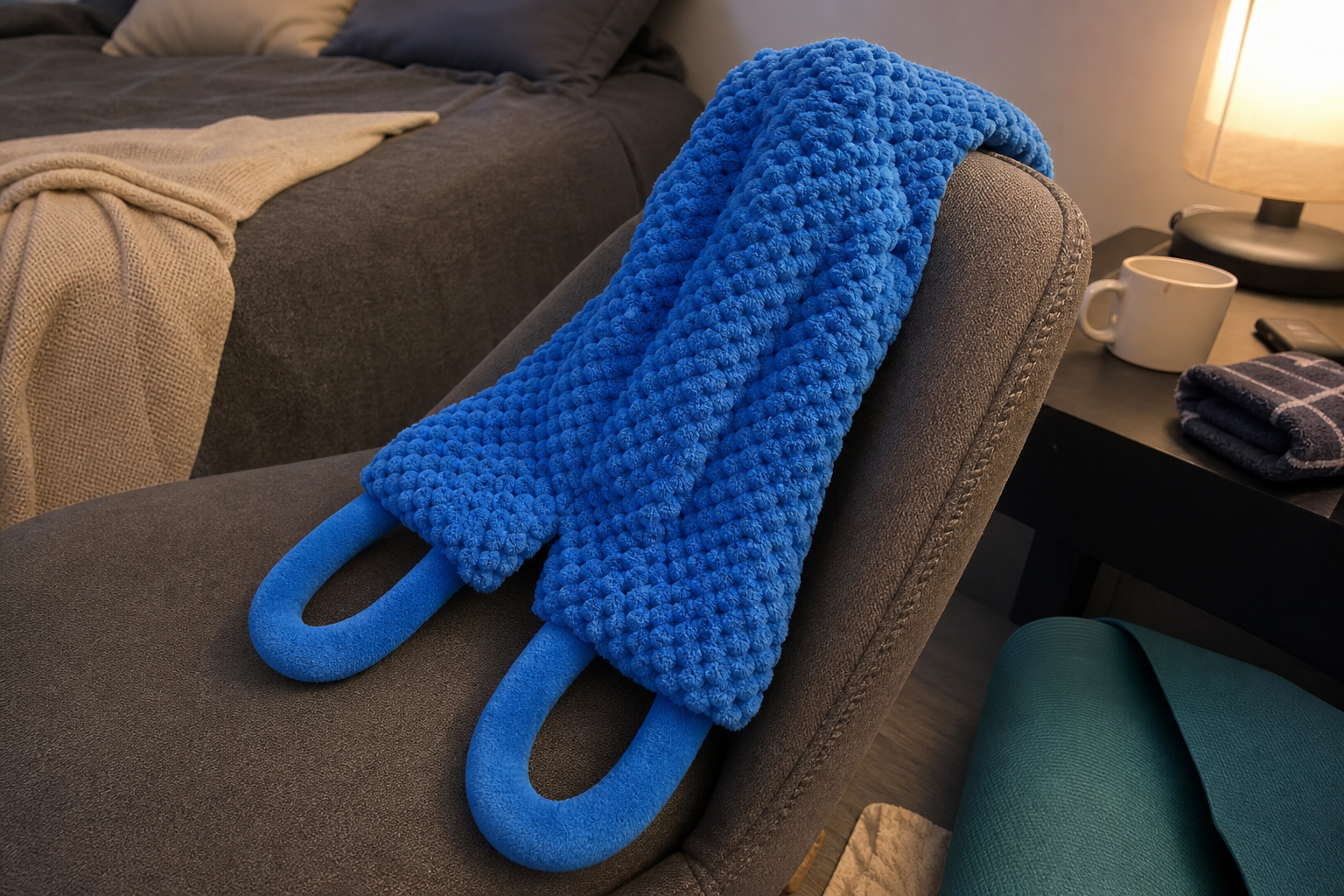
For temperature, keep a heat option within reach. A microwavable neck heating pad is especially useful when your shoulders are still up by your ears from laptop posture. The point is not that heat “fixes” everything. It simply gives the body a faster “you can soften now” message.
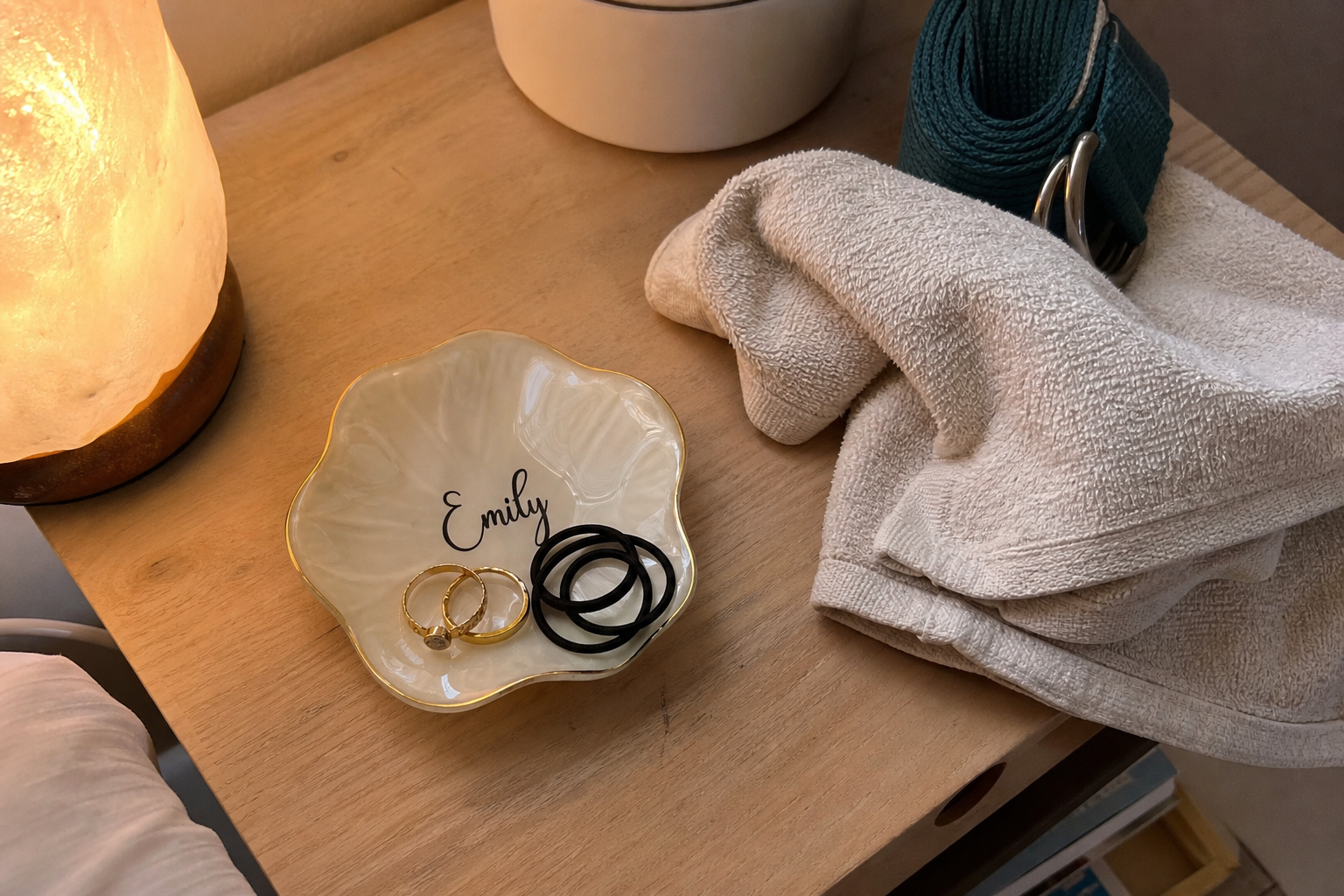
And for the practical cue I swear matters more than people think, include a small drop zone for your hair tie, ring, or earbuds. A little ceramic ring dish makes the routine feel finished before it starts: I put things down, then I drop into the floor.
Sometimes the most helpful ritual cue is not inspirational. It’s simply having somewhere obvious to place the things that keep you half-busy.
Step 3: Add one or two support props you can use without thinking
Your shelf should reduce friction, not create a mini equipment closet. I’d keep support props to a very small lineup:
- A strap for hamstrings, shoulders, or low-energy stretching
- A towel that can double as head support or knee padding
- A heat pack for neck, upper back, or hips
I like a looped strap because it removes a surprising amount of fiddling. This 6-loop yoga stretch belt is the kind of prop I’d leave visible because it invites simple movement: one hamstring stretch, one shoulder opener, done.
If you want more ideas in this vein, my post on underrated mobility tools that make showing up easier gets into why low-fuss props often beat aspirational gear.
Step 4: Match the shelf to your evening state
This is where nervous system awareness matters. Don’t build one “perfect” routine and expect it to fit every night. Build a shelf that helps you respond to the state you’re actually in.
If you feel overstimulated
Think bright brain, tired body, too much input. Your goal is to reduce intensity and narrow choices.
- Turn on the small lamp instead of overhead lighting
- Warm the heating pad and place it on your neck or upper chest for a minute
- Use the towel under your head and do one or two floor-based stretches only
This is a good night for supported shapes, longer exhales, and minimal novelty. If choosing stretches feels weirdly hard, I’d pair this shelf with the kind of choose-by-feeling approach I wrote about in The Mobility Menu That Meets Your Mood.
If you feel depleted
Think flat, foggy, or tempted to skip because everything feels like one task too many. Your goal is to make the first action tiny.
- Place your ring or hair tie in the dish
- Sit on the floor and hold the warm pad for 60 seconds
- Use the loop strap for one gentle hamstring stretch on each side
That might be the entire routine, and honestly, that counts. Depleted nights do not need heroic consistency. They need low-friction consistency.
If you feel restless
Think physically tired but mentally pinging around. Your goal is to give the body just enough input to settle.
- Start with one minute of cat-cow or a simple side bend
- Use the strap for shoulder mobility so the movement has structure
- Dim the room and finish with the towel over your eyes for a brief pause
Restless evenings often need a bridge between doing and resting. Too still too soon can backfire.
Step 5: Create a one-cue start rule
The shelf works best when it has a tiny rule attached to it. Mine would be: every night, I start by using one cue. Not the whole routine. Just one cue.
Your cue could be:
- Turn on the lamp
- Heat the neck wrap
- Place your rings in the dish
- Unfold the towel on the floor
- Pick up the stretch strap
This matters because habits get easier when the entry point is obvious. You are not asking, “Do I feel motivated enough for mobility?” You are asking, “Can I do the first tiny thing?”
Caution: don’t overload the shelf with too many scents, tools, or decorative pieces. If it starts to feel precious, crowded, or high-maintenance, it can create the same friction you were trying to remove. The shelf should feel calming, not performative.
A simple one-week experiment
If you want to make this practical, here’s the experiment I’d try for seven nights:
- Set up your shelf with five items max.
- Choose one start cue for the week.
- Each evening, use that cue before deciding whether to do any stretches.
- Afterward, jot down which object actually made showing up easier.
- At the end of the week, remove anything that looked nice but didn’t reduce friction.
You can keep the tracking extremely simple:
| Night state | Object I used first | Did it help me start? |
|---|---|---|
| Overstimulated | Lamp or heat pack | Yes / a little / no |
| Depleted | Ring dish or towel | Yes / a little / no |
| Restless | Stretch strap | Yes / a little / no |
That last step is important. Sustainable mobility is not only about finding the right sequence. It’s about engineering an environment your body wants to return to.
Closing Thoughts
A sensory reset shelf works because it lowers the activation energy of evening movement. Instead of relying on discipline alone, you use touch, temperature, light, and simple visual cues to help your nervous system switch modes. The best version is small, affordable, and easy to maintain, though the downside is that too many objects can quickly turn it into clutter. If the setup helps you begin more often, even for five quiet minutes, it’s doing its job.
Disclaimer: As an aliexpress Associate, I earn from qualifying purchases.