The Pre-Run Reset That Makes Evening Runs Happen
The clock says 6:12, your workday finally loosened its grip, and the run was supposed to start ten minutes ago. Then the earbuds are dead, the good socks are still in the laundry, your watch battery…
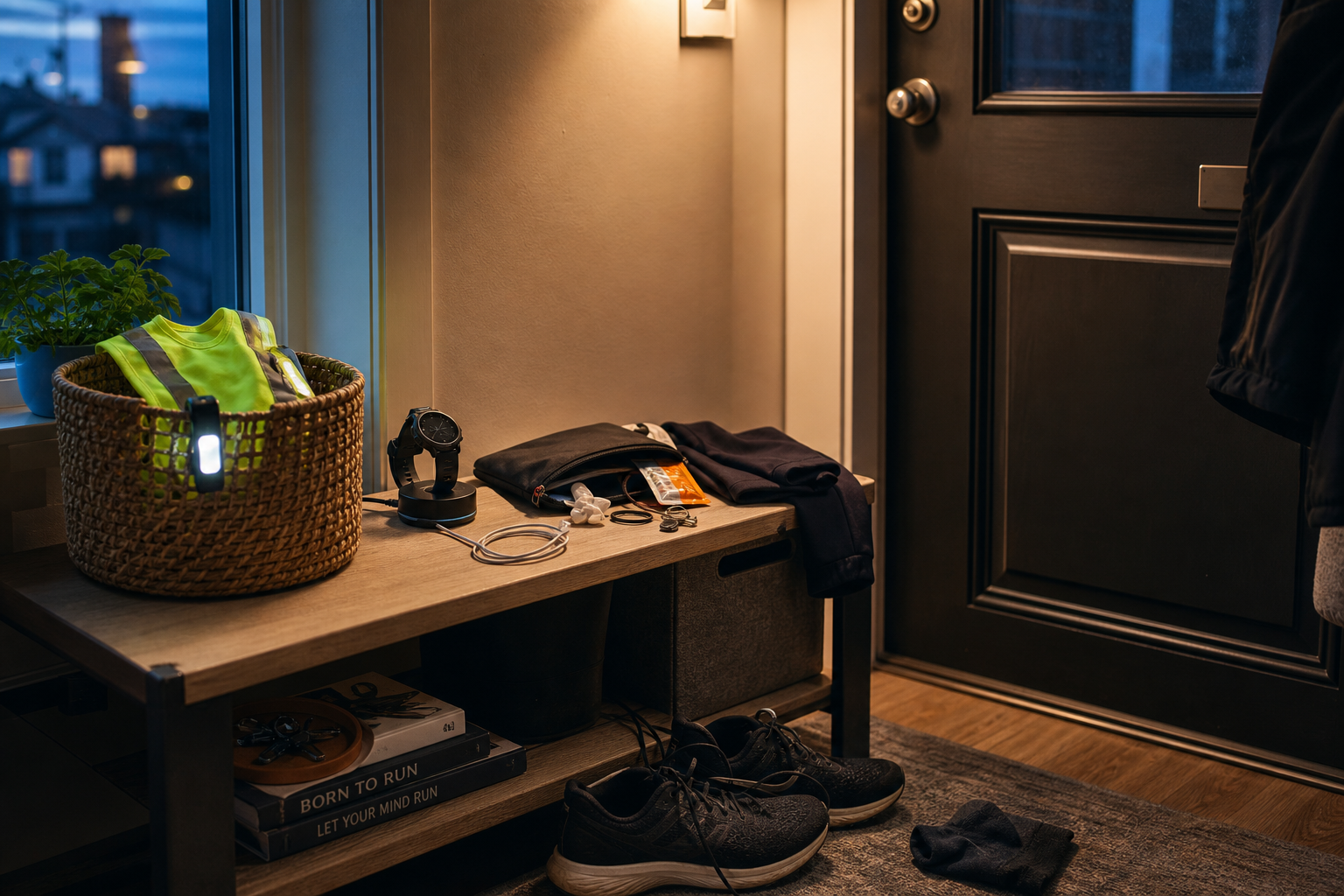
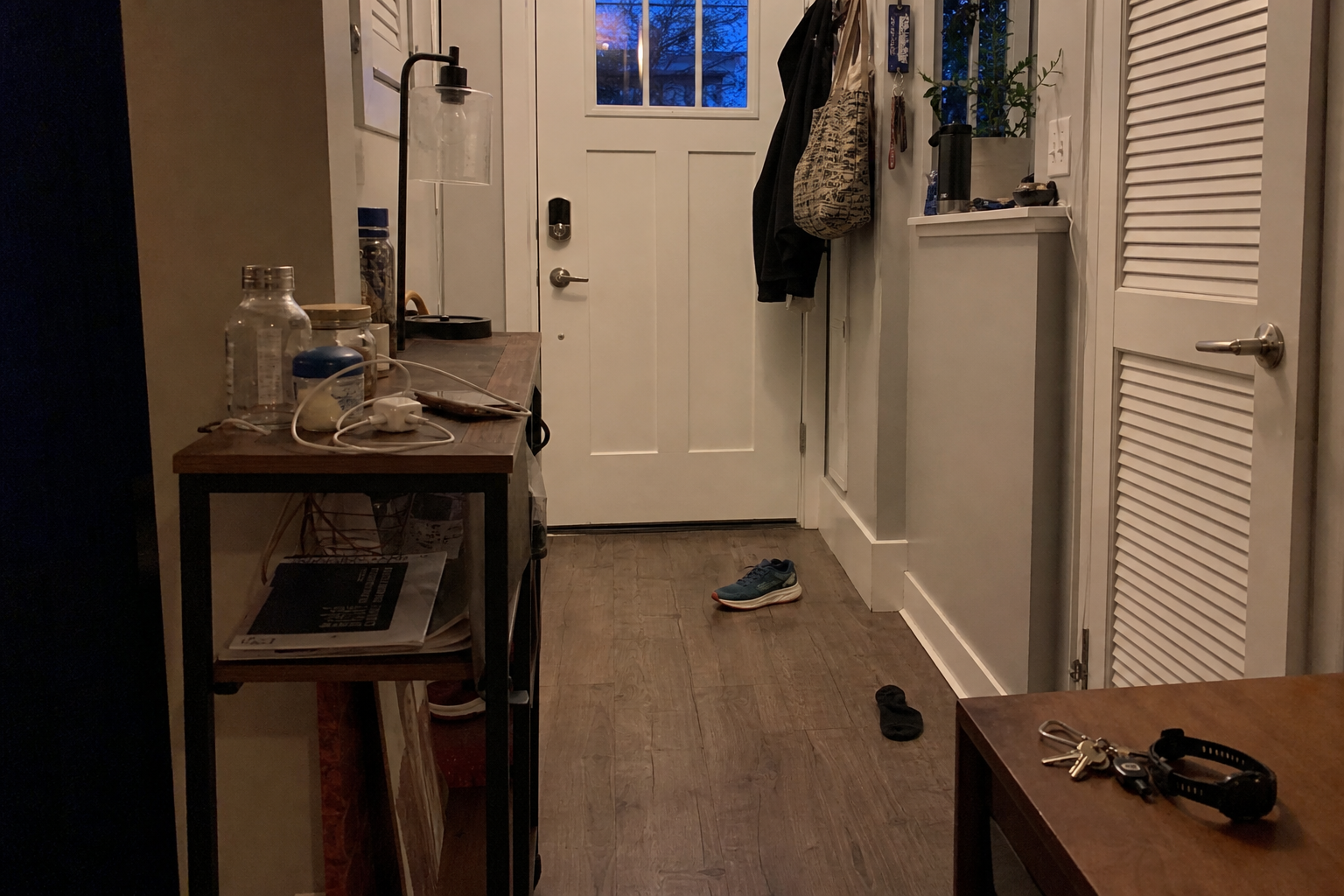
The clock says 6:12, your workday finally loosened its grip, and the run was supposed to start ten minutes ago. Then the earbuds are dead, the good socks are still in the laundry, your watch battery is blinking red, and somehow your house key has vanished into the same alternate universe as every spare hair tie.
That is the moment a lot of runners call themselves unmotivated. I usually call it friction.
When an easy run keeps getting delayed, especially on busy weeknights, the problem often is not discipline. It is a stack of tiny logistics failures that pile up in the hour before you leave. For newer 5K and 10K runners, those little delays matter because easy mileage is what keeps your pacing steady week to week. If getting out the door feels chaotic, consistency disappears before fitness ever gets a chance to help.
This is where a simple pre-run friction audit comes in. You are not analyzing splits, shoes, or race strategy. You are looking at your home like a course map and asking one question: what keeps slowing down my launch?
I’ve written before that not every running problem is solved by gear upgrades in Stop Upgrading Shoes and Fix Your Front Door. This is the home-version of that idea: reduce the stupid little obstacles, and your runs start feeling much more automatic.
How to do a pre-run friction audit
The goal is simple: build one low-cost run launch zone so the hour before your workout takes less thinking.
-
Step 1: Replay your last three delayed runs.
Don’t start with what went right. Start with what made you stall. Be annoyingly specific.
- Couldn’t find a visible light for a dark run
- Watch wasn’t charged
- No simple place to stash keys
- Needed a layer when weather changed
- Had to search three rooms for small essentials
If the same issue shows up twice, it belongs in your system.
-
Step 2: Pick one launch zone near the door you actually use.
Not the ideal door. The real one. If you leave through the side entrance, do not build a beautiful running station in the front hallway and expect discipline to bridge the gap.
A small shelf, corner table, basket, or even a patch of floor can work. This should feel more like an airport tray than a gear shrine.
-
Step 3: Set up four permanent categories.
This is the room-by-room reset that keeps things easy.
The room-by-room reset system
1. Entryway: one basket for reflective and visibility gear
Your first basket should hold the things that matter when daylight disappears or weather gets messy. If you run before sunrise, after work, or through gray rainy evenings, this is not optional clutter. It is the stuff that keeps “I can’t find my light” from becoming “I’ll just skip it.”
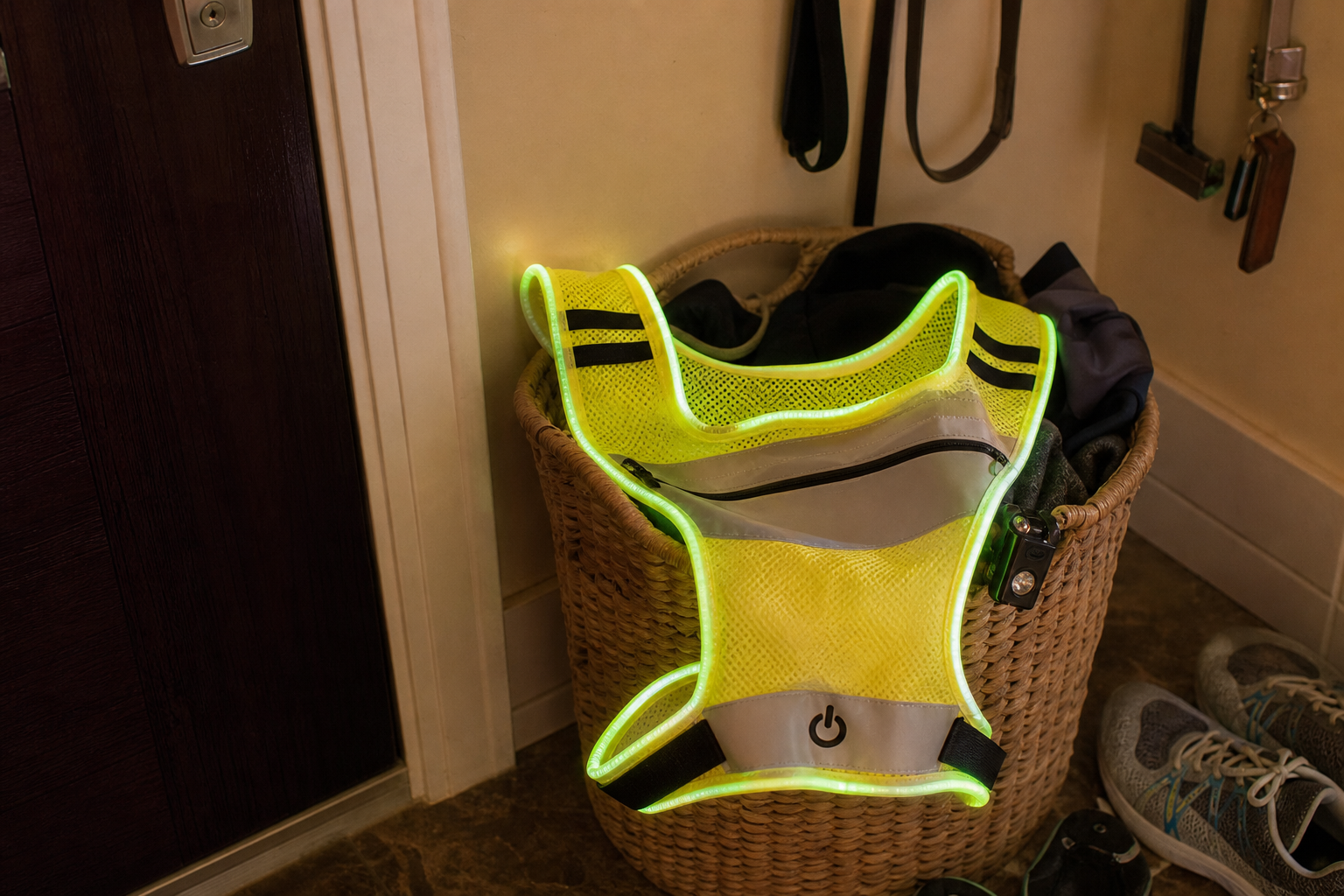
I like keeping a visible item such as a LED reflective vest in that basket because it solves two problems at once: visibility and zero hunting around. A compact mini clip flashlight also earns its place if you need a quick backup light that lives in the same spot every time.
- Reflective vest or visible outer layer
- Clip light or small flashlight
- Spare reflective accessory
2. Bedroom or desk area: one charging spot for watch and lights
A dead watch is not a fitness issue. It is a charging issue. Same for clip lights you swear you charged “recently.”
Create one charging home for run electronics and leave the cords there full-time. A simple watch charger stand can help because it turns the watch into something you can actually see instead of a puck and cable buried on a nightstand. If your cords tend to migrate under furniture, an cable management tray under a desk or shelf can keep the whole setup from turning into a tangle again.
If you run with electronics, they need a parking spot. That’s the rule.
3. Kitchen counter or shelf: one grab-and-go pouch for small essentials
This part matters more than people think. Most skipped runs are not stopped by major obstacles. They get nibbled to death by little ones.
Use one pouch for the stuff you’re always searching for right before the run:
- Gel or chew for longer sessions
- Tissues
- Hair ties
- Lip balm
- Bandage or blister patch
- Spare house key
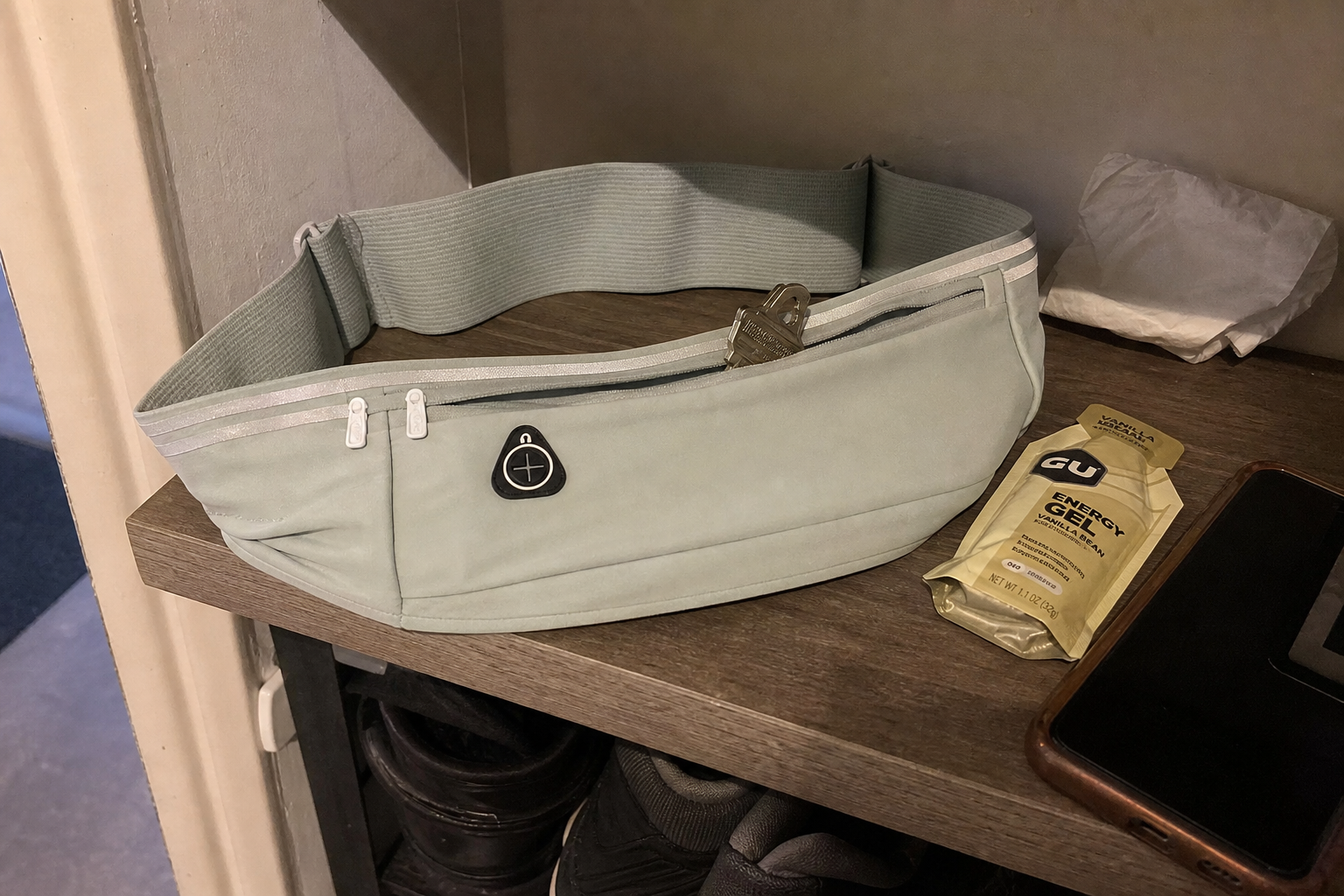
A small mini essentials pouch works well here because it gives those tiny items one address. If you’d rather carry your key and phone on the run, this is also where a reflective running belt can live next to the pouch so it’s always paired with the essentials you need.
4. Hall closet or chair back: one backup layer for weather swings
The weather changes faster than motivation does. A run that feels obvious at 4 p.m. can feel questionable by 6:30 if the breeze picks up or the temperature drops.
Keep one backup layer in the launch zone, not buried with the rest of your clothes. For a lot of runners, that can be as simple as a light long-sleeve, thin gloves, or a pair of lightweight arm sleeves. They are especially useful when a beginner wants an easy adjustment instead of fully changing outfits.
If adding one layer makes the run happen, that layer is not extra. It is part of the system.
The quick test for what earns a permanent spot
Not every accessory deserves space in your station. Before something becomes a permanent resident, run it through this checklist:
- Does it save time in the hour before my run?
- Does it reduce stress when I’m tired, late, or mentally cooked?
- Does it solve a repeat problem on dark, wet, cold, or rushed days?
If the answer is no to all three, it probably does not belong there.
How to choose your carry option without overthinking it
One of the sneakiest pre-run delays is figuring out where your phone, key, or card will go. Make that decision once.
-
If you want the simplest all-in-one option, keep a running waist belt already loaded with your key and backup tissue.
-
If you prefer something smaller for short runs, a waist earphone pouch can handle a key and tiny essentials without much bulk.
-
If you hate waist storage, a leg phone pouch can be your designated carry choice instead.
The important part is not which one you pick. It is that you stop renegotiating it at 6:07 p.m. every Tuesday.
A simple weekly reset that keeps the station working
A launch zone only helps if it stays alive. I’d do this once a week, ideally after your longest run or on laundry day.
- Recharge your watch and lights
- Restock tissues, gels, and hair ties
- Return reflective gear to the basket
- Put one weather backup layer back in place
- Check that your carry belt or pouch still has your key
If your pacing has felt inconsistent lately, don’t assume it is all fitness. A choppy training week often starts with one missed easy run, and that missed easy run often starts with avoidable friction at home. If you want a companion piece for the actual effort side of pacing, How to Pace Without Trusting Your GPS pairs well with this because it helps once you’re out the door. This article is about making sure you actually get there.
Caution: do not turn this into a giant gear project. The whole point of a friction audit is to remove decisions, not create twelve new ones. If an item is cheap, simple, and clearly useful, great. If you’re spending three weeks comparing storage systems instead of running, the system has become another delay.
Why this works so well for beginner 5K and 10K training
Newer runners usually do not lose consistency because every workout is too hard. They lose it because normal life keeps clipping the edges off the week. One delayed evening run becomes a skip. One skip becomes a training plan that suddenly feels unstable.
A home launch station protects the plain, boring, useful miles. Those easy miles are what make 5K and 10K pacing feel familiar instead of frantic. And because the system is mostly baskets, pouches, chargers, and small accessories, it fits nicely with the inexpensive, mix-and-match style you’ll find on AliExpress. You can check the current price on AliExpress for the pieces that match your own friction points without treating running organization like a new hobby.
The Bottom Line
A pre-run friction audit works because it attacks the real problem: the messy hour before the workout. One basket for visibility gear, one charging spot, one essentials pouch, and one backup layer can make evening runs feel far less negotiable. The downside is that you do need to maintain the station with a quick weekly reset, but that is still much easier than rebuilding consistency after missed runs pile up. Keep it cheap, simple, and close to the door, and your run launch zone can do a lot of quiet work for you.
Disclaimer: This post contains affiliate links. I may earn a commission from qualifying purchases.