The Morning Practice That Starts With One Mark
Let’s settle this: not every scattered morning needs a better routine. Sometimes what actually helps is something quieter and more tactile—a half-filled page, a pen in your hand, stiff wrists waking…
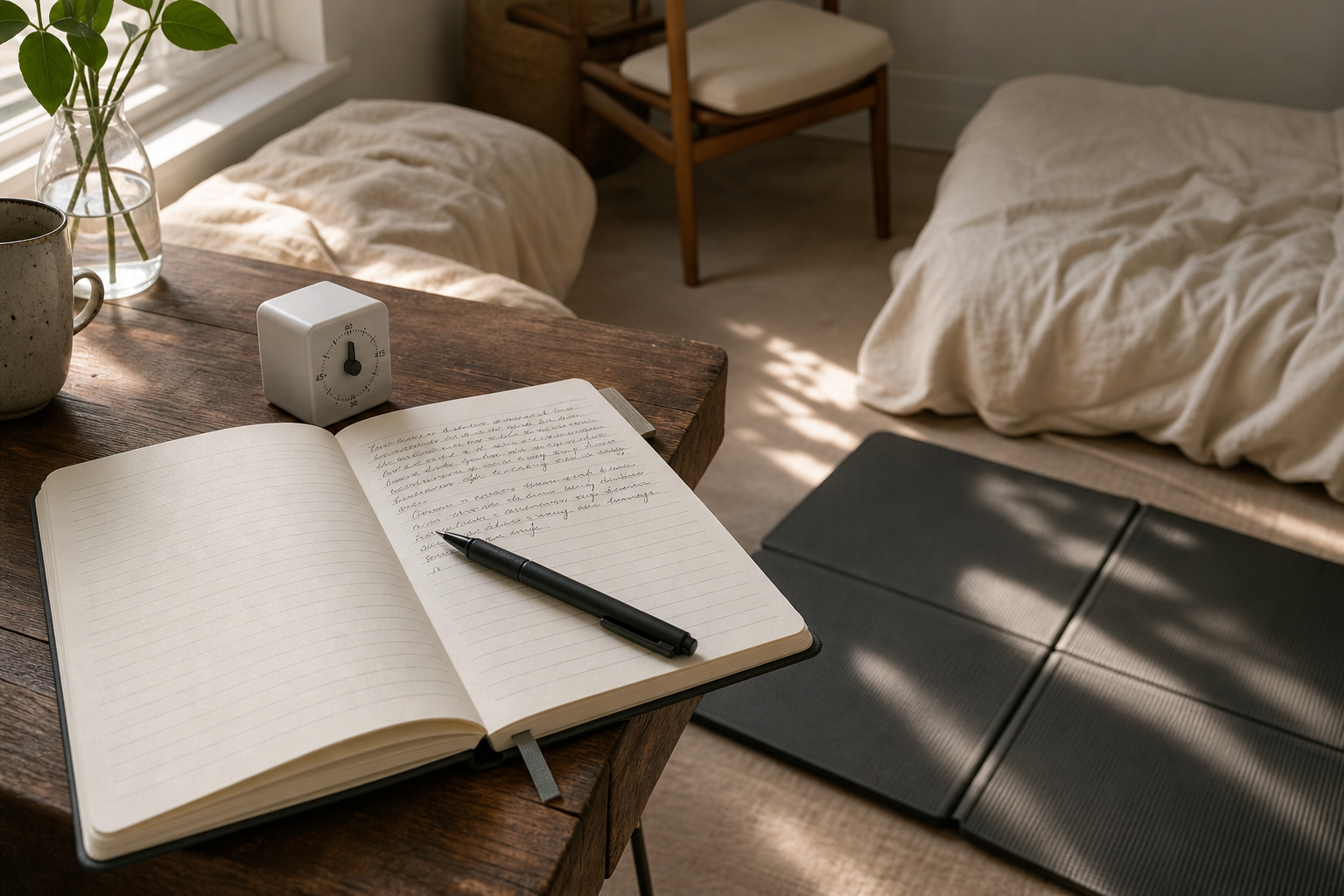
Let’s settle this: not every scattered morning needs a better routine. Sometimes what actually helps is something quieter and more tactile—a half-filled page, a pen in your hand, stiff wrists waking up slowly, and the oddly calming effect of making one small mark before you move.
I love digital tools when they genuinely reduce friction, but on mentally noisy mornings, paper often wins for me. A handwritten check-in can show me what my body is carrying before I ask it to “perform” wellness. That’s the whole idea here: an analog reflection + movement practice that takes seven minutes, feels personal, and doesn’t ask you to optimize your entire life before breakfast.
This method has three parts:
- A 2-minute handwritten check-in
- A 4-minute mobility sequence that matches what surfaced
- A 1-minute closing note so the ritual becomes easy to repeat
If you’ve ever stared at your mat feeling blank, this pairs especially well with the logic behind the mobility menu that meets your mood: let the state you’re in guide what happens next.
Step 1: Do a 2-minute handwritten check-in
The goal here is not deep journaling. It’s a quick diagnostic.
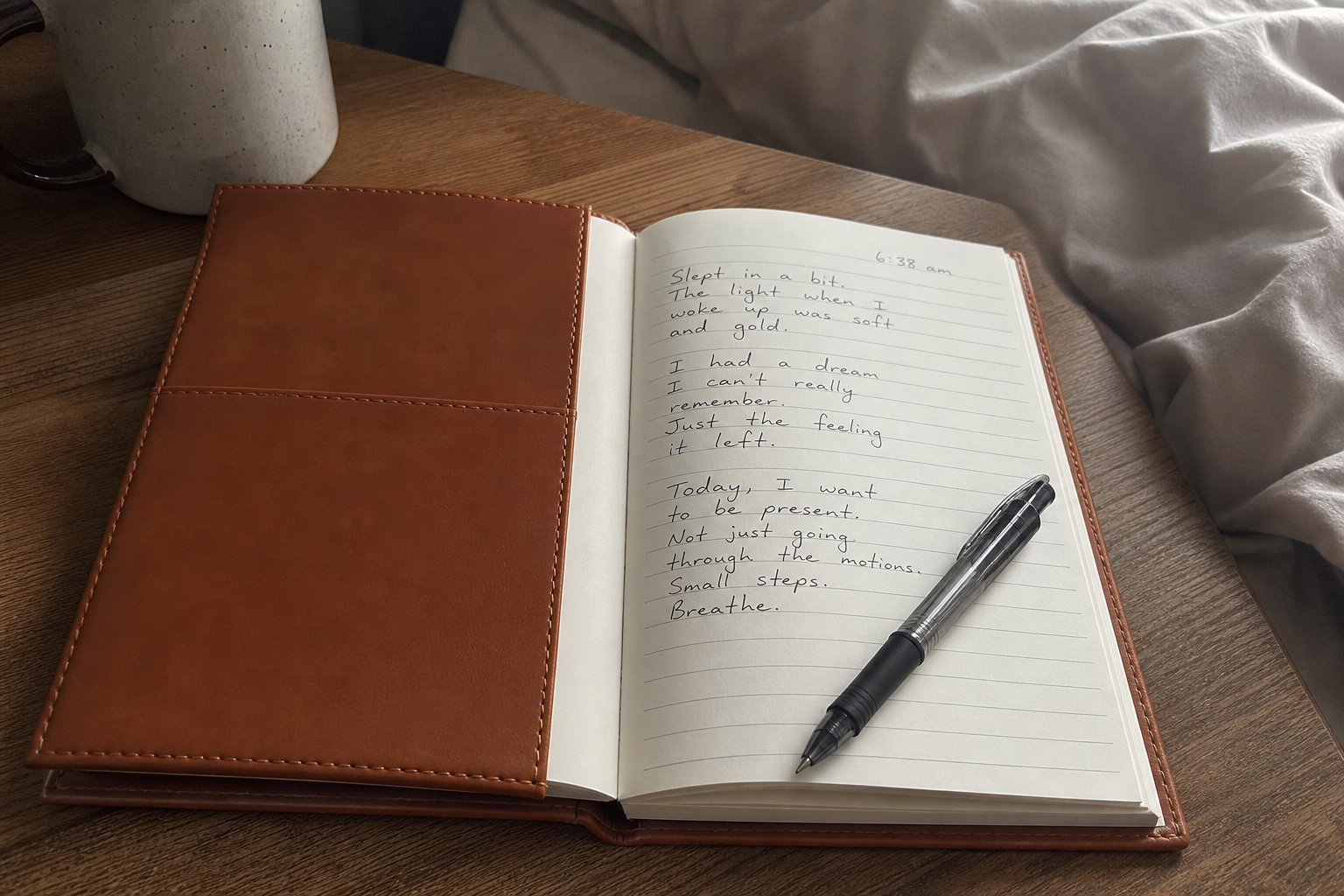
I like using an A5 lined journal notebook because the size feels approachable rather than grand, and a smooth pen matters more than people think. If writing feels pleasant, you’re more likely to do it. Even a playful option like these Miffy gel pens can make the page feel less clinical and more like a space you actually want to meet yourself in.
Set a timer for two minutes. A small physical timer, like this digital cube timer, can be oddly soothing because you can just flip it and begin instead of opening another app.
Then write answers to these three prompts:
- What feels loud right now?
- Where do I feel that in my body?
- What kind of movement sounds tolerable today: floor, chair, or standing?
That’s enough. Not insightful enough. Not beautifully written enough. Just enough.
Your journal page is not proof of discipline. It’s a map.
What to look for on the page
This is where journaling becomes useful for mobility, not separate from it. Patterns tend to repeat long before we consciously “figure them out.”
- If you keep writing words like pressure, bracing, or holding it together, you may also notice jaw clenching, shallow breath, and tight upper traps.
- If your page sounds emotionally flat or drained, hips and low back often show up as stiff or heavy.
- If you feel foggy and unfocused, wrists, chest, and spine may simply need gentle waking up rather than intense stretching.
I’ve found that when people stop asking, “What routine should I do?” and start asking, “What is my body echoing from my mind today?” consistency gets much easier.
Step 2: Match the page to a 4-minute mobility sequence
Now use what you wrote to choose a short movement response. You do not need a full flow. You need the right four minutes.
If you want something tiny to anchor the habit on especially cluttered mornings, this works nicely alongside the 30-second mobility ladder I use on stuck days. Think of today’s practice as the slightly more reflective version.
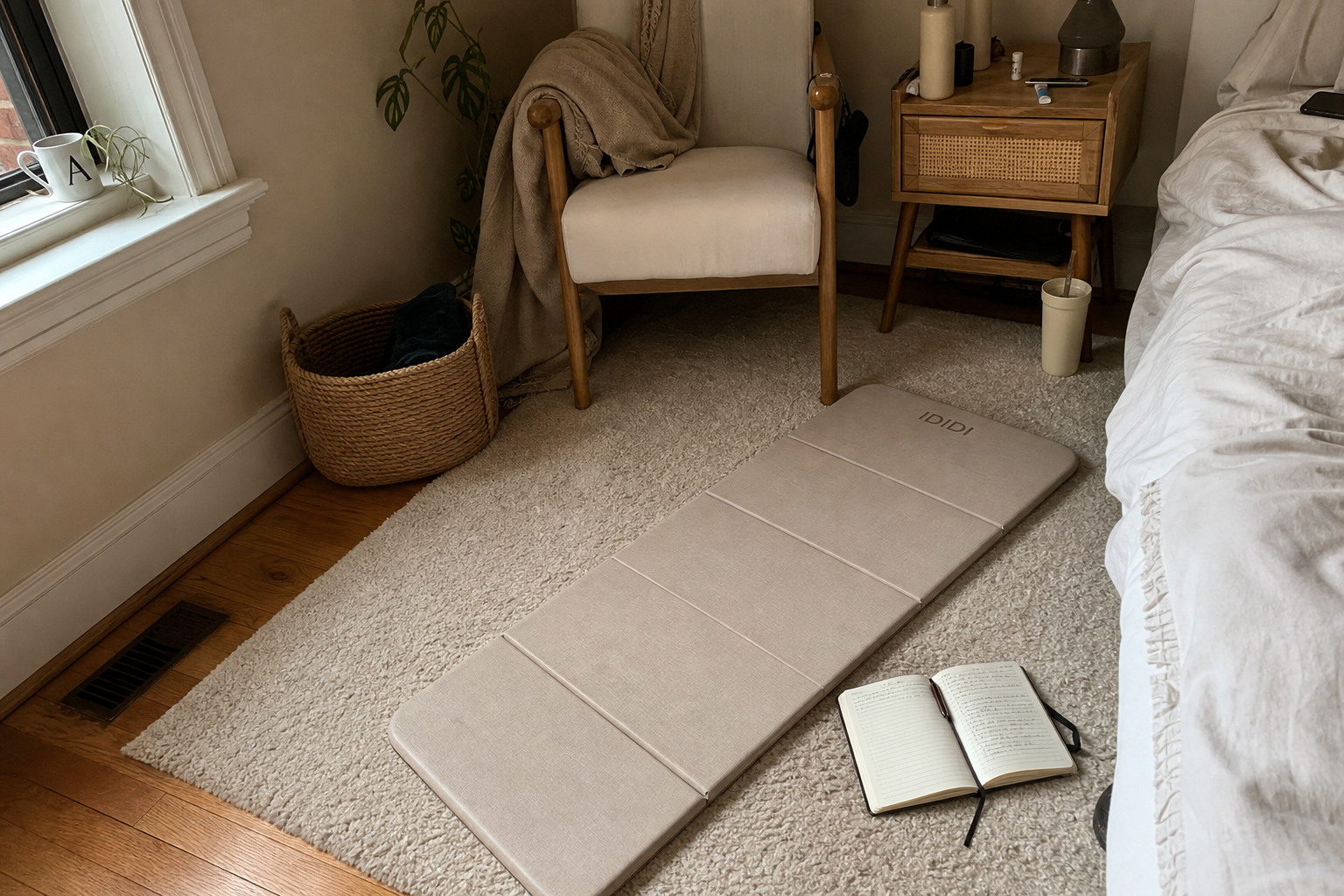
You can do this on the floor with a foldable yoga mat if your knees or wrists like more cushioning, or do the chair versions at your desk if the floor feels like too much.
Use this prompt-to-movement map
Pick the line that sounds most like your page, then do the paired movements for about one minute each.
| What surfaced in writing | What it may mean physically | Movement response |
|---|---|---|
| “I feel pressure.” “I’m bracing.” “My jaw is tight.” | Neck, jaw, chest, and upper back tension | Seated chin nods, shoulder rolls, open-book twist, long exhale |
| “I feel emotionally heavy.” “Everything feels stuck.” | Hips, low back, and outer glutes holding tension | Figure-4 stretch, gentle hip circles, cat-cow, supported fold |
| “I’m foggy.” “I didn’t fully wake up.” | Wrists, spine, ribs, and breath need gentle activation | Wrist circles, seated side bends, standing reach, marching in place |
| “I’m restless.” “My brain is sprinting.” | Nervous system is activated; body may need rhythm more than stretch | Rocking child’s pose or chair rock, slow spinal wave, calf raises, extended exhale |
Three ready-to-use 4-minute sequences
If you want the sequence spelled out, here are three simple options.
Option 1: High-pressure morning
- 30 seconds seated chin nods
- 30 seconds shoulder rolls with slow exhale
- 1 minute open-book twist, switching sides halfway
- 1 minute supported child’s pose or seated fold
- 1 minute easy nasal breathing, with a longer exhale than inhale
Option 2: Emotionally draining week
- 1 minute cat-cow
- 1 minute figure-4 stretch on the right
- 1 minute figure-4 stretch on the left
- 1 minute slow hip circles or windshield wipers
If you want a little more feedback around the hips without making the practice feel like a workout, light fabric resistance bands can be useful for gentle glute activation during bridges or side steps. I’d keep the tension easy here; this practice is about awareness, not max effort.
Option 3: Foggy, low-energy morning
- 1 minute wrist circles and palm stretches
- 1 minute seated side bends
- 1 minute standing reach with arm sweeps
- 1 minute march in place with relaxed shoulders
Caution: none of this should feel sharp, pinchy, or forced. If a position increases pain, numbness, dizziness, or headache, skip it and choose the chair version or a smaller range of motion instead. Gentle mobility should leave you feeling more organized, not more irritated.
Step 3: Finish with a 1-minute closing note
This last minute is what turns a nice idea into a repeatable habit. Not because you tracked it perfectly, but because you closed the loop.
Write one sentence under your check-in:
- What helped most?
- What did I notice in my body after moving?
- What should I repeat next time?
Examples:
- “Jaw unclenched after shoulder rolls and longer exhales.”
- “My hips felt less glued down after figure-4 and cat-cow.”
- “Chair version was easier to start, so do that again tomorrow.”
This is the part many people skip, but it matters. A short closing note helps you build a personal reference library. Over time, you may notice that high-pressure workdays call for neck and chest mobility, while emotionally draining weeks show up in your hips and lower back. That kind of self-awareness is what makes a movement habit feel specific enough to keep.
How to make the ritual inviting enough to return to
A low-friction morning practice is not just about willpower. It’s also about setup.
I wrote more about this principle in building a tiny home movement corner that gets used, and it applies here too: when the tools are visible and pleasant, the ritual asks less of your brain.
You do not need a beautiful wellness cart. You just need a few cues that make starting obvious.
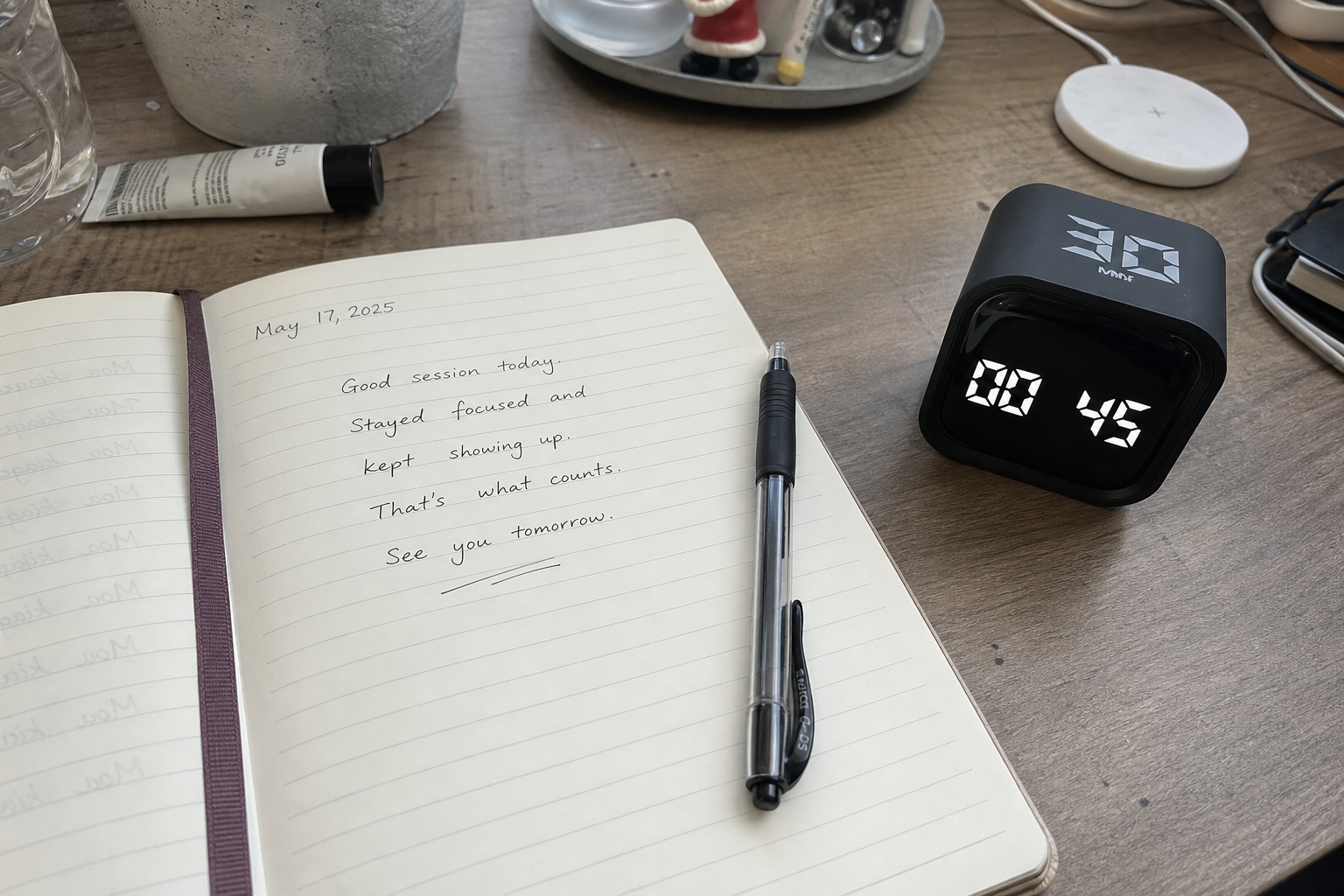
- Keep your journal and pen already out, opened to the next blank page.
- Use a page marker so there’s no hunting.
- Leave a compact timer nearby instead of relying on your phone.
- Store a foldable mat where it can be opened in seconds.
- If floor work feels better with support, keep one small accessory like a light hip band within reach.
This is one place where AliExpress can be genuinely useful: there’s a lot of affordable variety for the small things that shape a ritual’s feel. If you’re curious, you can check the current price on AliExpress for the lined journal, gel pens, cube timer, foldable mat, and fabric hip bands.
The Bottom Line
This seven-minute morning practice works because it starts with attention, not pressure. The page helps you notice what your body is carrying, the movement responds directly to that signal, and the closing note makes the whole thing easier to repeat without chasing perfection. The only real downside is that it asks for honesty over autopilot—but in my experience, that’s exactly why gentle mobility becomes more consistent, more personal, and much easier to come back to.
Disclaimer: This post contains affiliate links. I may earn a commission from qualifying purchases.