The Evening Corner That Makes Mobility Happen
Here’s what nobody tells you: a lot of evening mobility starts long before you stretch. It starts with the scratch or softness of the rug under your feet, the lamp sitting low enough to make the room…
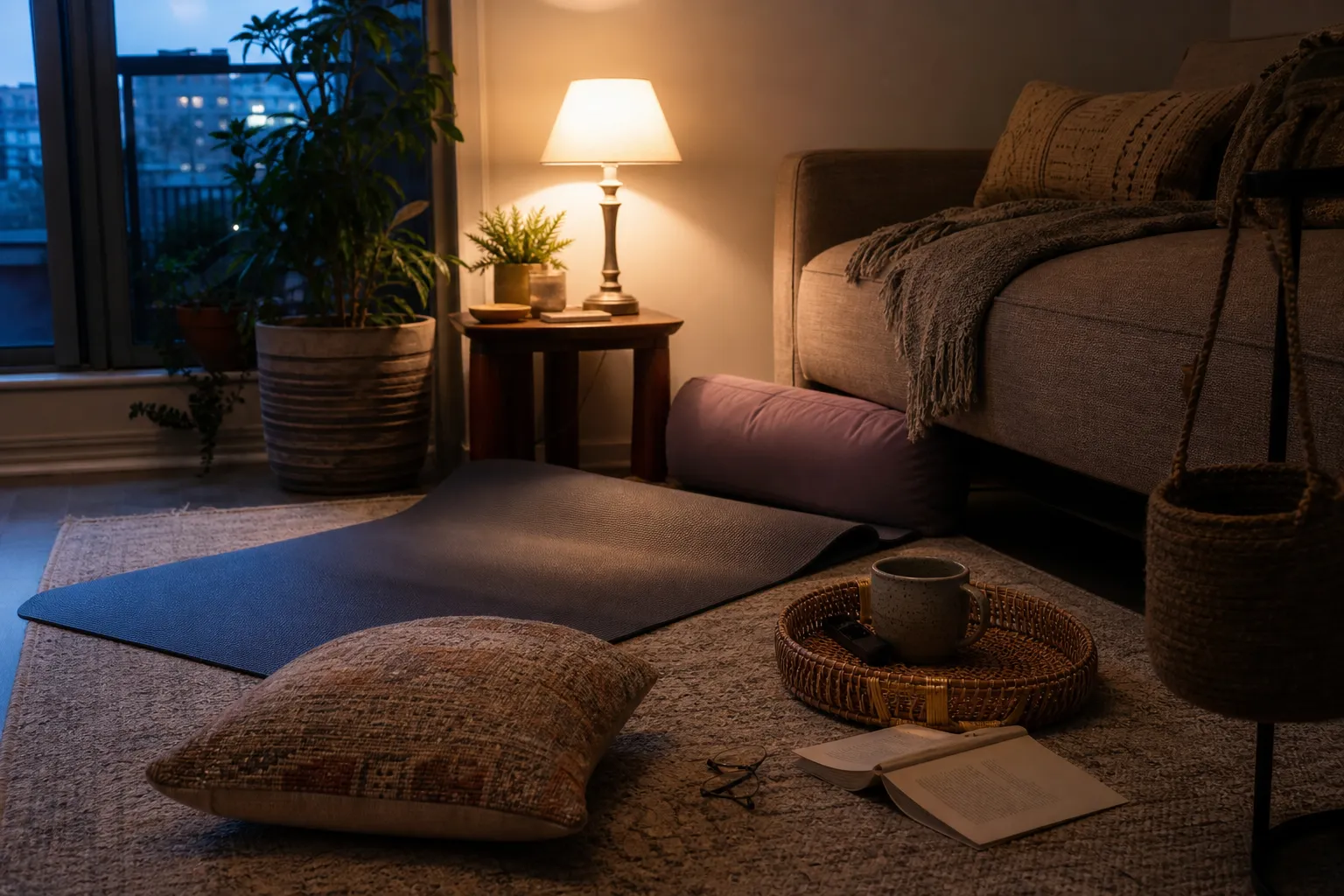
Here’s what nobody tells you: a lot of evening mobility starts long before you stretch. It starts with the scratch or softness of the rug under your feet, the lamp sitting low enough to make the room feel landable, and whether the bolster is visible enough that getting on the floor feels easier than staying folded into the sofa.
If a mug has nowhere safe to land, or your book only makes sense from one upright chair, your room quietly votes against movement. But when one small area is arranged with intention, your body tends to change positions naturally over the course of an hour without anything needing to feel like a routine.
I love this kind of setup because it shifts mobility out of the realm of self-improvement and into spatial design. The room does some of the coaching for you.
Step 1: Audit one small evening zone
Don’t redesign your whole home. Pick one area where you already spend 30 to 60 minutes at night: the side of the sofa, the foot of your bed, or the patch of floor near your reading chair.
Your goal is to notice what the space currently encourages. I often tell people to do the same kind of observation I use in mobility habit work: before changing behavior, study the environment.
- Stand in the area and look at the floor first.
- Notice where your eye lands next: couch, chair, lamp, clutter, screen, side table.
- Ask which posture the room makes easiest by default.
- Ask what makes floor sitting slightly annoying.
Usually the barriers are ordinary:
- the floor feels too hard or cold
- there’s nowhere to put a drink or phone
- props live in a closet, so the floor feels like “exercise”
- the lighting is too bright overhead, which keeps the area feeling active rather than settling
If this way of thinking clicks for you, it pairs well with my piece on why location-based cues make mobility habits stick better. The short version: your body remembers places faster than it remembers good intentions.
Step 2: Build one inviting landing spot
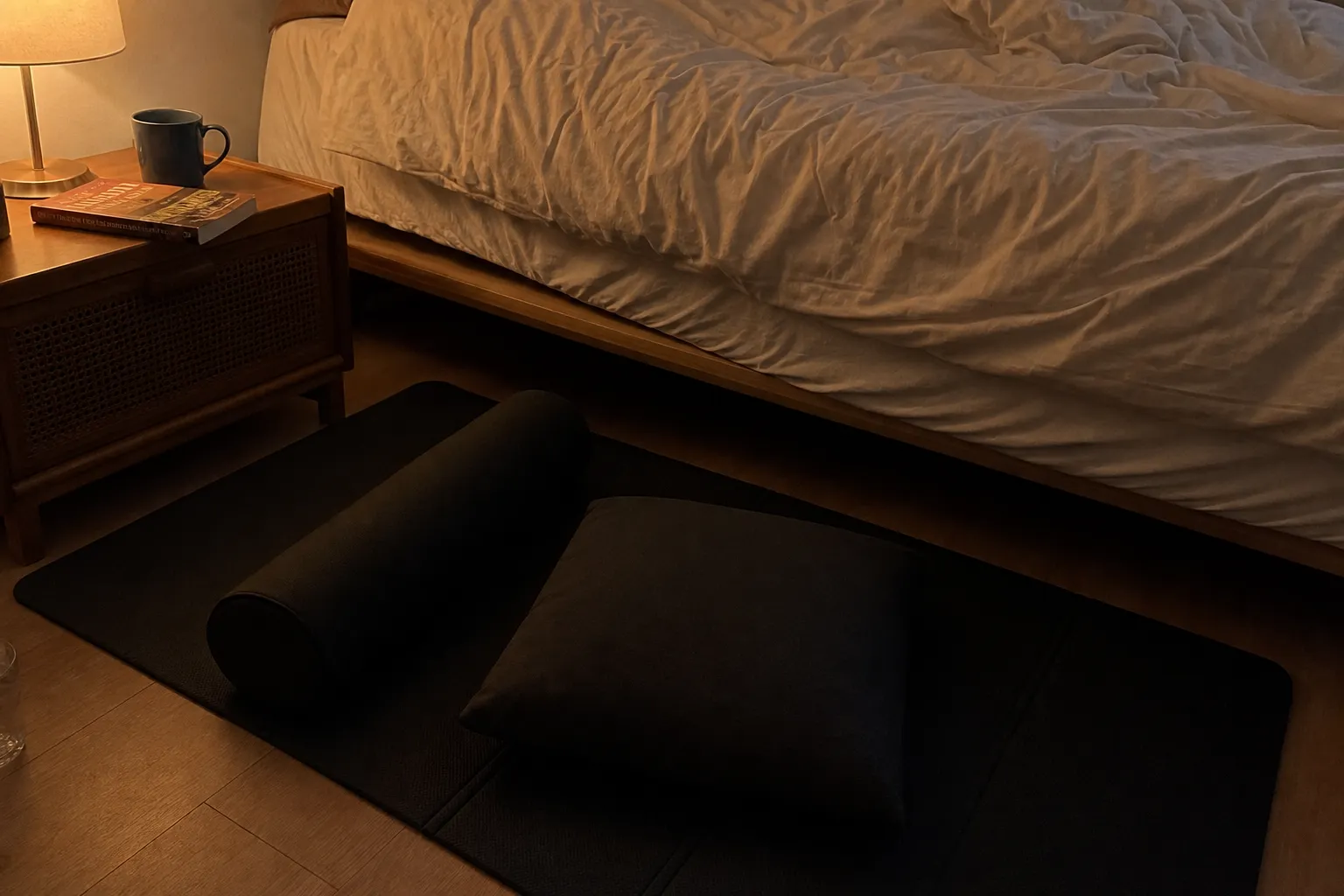
The first design job is simple: make the floor feel like a valid place to be, not a backup option. That means creating a soft, visible, low-friction landing zone.
A foldable yoga mat works well here because it gives you a defined floor surface without needing to stay permanently rolled out. I especially like foldable mats for evening use because they’re easier to half-open in a bedroom or beside a sofa, which feels more like living and less like setting up a workout.
On top of that, add one comfortable sitting layer. A textured meditation seat cushion can make side-sitting, kneeling, or cross-legged reading much more realistic if your hips hate hard floors. If you want a slightly taller option that also doubles as a footrest, an round floor pouf cover can create a nice in-between height once stuffed.
Step 3: Put the bolster where your body can see it
This sounds minor, but it matters. If your support prop is hidden in a closet, your nervous system reads it as a project.
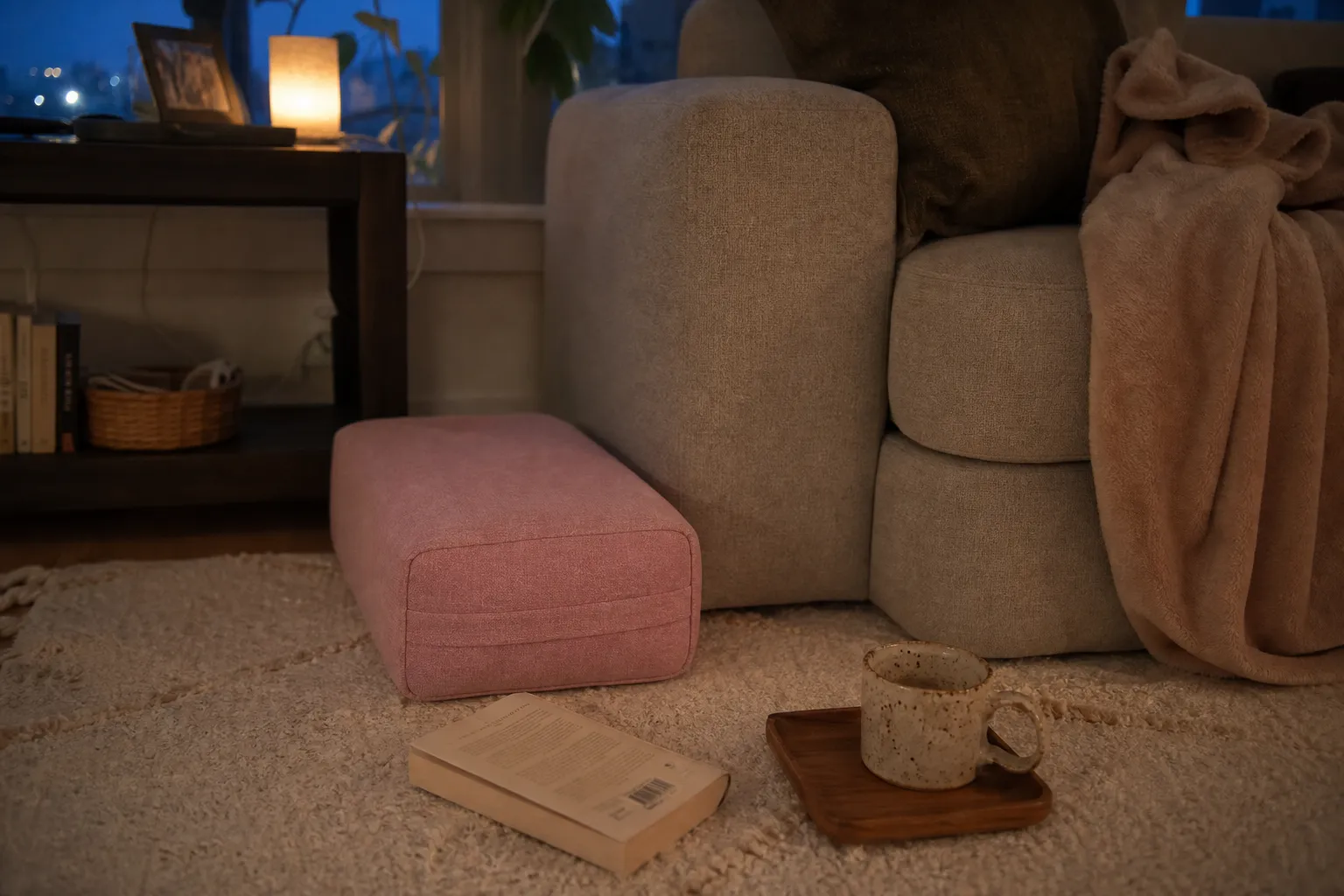
I’d rather see a rectangular yoga bolster living right beside the sofa than perfectly “stored” somewhere I won’t use it. A visible bolster supports reclining, propped sitting, chest-opening, and legs-up positions without requiring much decision-making.
If the prop is already in the room, the floor feels like an option. If it’s packed away, the floor feels like homework.
Step 4: Add one surface for your real life items
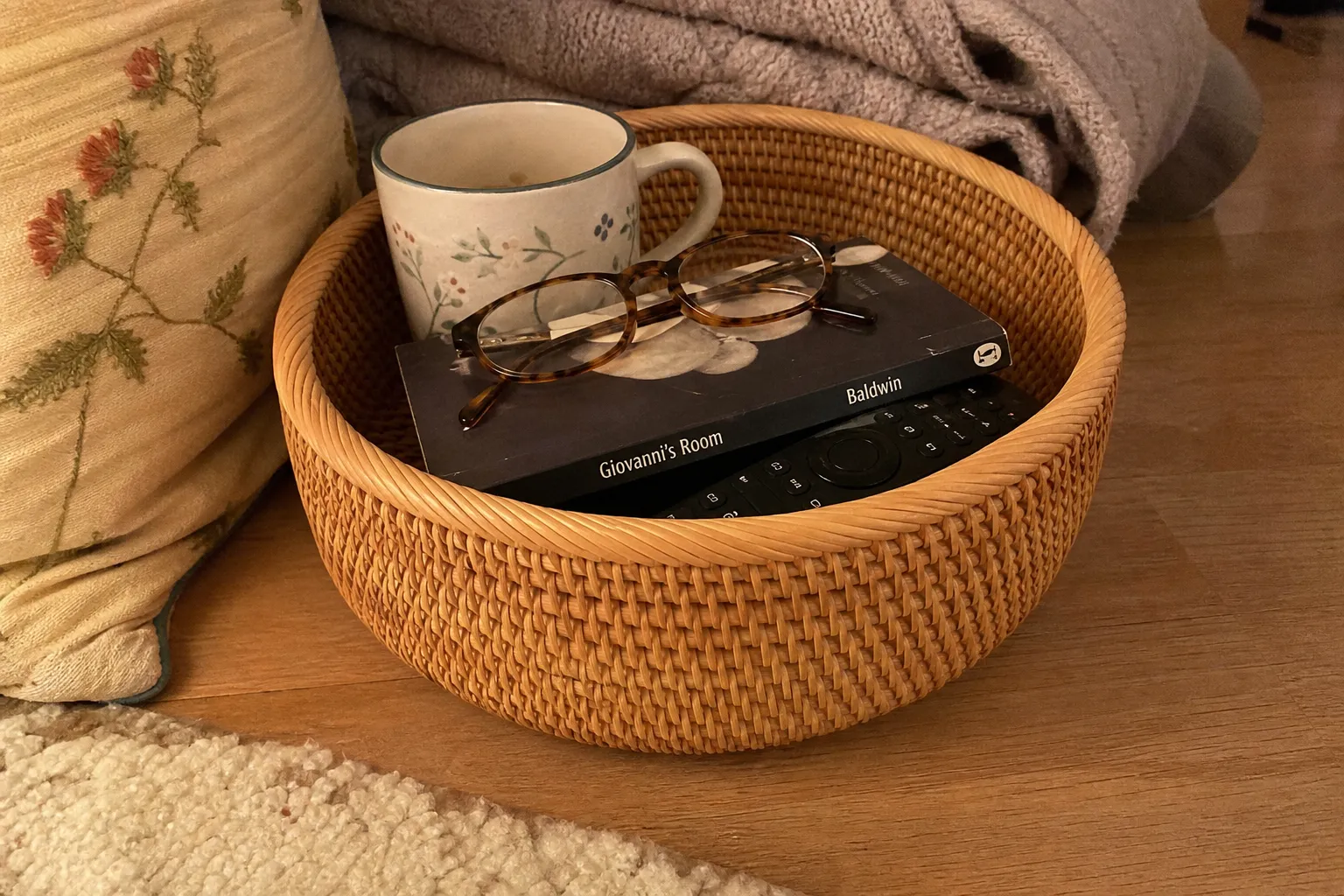
One reason people don’t get down on the floor is surprisingly practical: they don’t know where to put the mug, remote, glasses, or book. A setup only works if it supports the life you actually live there.
A small rattan tray basket does this nicely because it can hold your tea, journal, or lip balm and visually mark the floor setup as usable, not decorative. For vertical storage, a small jute hanging basket can keep a strap, eye pillow, socks, or TV remote nearby without adding visual chaos.
Step 5: Lower the light so the floor feels restful
This piece is easy to underestimate. Overhead lighting keeps many rooms feeling task-oriented, which tends to funnel us toward one upright, static posture.
If you have a lamp, place it low enough that the glow reaches the floor area rather than only the sofa or bed. Soft side lighting helps the corner feel like a place to downshift, which makes slow position changes more likely. If you’ve built any kind of calming nook before, the logic is similar to what I wrote in this post about creating a sensory reset shelf: visual tone changes behavior.
Caution: keep lighting low and cozy, but not so dim that you’re twisting awkwardly to read or stepping over props you can’t see. The goal is inviting, not hazardous.
Step 6: Arrange for three or four default postures
Instead of planning a routine, plan a menu of positions the room supports well. This is where the setup becomes practical mobility rather than decor.
I like to choose a few default postures that fit the activities already happening in the evening:
- Side-sitting while reading: sit on the cushion with both shins folded to one side, then switch sides a few pages later.
- Supported kneeling: kneel with the cushion or bolster under the hips for a gentler angle at the knees and ankles.
- Legs-up on a bolster or pouf while watching a show: calves supported, low back settled, no dramatic stretch required.
- Gentle twist against the sofa before bed: sit sideways near the sofa edge, one hand to the cushion or seat, and rotate softly through the ribs.
- Half-recline with a book: prop the bolster behind you so reading happens in an open-chested position instead of a neck-cranked slump.
The best part is that these are not “sessions.” They’re just alternate ways to exist in the room.
Step 7: Make transitions obvious and easy
What you’re really designing is not one perfect posture, but a path between postures. The body tends to like variety more than intensity at the end of the day.
- Start in your usual seat with your mug or book.
- Move to the floor for one chapter, one episode segment, or ten minutes.
- Shift to a second position when you naturally pause.
- Finish with one gentle shape that tells your system bedtime is getting closer.
This can be as small as side-sit to recline to twist. On lower-energy evenings, that is enough.
On the nights when I feel especially stuck, I use the same principle I talk about in my 30-second mobility ladder: lower the entry point until movement feels almost too easy to skip.
Step 8: Know what not to overdo
A low-friction mobility corner should not become a tiny studio stuffed with gear. Too many props can create the same problem as too many saved routines: choice fatigue.
Keep the setup simple:
- one base layer on the floor
- one main sitting support
- one reclining support
- one surface or basket for everyday items
If you add everything at once, the space can start feeling performative. I’d much rather have a mat, a bolster, and a mug tray that get used nightly than a beautiful corner that behaves like a museum display.
A one-night experiment to try tonight
If you want to test this immediately, don’t wait for a full makeover. Run a one-evening experiment with whatever you already own, then decide what’s missing.
- Choose one patch of floor near your sofa or bed.
- Put down a folded blanket, rug layer, or a mat if you have one.
- Bring one pillow or bolster into plain sight.
- Set a lamp or side light so the floor area feels warm.
- Place a mug, book, or remote on a tray, plate, or stable surface beside you.
- Spend one hour in the room without asking yourself to do a routine.
- During that hour, change positions three times.
A sample sequence might look like this:
- 15 minutes side-sitting while reading
- 20 minutes legs-up on a cushion while watching something easy
- 2 minutes in a gentle seated twist using the sofa for support
- the rest of the time reclining on the bolster before heading to bed
Afterward, jot down just three things:
- what position felt easiest to enter
- what made the floor more appealing than usual
- what tiny missing piece would improve the setup next time
Maybe that missing piece is more padding. Maybe it’s a visible bolster. Maybe it’s simply a place to put your tea. Those details are not trivial; they are often the difference between “I should stretch” and actually getting on the floor.
Closing Thoughts
A good evening mobility setup is less about discipline and more about reducing friction. When a room offers soft floor support, visible props, a place for your real-life items, and a few easy posture options, your body tends to move more without being forced into a formal routine. The downside is that even a lovely corner will not help much if it’s overcomplicated or packed away out of sight. Start small, notice what your space already teaches, and let the room coach the movement.
Disclaimer: This post contains affiliate links. I may earn a commission from qualifying purchases.