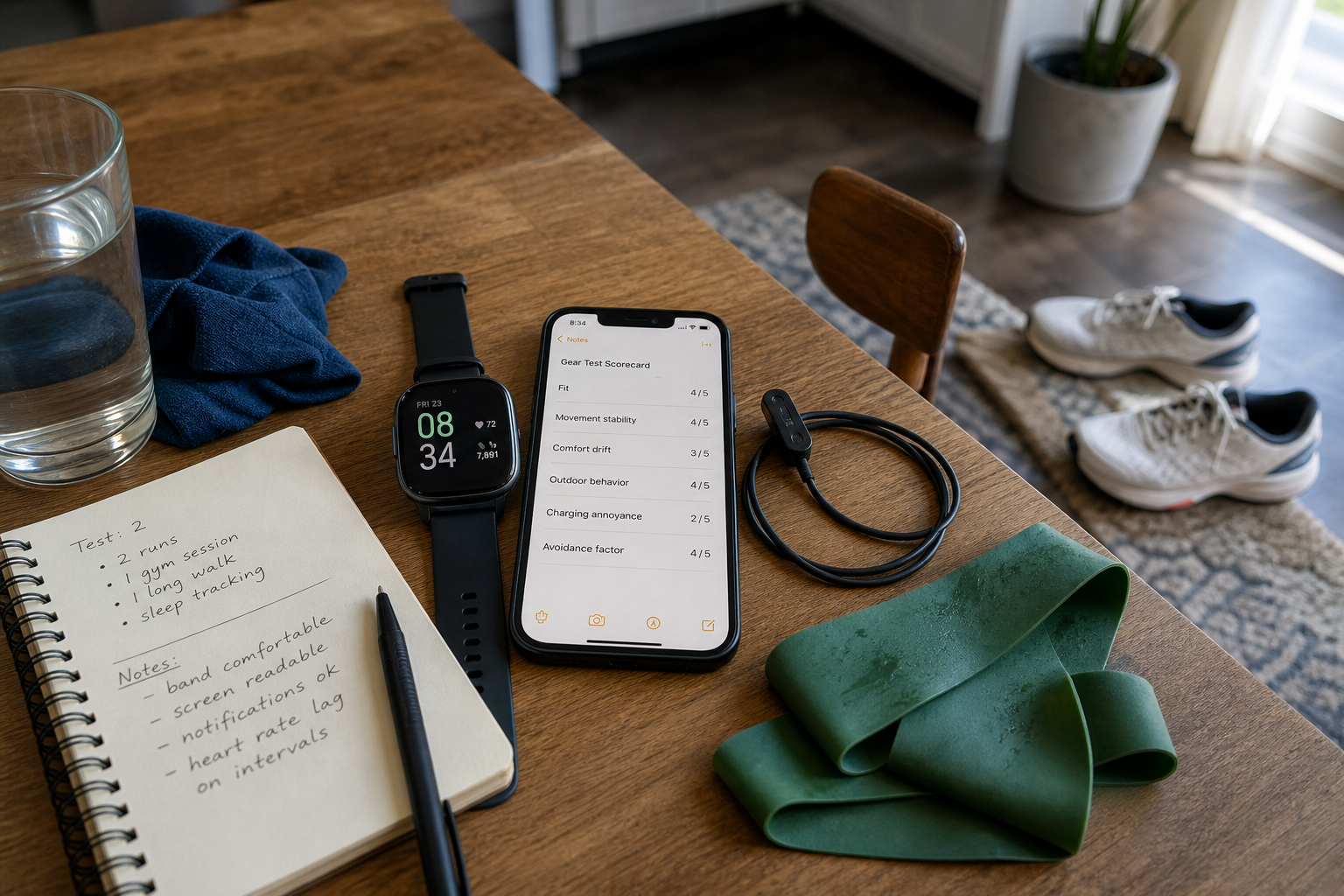
The Gear That Almost Made Me Skip
Skip this if you think missed workouts only come from broken gear. The stuff most likely to sabotage consistency is usually the stuff that technically works while adding just enough friction to make…
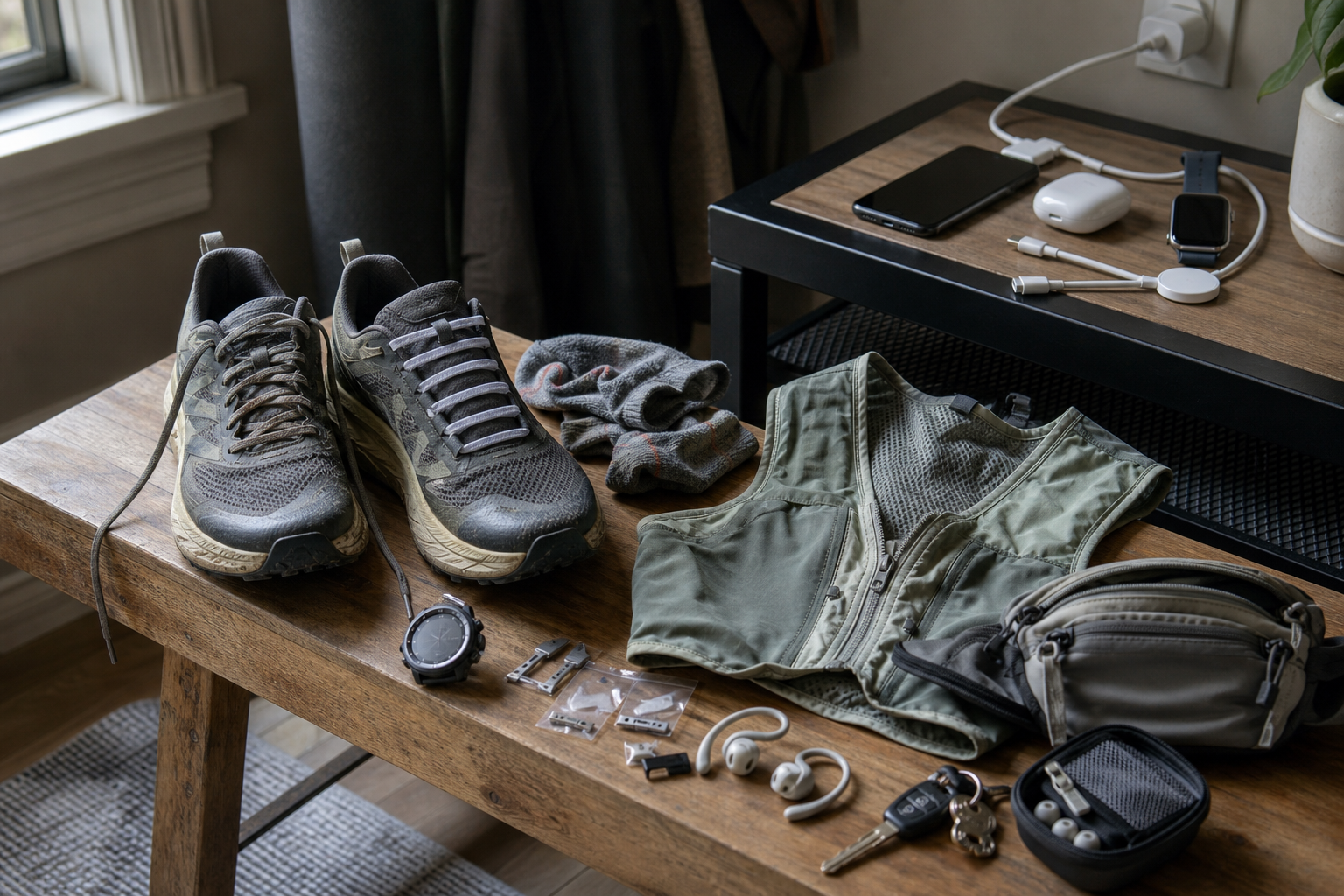
Skip this if you think missed workouts only come from broken gear. The stuff most likely to sabotage consistency is usually the stuff that technically works while adding just enough friction to make a normal training day feel annoying.
I spent two weeks building a little mental friction map of my workouts. Not a formal spreadsheet-heavy test, just a running log of every tiny delay that made me less likely to start, continue, or wrap up a session without irritation.
The surprising part was how rarely obvious defects mattered. I did not skip anything because a shoe exploded or a watch died completely. What almost got me were the micro-annoyances: a resistance band knotted around itself, earbuds needing reseating at mile two, socks bunching because I rushed my laces, and a charging setup that somehow required exactly the one cable not sitting near the door.
This reminded me a bit of what I talked about in How I Spot Fake Fitness Gear Claims Fast: flashy claims are easy to question, but small usability failures hide better because they do not look dramatic in a product listing.
Why I tried this
I had a stretch of very normal training on the calendar: trail runs, fast apartment strength sessions, and those rushed post-work workouts where you have maybe 40 minutes and no patience. On paper, my setup was fine. In practice, I kept noticing that the days most likely to get downgraded or shortened were not the hard days. They were the days where my gear asked for one extra step too many.
So for two weeks, I paid attention to three moments:
- Before the workout: what slowed me down getting out the door
- During the workout: what broke my rhythm without fully failing
- After the workout: what made reset and recovery more annoying than it should be
Week one: the friction was embarrassingly small
The first pattern showed up on trail runs. My watch itself was fine, but swapping straps and fastening everything cleanly was more fiddly than it should have been when I was trying to leave quickly. I ended up reducing that hassle with a set of quick-fit Garmin band connectors and a spare pair of quick-release watch band adapters so I was not fighting a tiny hardware problem five minutes before a run.
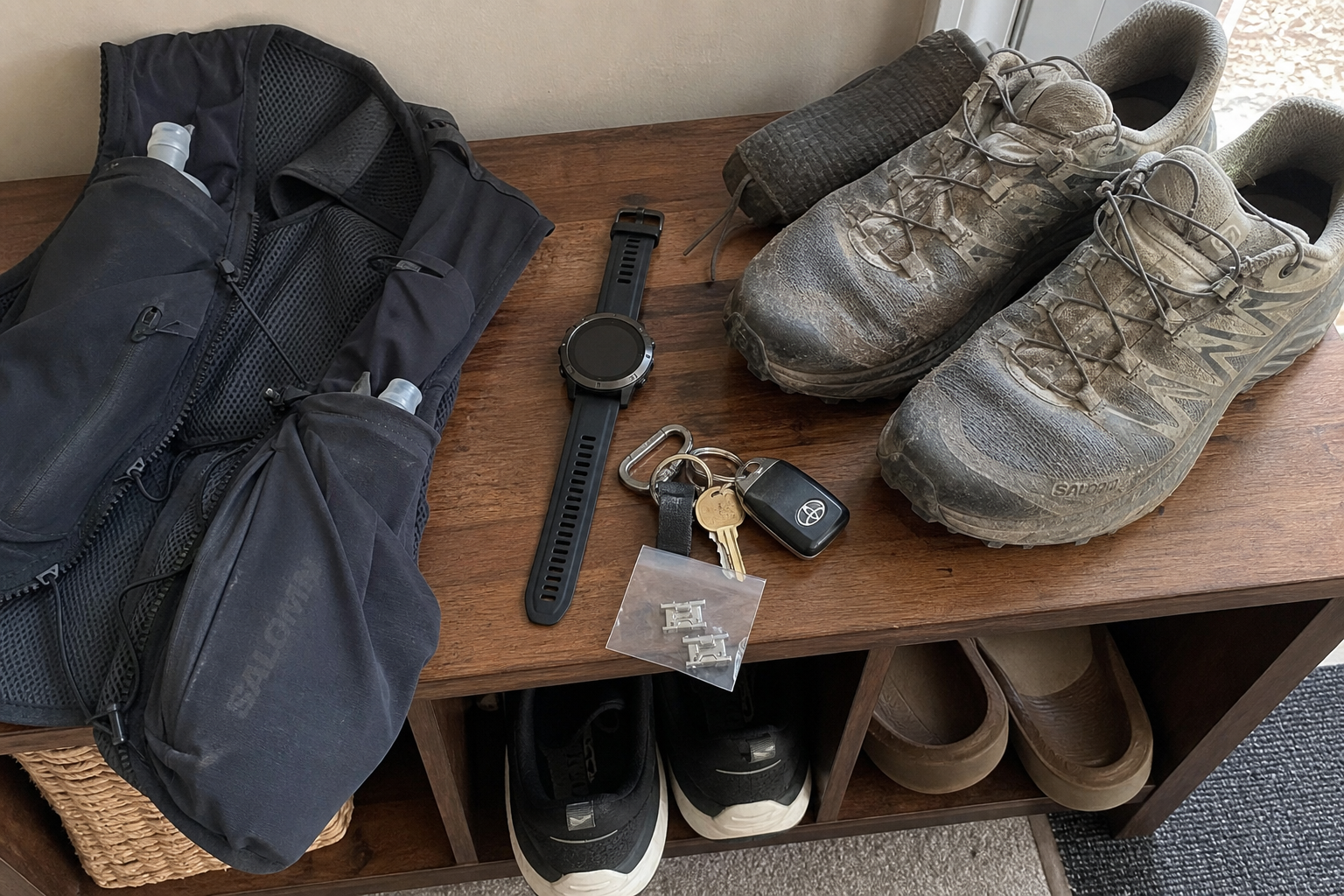
That did not make the watch more accurate. It made it less annoying, which honestly mattered more that week.
The second issue was laces. Not because they kept fully untying, but because on rushed days I would do a lazy tie job, my foot would shift, my sock would slide, and then I would spend the first ten minutes of a run negotiating with my shoe instead of settling in. I swapped one pair into no-tie elastic laces just to see whether they reduced that pre-run sloppiness. They did, especially for easy runs and casual daily wear shoes that pull double duty.
I would not put no-tie laces in every shoe I own. For technical trail descents, I still want more exact lockdown in some pairs. But for general training, they removed one of those tiny setup errors that kept echoing into the rest of the run.
Earbuds were the biggest during-workout offender. Mine were not bad enough to qualify as broken. They were just irritating enough that I kept pushing them back in at stoplights and on climbs. Adding silicone ear tips with hooks cut down the mid-run reseating a lot.
If I have to fix a piece of gear twice in one workout, that gear is borrowing motivation from the next workout too.
Apartment strength sessions exposed a different kind of friction
At home, the issue was not performance. It was setup drag. Bands that tangle are not dramatic, but they are weirdly effective at killing momentum when you only have 20 minutes between emails and dinner.
I kept noticing that small storage problems became workout problems. Earbuds tossed loose in a drawer meant five seconds here, fifteen seconds there, and sometimes a dead battery because the case or cable had wandered off. A basic earphone storage case sounds almost too boring to mention, but it kept my workout earbuds, small cable, and backup tips in one place instead of floating around my apartment.
That was one of the main lessons from this experiment: the cheapest fix was often not a better version of the main product. It was a side accessory that stopped the main product from becoming a chore.
Post-work workouts were where charging friction really showed up
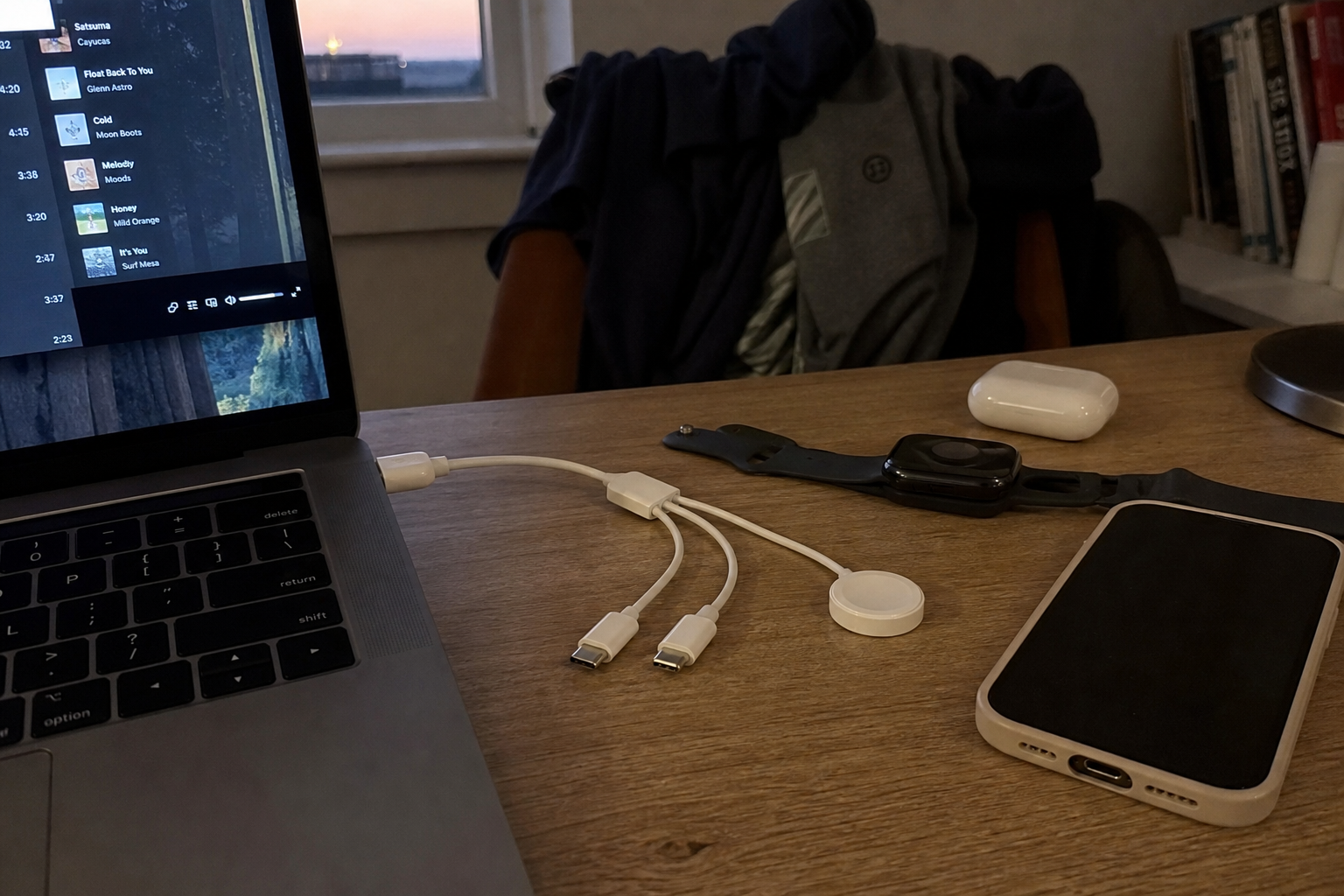
The worst near-skip of the two weeks happened after work on a weekday when I wanted to head straight out for a short run before sunset. My watch and earbuds both needed top-ups, and the problem was not battery life by itself. The problem was a fragmented charging setup that depended on the right cable being in the right room at the right time.
That is where a 3-in-1 magnetic watch and phone charging cable helped more than I expected. Not because it was magical, but because it reduced the number of charging decisions I had to make. One cable living in my bag handled more of the mess.
I had a similar result with run organization. I do not love carrying more than I need, and I really dislike hunting for keys or a gel after I am already dressed. A running waist pack with three zip pockets gave my small essentials fixed places, which meant fewer last-second laps around my apartment.
I covered a similar idea in I Built a Backup Fitness Kit From Overlooked AliExpress Gear, but this two-week test made the case more clearly: backup gear matters less when it exists in theory than when it removes a specific point of hesitation on a real weekday.
What changed by week two
By the second week, I stopped thinking in terms of “good gear” and “bad gear.” I started thinking in terms of where the drag showed up.
- A watch strap issue was usually pre-workout friction
- Earbud fit problems were during-workout friction
- Charging and storage messes became post-workout friction that attacked the next session
That framing helped me make smarter low-cost changes. I was not replacing working products just to replace them. I was trimming the annoying edges around them.
Some of the best fixes were backups, not upgrades. A second set of adapters, extra laces, extra ear tips, and a dedicated storage case all did more for consistency than another premium main device would have. If your current watch, shoes, or earbuds are 80 percent fine, the best value move is often solving the 20 percent of hassle around them.
What I’d do differently
If I repeated this experiment, I would start sooner with one rule: every frequently used item gets a fixed home. That includes cables, band accessories, and run carry gear. Too much of my friction came from stuff being technically available but not where I needed it.
I would also separate performance testing from consistency testing more clearly. A product can perform well once you are moving and still be a bad fit for real life if it is annoying to put on, charge, store, clean, or adjust.
And I would be more selective with “solutions.” Not every convenience accessory is worth adding. If it saves one second but creates more clutter, it is just friction in a different costume.
My Verdict
After two weeks, the biggest takeaway was simple: the gear most likely to derail consistency is usually not the gear that breaks, but the gear that keeps asking for tiny acts of patience. The best fixes were inexpensive accessories that removed effort before, during, or after training, especially around charging, carry, fit, and setup. When I judge value now, I care less about whether a product performs in the workout alone and more about whether it saves effort across the whole routine. That is where cheap, overlooked problem-solvers can earn their place.
Disclaimer: As an aliexpress Associate, I earn from qualifying purchases.