The 30-Second Mobility Ladder I Use on Stuck Days
There’s a strange little pocket of time I’ve started loving in summer: that minute while the kettle hums, the shower turns from cold to usable, or a file crawls toward 100 percent. Those mundane…
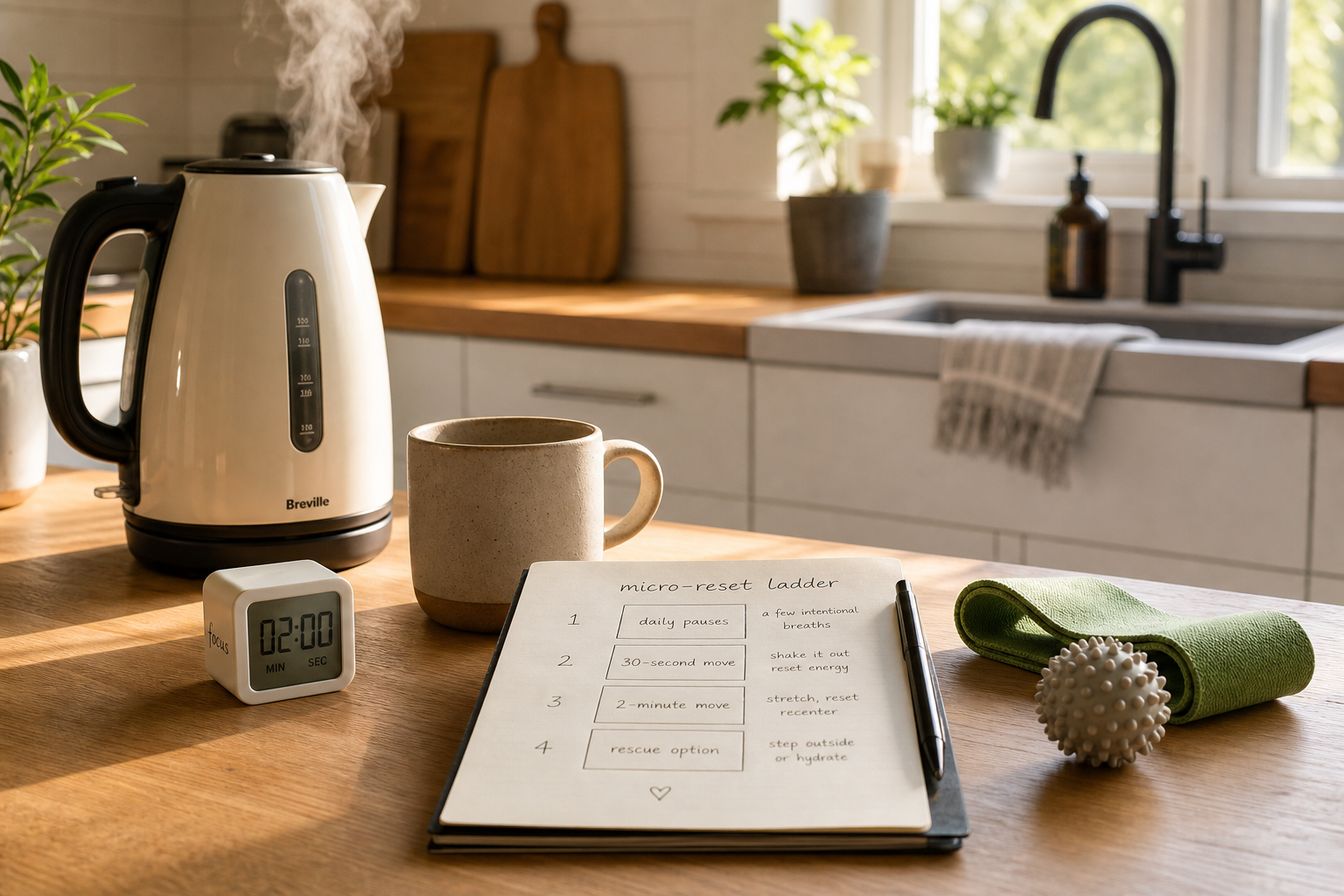
There’s a strange little pocket of time I’ve started loving in summer: that minute while the kettle hums, the shower turns from cold to usable, or a file crawls toward 100 percent. Those mundane waits used to feel like dead air to me. Now they’re where I hide some of my most reliable mobility resets.
The key idea is a micro-reset ladder: instead of trying to “find time for a session,” you match one tiny movement option to pauses that already exist in your day. No pep talk, no outfit change, no mat negotiation. Just a physical check-in placed inside the hidden architecture of a normal day.
If you’ve read my piece on how to stop all-or-nothing thinking about fitness, this is that mindset in practice. We’re not asking, “When will I do a full routine?” We’re asking, “Where does my day already pause, and what body part could use that pause?”
Step 1: Find your built-in pauses first
Before you choose any stretches or mobility drills, look for the moments that happen without effort. These are the anchors. They matter more than the perfect move.
Start by listing the small delays that already show up most days:
- Waiting for the kettle or coffee to brew
- Standing by the microwave
- Waiting for a file to upload or download
- Letting the shower warm up
- Brushing your teeth
- Standing on hold during a call
- Waiting for a meeting to start
I like these because they’re repeatable. They remove decision fatigue. If you already know the pause is coming, you don’t have to negotiate with yourself when your energy is low.
Consistency is often less about carving out time and more about placing movement inside time that was already there.
Step 2: Build three rungs of the ladder
Your ladder needs three levels: 30 seconds, 2 minutes, and 5 minutes. The point is not to always climb to the top. The point is to have a next step that still feels possible.
- 30 seconds: your easiest “I can do this even if I’m grumpy” option
- 2 minutes: a slightly fuller reset when you have a little more margin
- 5 minutes: your best momentum-recovery option when you want to feel genuinely better
On the lowest-energy days, I only need rung one. That still counts. In fact, it counts a lot, because it keeps the habit thread unbroken.
Step 3: Match one body area to one pause
To keep this practical, assign a simple mobility action to a specific daily delay. I’d focus on the areas that tend to get cranky from screens, chairs, and general modern life: wrists, thoracic spine, ankles, and breath.
For wrists: pair it with computer loading time
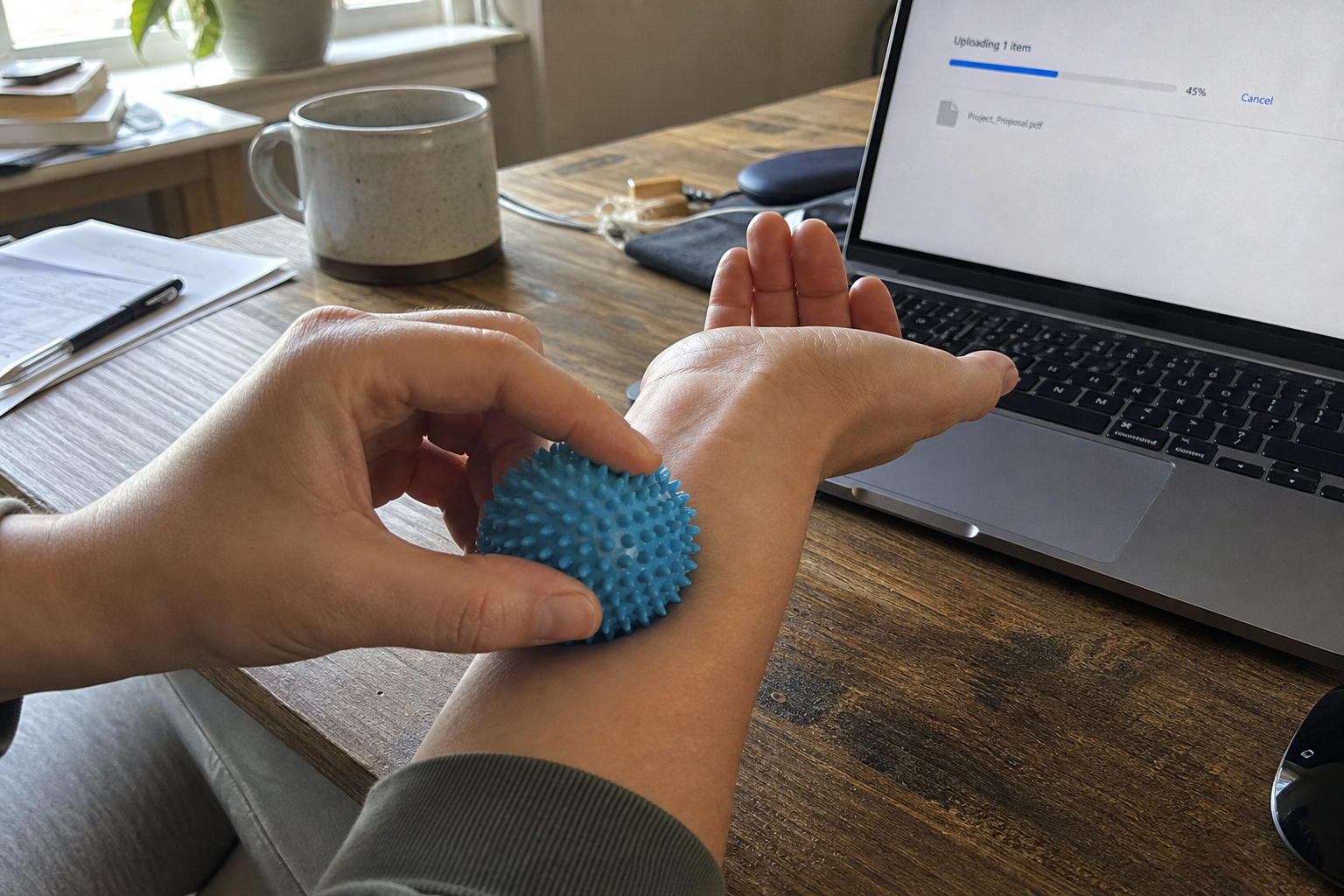
If your file is uploading or an app is launching, do a 30-second wrist reset beside your desk.
- 30-second move: palm circles and finger spreads
- 2-minute move: tabletop wrist rocks on a desk edge or countertop
- 5-minute move: wrist rocks, forearm stretch, then gentle fist-to-finger extension reps
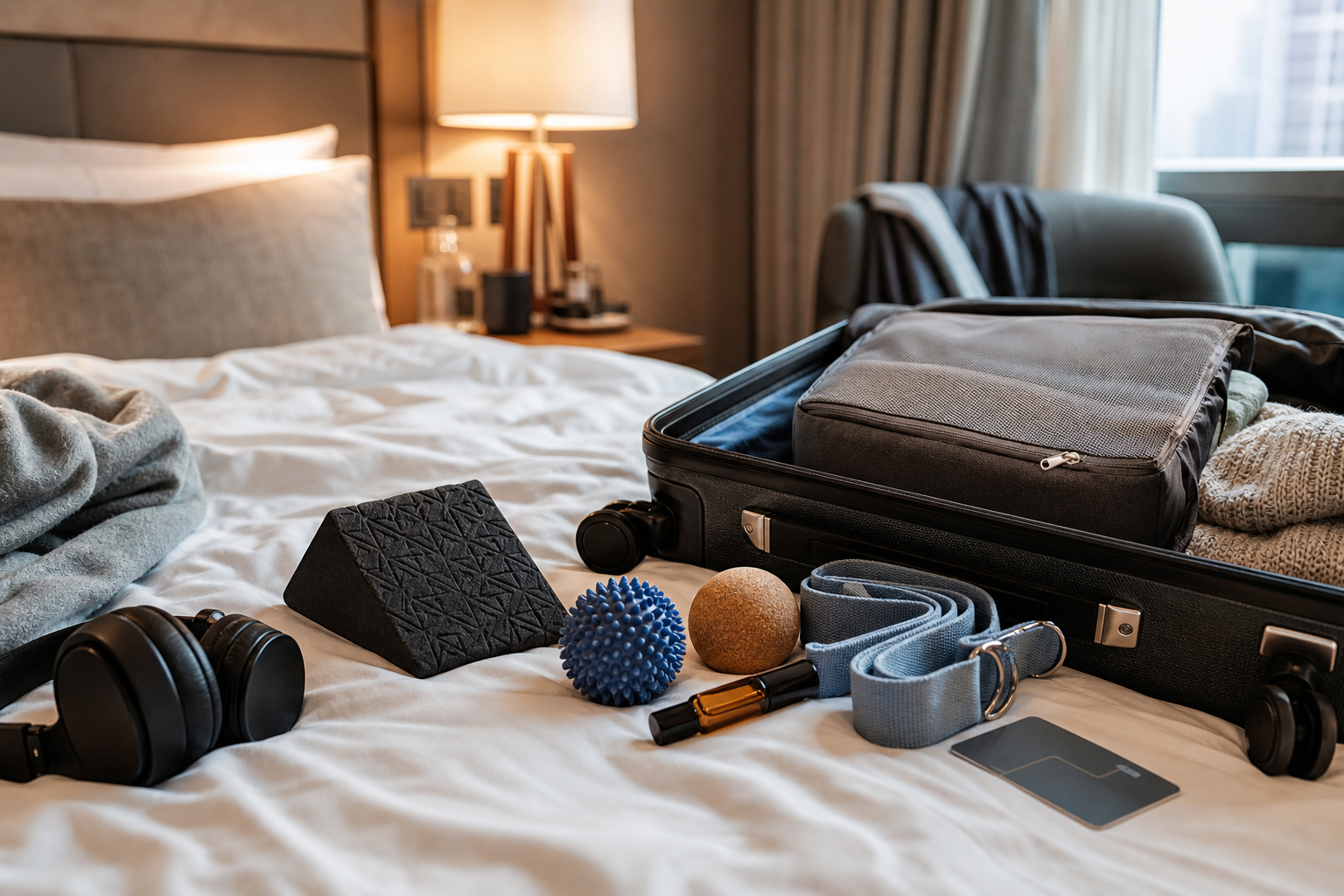
If you like a tactile cue, a small spiky massage ball can make these pauses easier to notice and use. I’d keep one near my laptop and roll through the palm or forearm lightly for a few breaths.
For thoracic spine: pair it with the kettle
The kettle is perfect for upper-back mobility because you’re already upright and waiting.
- 30-second move: clasp hands, reach forward, then open arms wide and gently rotate
- 2-minute move: standing cat-cow plus slow thoracic twists
- 5-minute move: standing side bends, thread-the-needle at a counter, and chest-opening reaches
If you want a little more feedback without setting up equipment, a light mini loop resistance band can work well for a few band pull-aparts or gentle no-money drill reps in that 2-minute window. It’s not essential, just handy when you want your posture reset to feel a bit more defined.
For ankles and feet: pair it with the shower warming up
This is one of my favorites because it turns a throwaway minute into something surprisingly useful.
- 30-second move: ankle circles, 15 seconds each side
- 2-minute move: calf raises and slow knee-over-toe ankle rocks
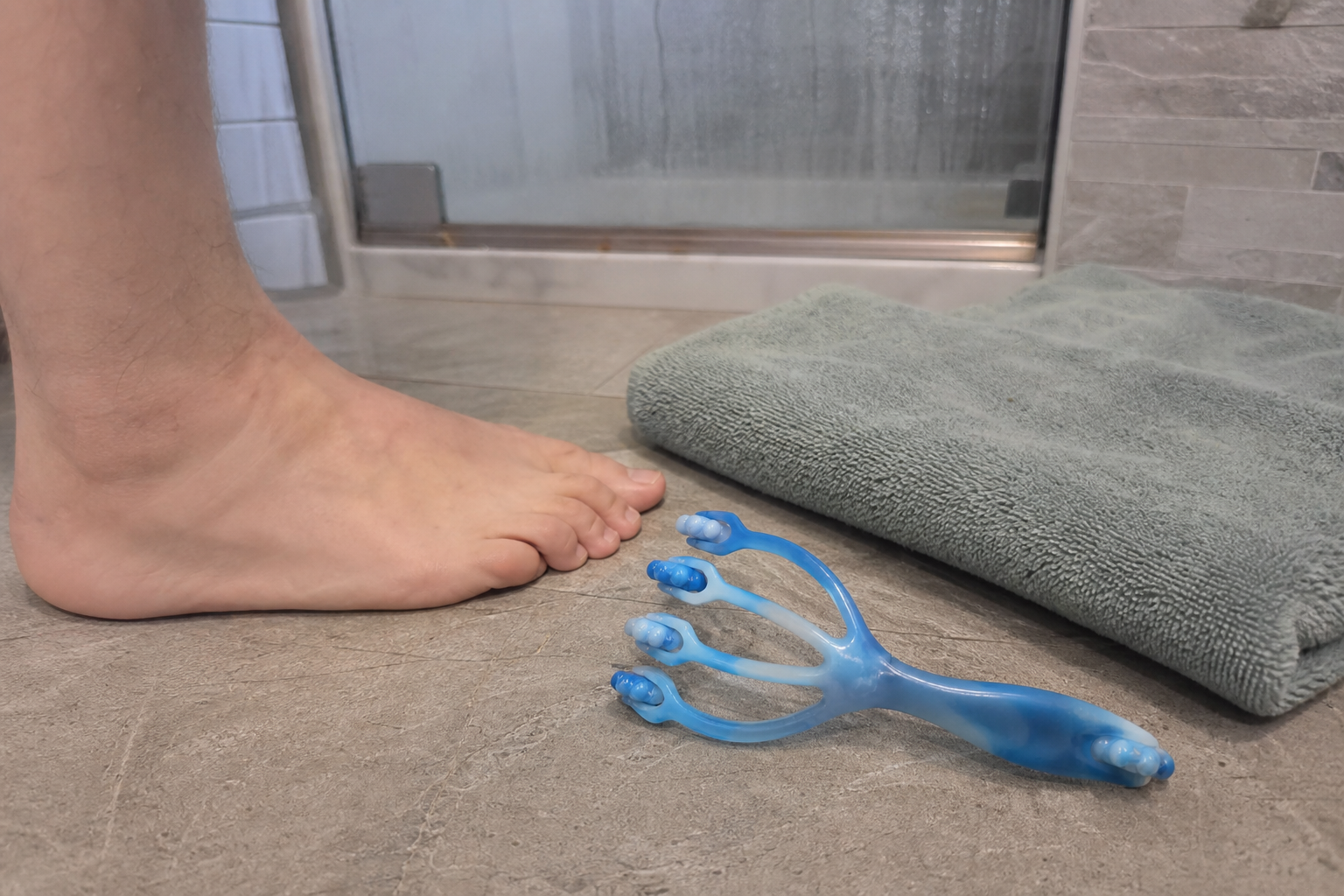
- 5-minute move: ankle circles, calf raises, toe lifts, then foot rolling
A compact tool like the four-claw roller massager can be a decent foot or calf wake-up if you like sensory input, though personally I’d still keep the movement itself as the main event.
For breath: pair it with any transition
Breath is the easiest reset to weave into your day because it asks for almost nothing externally. The trick is to make it concrete.
- 30-second move: three slow exhale-focused breaths
- 2-minute move: box breathing or 4-in, 6-out nasal breathing
- 5-minute move: seated breathing with one hand on ribs and one on chest, focusing on lateral rib expansion
If a visual cue helps, a portable breathing trainer exists, but I’d call it very optional here. For most readers, counting breaths is enough. I’d only use a tool like that if you enjoy gadgets and they genuinely make you more likely to pause and breathe.
Step 4: Make the first rung absurdly easy
This is the part most people skip. They build a beautiful 5-minute plan and then feel like they failed when they don’t do it.
Your 30-second rung should feel almost too small. That’s the point. Some good options:
- 3 deep breaths by the sink
- 10 ankle circles while the shower warms
- 5 band pull-aparts while the kettle boils
- Palm stretch during a file upload
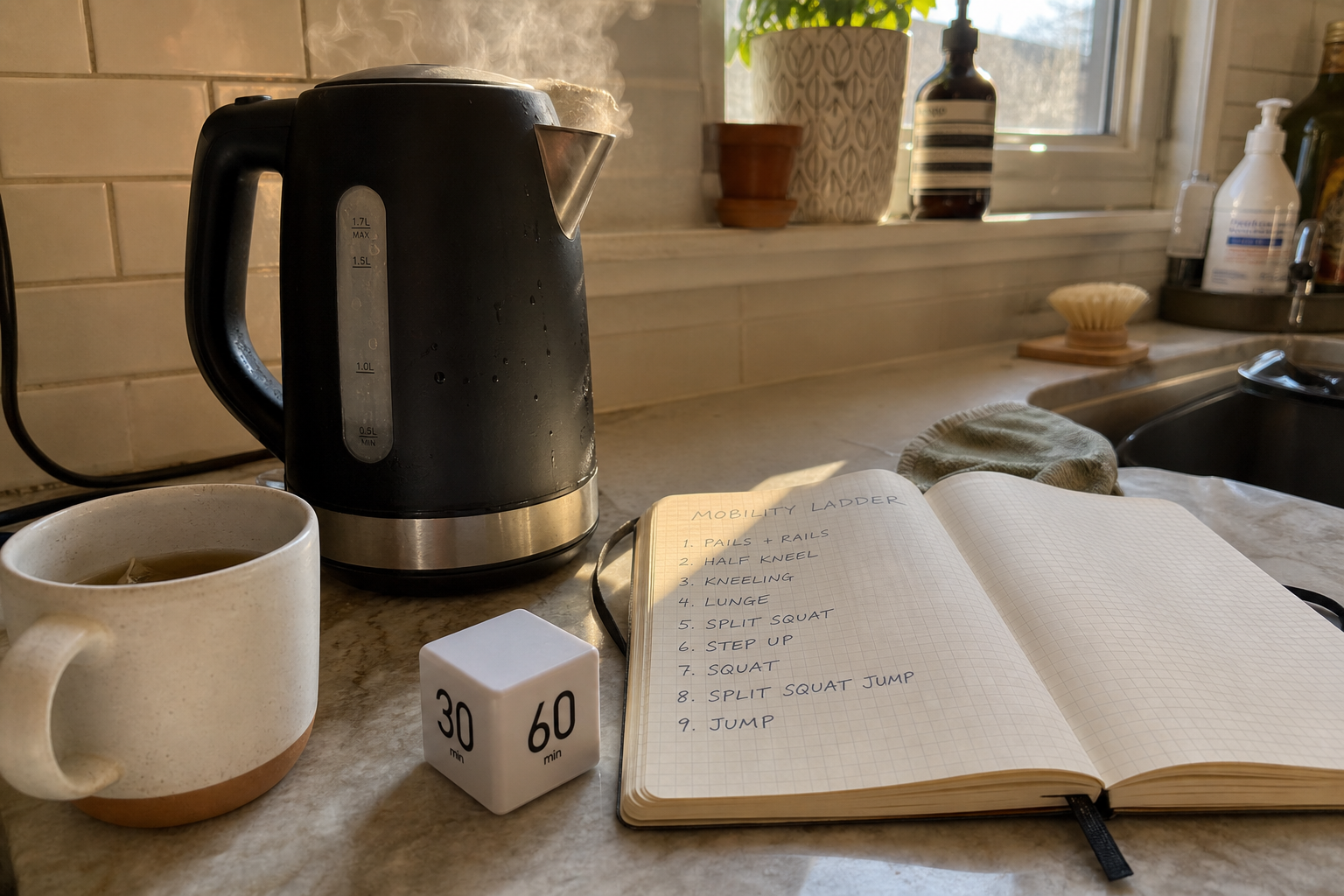
If you want an external cue, the cube timer is the kind of inexpensive, compact thing I actually like for this. Flip it, do one tiny reset, move on. It lowers friction, which is often more useful than adding intensity.
Step 5: Create a rescue option for resistance
Every good ladder needs a floor. Mine is what I do when even the 30-second plan feels annoying.
Your rescue option should be smaller than your smallest rung. Examples:
- One full inhale and one long exhale
- Roll shoulders back twice
- Stand up and circle one ankle
- Touch the wall and reach one arm overhead
This may sound ridiculously minimal, but it works because it interrupts the “I guess I’m doing nothing” spiral. That’s also why I liked writing The Mobility Menu That Meets Your Mood: sometimes the win is not doing more, but reducing the amount of choosing your brain has to do.
Step 6: Keep tools optional and visible
I’m very pro-prop when it removes friction and very anti-prop when it becomes another project. If you want to support this pause-based approach, keep tools tiny, cheap, and out where you’ll actually see them.
A few that fit this style well:
- A cube timer on the kitchen counter or desk
- A mini loop band hung on a drawer pull for thoracic or shoulder work
- A spiky massage ball by the laptop or couch
If you want more ideas on reducing startup friction, my post on building a tiny home movement corner that gets used gets into the environmental side of this. Same principle, just applied to space instead of pauses.
Step 7: Fill out your micro-reset template
Here’s the simplest version I know. Copy it into your notes app, journal, or the back of a receipt if that’s what’s nearby.
| Prompt | Your answer |
|---|---|
| My daily pauses | ________________________________ |
| My 30-second move | ________________________________ |
| My 2-minute move | ________________________________ |
| My 5-minute move | ________________________________ |
| My rescue option when I resist | ________________________________ |
A sample version might look like this:
- My daily pause: waiting for the kettle
- My 30-second move: 3 breaths plus arm reach
- My 2-minute move: thoracic twists and standing cat-cow
- My 5-minute move: band pull-aparts, side bends, counter stretch
- My rescue option when I resist: one slow exhale
A quick caution before you start
Caution: keep these resets gentle and pain-aware. The goal is to create a repeatable mobility habit, not to force range of motion in the middle of a random Tuesday. If a move causes sharp pain, numbness, or dizziness, skip it and choose an easier option.
Closing Thoughts
A micro-reset ladder works because it respects real life. Instead of waiting for the perfect session, you use the pauses already built into your day and give each one a tiny physical job. Optional tools like a timer cube, mini band, or massage ball can help lower friction, but they’re not the magic part. The real shift is noticing the hidden structure of your day and placing movement inside it on purpose.
Disclaimer: As an aliexpress Associate, I earn from qualifying purchases.