Stop Upgrading Shoes and Fix Your Front Door
I’ll confess this up front: I think a lot of beginner runners use shoe shopping as a very polished form of procrastination. I’ve watched people spend more energy comparing foam and carbon plates than…
I’ll confess this up front: I think a lot of beginner runners use shoe shopping as a very polished form of procrastination. I’ve watched people spend more energy comparing foam and carbon plates than figuring out where their socks dry on a Tuesday night.
Here’s the scene that keeps proving me right. Two runners have basically identical fitness, similar work schedules, and the same goal race. The one with the cheaper setup trains more consistently—not because their shoes are magic, but because their entryway works, their laundry flow makes sense, the light is easy to switch on at 5:30 a.m., and their running gear lives in one obvious place.
That’s my position: beginner runners obsess too much over shoe upgrades and not enough over building a repeatable pre-run environment at home. Endurance progress usually doesn’t break down because your daily trainer is one model behind. It breaks down because getting out the door feels like solving four small problems before coffee.
The boring stuff is usually the real training bottleneck
When a weekday run keeps getting skipped, most people blame motivation, weather, or not owning the “right” gear. Sometimes that’s true. But a lot of the time, the real issue is a messy launch point inside the house.
If your reflective gear is buried in a random drawer, your watch is charging in another room, one shoe is still damp, and your clean socks are mixed into regular laundry, that run already has friction. Not huge friction. Just enough to make “I’ll go later” sound reasonable.
Consistency is often built before the first step of the run.
I’ve seen this over and over with beginners. The runners who look disciplined are often just reducing decisions. They don’t wake up more heroic than everybody else. They just know where everything is.
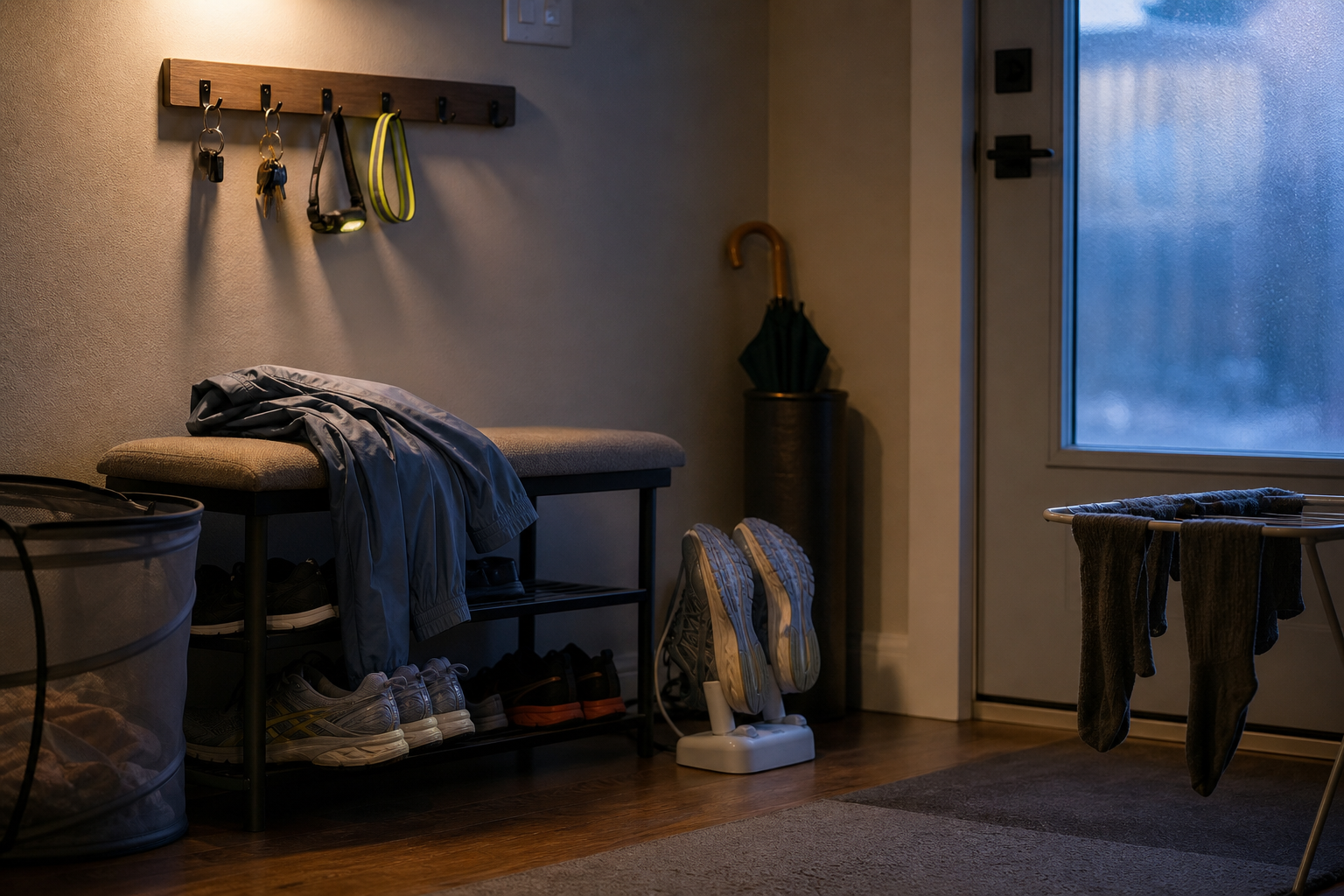
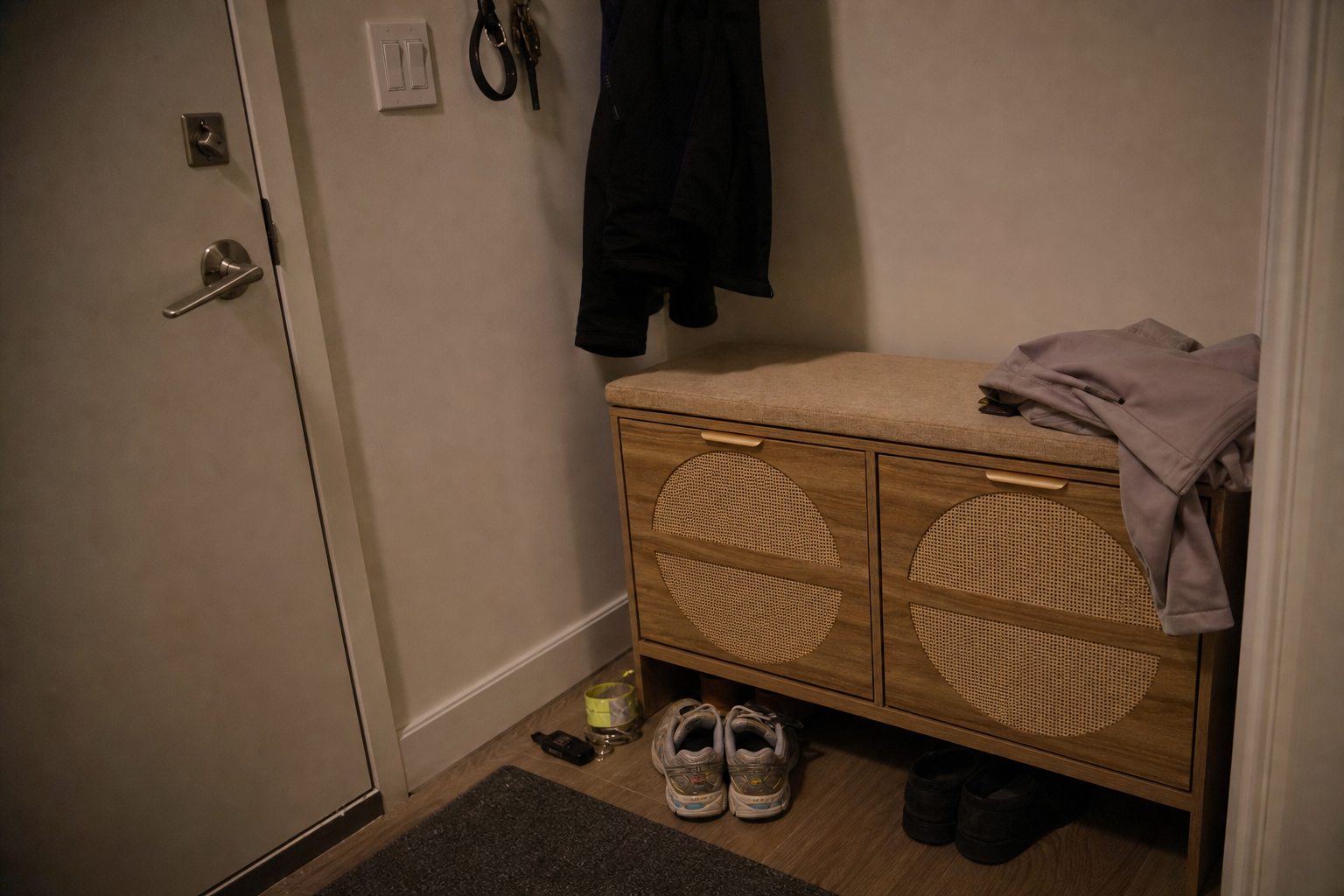
A simple home setup can do more for weekly consistency than another flashy upgrade. Something like a shoe bench with storage by the door gives your shoes, hat, gloves, and extras a home. A wall key holder with hooks keeps keys, reflective bands, and maybe even your chest light or hat from disappearing into the house.
The invisible logistics that quietly shape your mileage
Most running advice starts once you’re outside. I think that’s too late. A lot of endurance habits are decided by tiny home logistics that don’t look athletic at all.
- Where your socks dry: if your good running socks are always still damp or lost in a pile, you’ll stall.
- Where reflective gear lives: if dawn or evening gear isn’t visible, you’ll “forget” it or talk yourself out of going.
- How wet shoes air out: damp shoes make the next run feel gross before it starts.
- Where sweaty clothes land: if post-run laundry becomes a clutter bomb, tomorrow’s run gets harder.
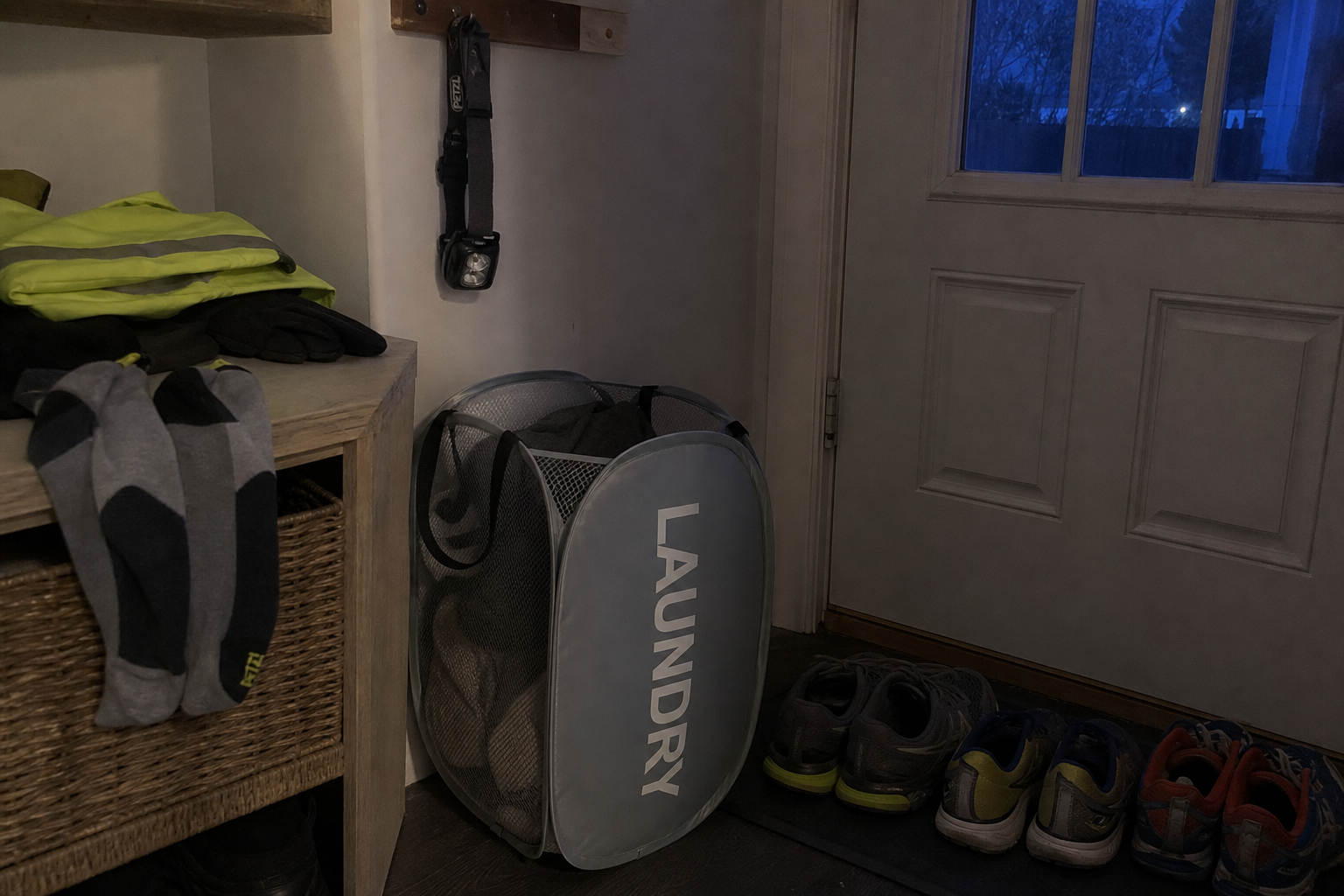
This is why I’d rather see a beginner solve the house system than chase another speed promise. A cheap USB rechargeable headlamp can save a dark morning run. A breathable pop-up laundry hamper can be the difference between sweaty gear getting handled today or becoming tomorrow’s excuse.
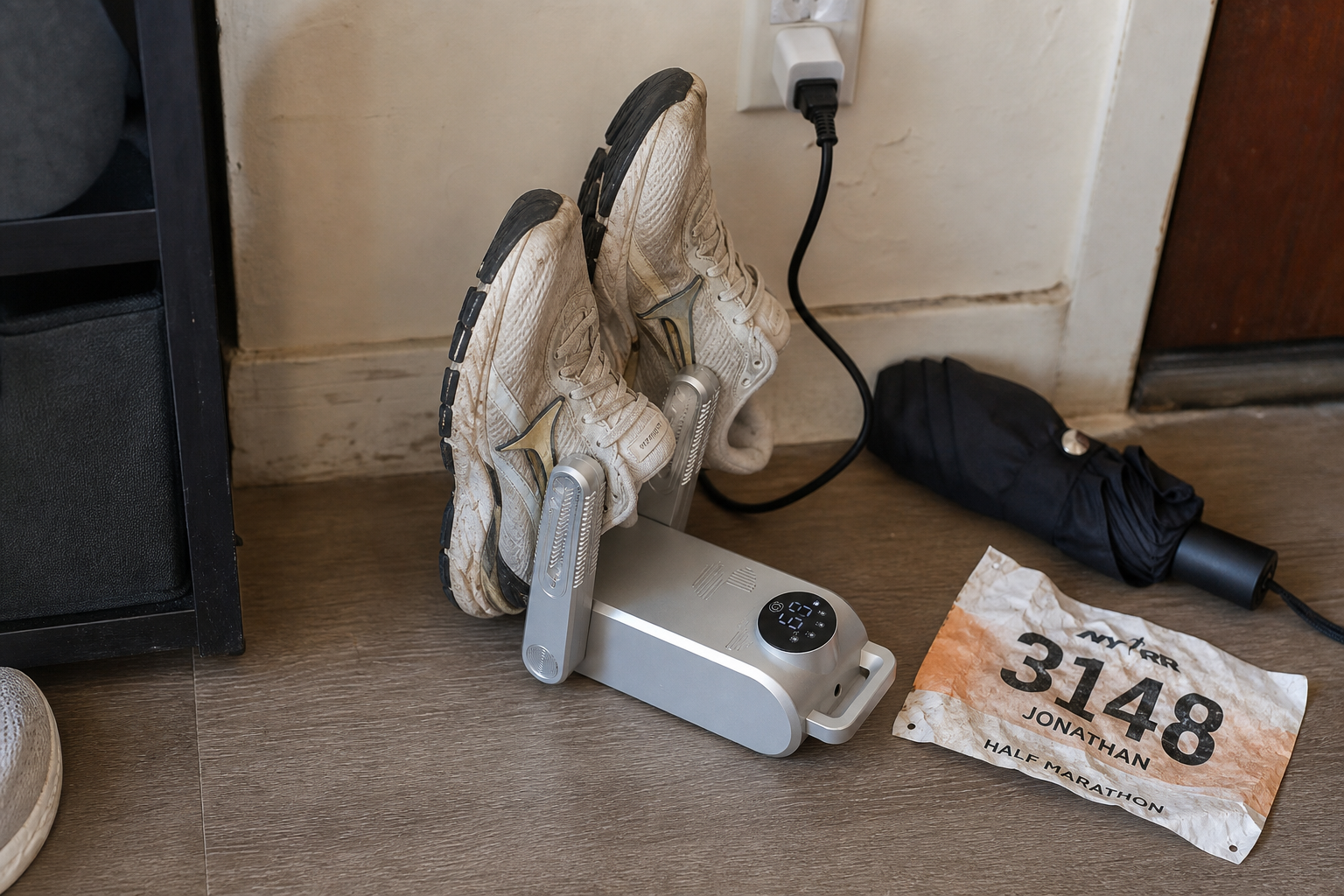
I’m also a big believer in drying shoes on purpose if you run through rain, dew, or winter slush. Something like the shoe dryer is not glamorous, but wet shoes shoved in a corner are a quiet consistency killer.
Do a five-minute audit of your weekday launch point
If you want one practical challenge from this piece, it’s this: audit the exact spot where your weekday runs begin. Not your goals. Not your playlist. The physical launch point.
Stand where you usually get ready and ask yourself what actually slows you down. I’d look for the three biggest sources of delay or excuse-making.
- What do you have to search for every time?
- What tends to be damp, dead, missing, or in the wrong room?
- What part of the routine makes a dark or rainy morning feel twice as hard?
Be honest here. If your keys wander, that matters. If your socks never fully dry in one place, that matters. If you avoid early runs because the hallway light is harsh, the doorway is cluttered, or your visibility gear is annoying to find, that matters too.
This is the same thinking behind reducing race-day chaos in my pacing kit post. Friction adds up. And if your weekday runs are inconsistent, I’d argue your home setup deserves attention before your next shoe tab does.
The counterargument: yes, shoes matter—but not as much as people think
I’m not saying shoes are irrelevant. If a pair fits badly, beats up your feet, or is truly worn out, replacing it is smart. And if you’re building toward longer distances, comfort matters a lot.
But beginners often act like the next shoe upgrade will unlock discipline. It usually won’t. A nicer midsole does not solve clutter, poor lighting, lost keys, wet shoes, or a laundry situation that turns every run into a scavenger hunt.
If you’re already training consistently, sure, better footwear can make the experience nicer. But if you’re missing two weekday runs a week because your mornings feel chaotic, the performance gain you need is probably organizational, not technological. That’s also why I keep pushing simple systems in pieces like why walking breaks make you a faster runner: progress usually comes from repeatable habits, not ego-driven upgrades.
A simple low-cost reset for your runner’s corner
You do not need a Pinterest-perfect mudroom. You need one small zone that makes running the easy option.
- Put a key holder with hooks by the door for keys, reflective gear, and the little stuff that disappears.
- Use a storage bench if your shoes and layers are always spilling into the walkway.
- Keep a collapsible laundry hamper close enough that sweaty gear goes in immediately, not onto a chair.
- Charge and stash a small headlamp in that same zone if you run early or late.
- Give wet pairs a real drying plan with a boot and shoe dryer instead of hoping they’ll be fine by morning.
None of that is sexy. That’s exactly why it works. It matches the kind of budget-friendly, utility-first setup I think most new runners actually need: less aesthetic perfection, more “can I get out the door in three minutes without thinking?”
The Bottom Line
If you’re new to running, I’d worry less about looking like an elite runner and more about making your home routine boringly easy to repeat. Good shoes matter, but they rarely matter more than clear storage, dry gear, decent light, and a place for the stuff that usually goes missing. The downside is that home logistics are not fun to brag about, and they won’t scratch the upgrade itch. The upside is that they quietly make more runs happen, and more runs are still the simplest path to better endurance.
Disclaimer: As an aliexpress Associate, I earn from qualifying purchases.