How to Build a Recovery Lunch Kit That Prevents the 2 P.M. Crash
It’s 2 p.m., your brain is foggy, your inbox is still moving, and there’s a workout sitting later in the day like a promise you may or may not keep. Maybe you still have errands, pickup, or one more…
It’s 2 p.m., your brain is foggy, your inbox is still moving, and there’s a workout sitting later in the day like a promise you may or may not keep. Maybe you still have errands, pickup, or one more meeting to survive first. This is the window where recovery nutrition quietly begins—not after training, but hours earlier, when under-fueling sets up the energy dip, random snacking, and lousy sleep that follow.
I’m very biased toward low-effort systems over aspirational meal prep, so this guide is not about packing a perfect lunch. It’s about building a repeatable recovery lunch kit that helps you stay steady through the afternoon and show up better for evening movement.
If you already liked the idea of reducing friction in your routine, this pairs well with how to build a recovery station that actually gets used. Same principle, different part of the day: make the good choice the easy choice.
Step 1: Understand what the kit needs to do
A workday recovery lunch kit has one job: carry you from late morning fatigue to evening training without leaving you ravenous, sluggish, or grazing on whatever is closest.
The anatomy is simple. Each kit should include:
- One hydrating produce item
- One protein that holds well
- One carb that steadies energy
- One salty element for sweat recovery and flavor
- One texture or flavor booster so it feels like lunch, not a compliance exercise
If your lunch is too light, too dry, or too joyless, your 4 p.m. self will go looking for compensation.
Step 2: Pick a few inexpensive tools that make the system portable
I do not think you need a gear haul to eat well. But a few cheap, practical tools can make this setup much more repeatable.
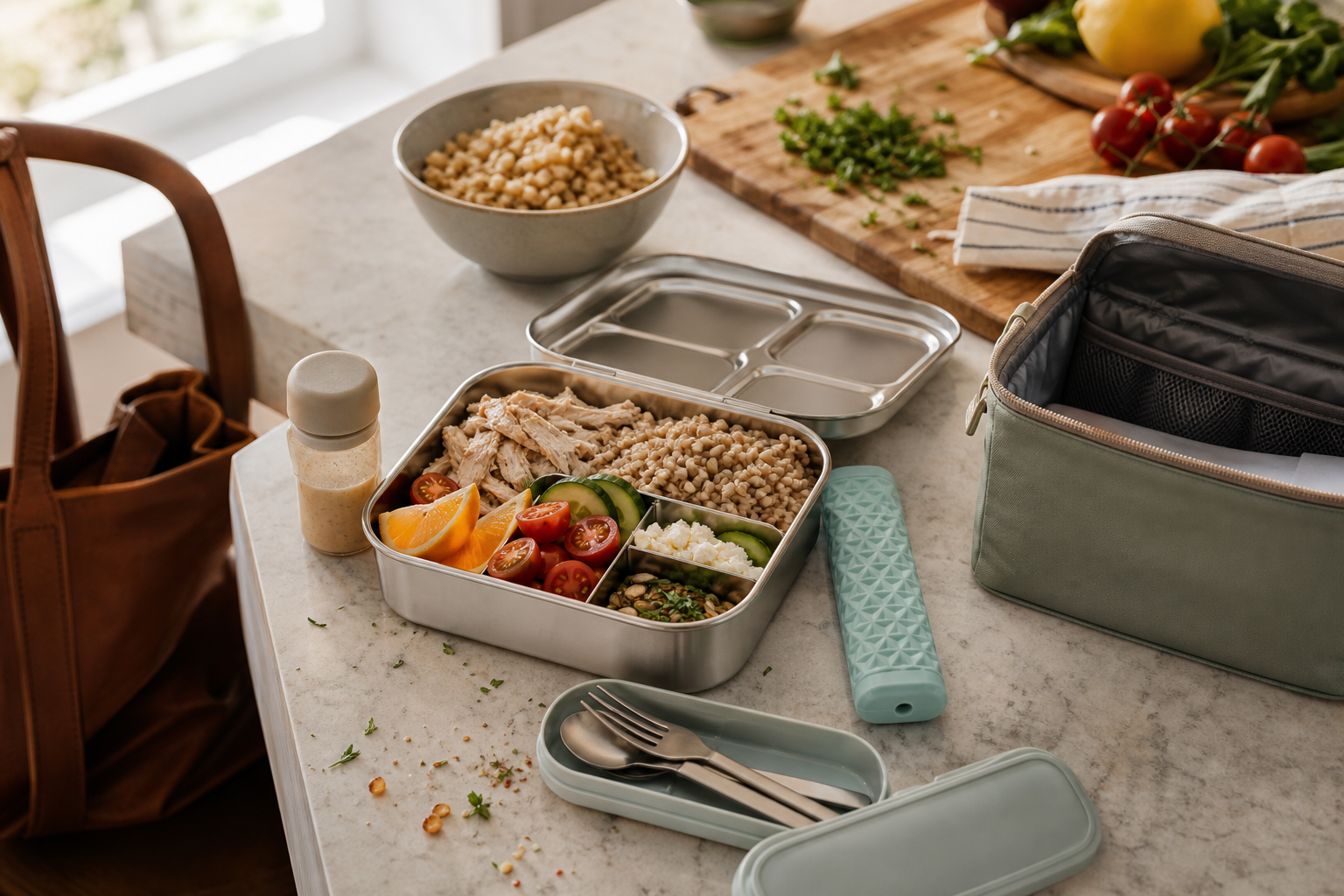
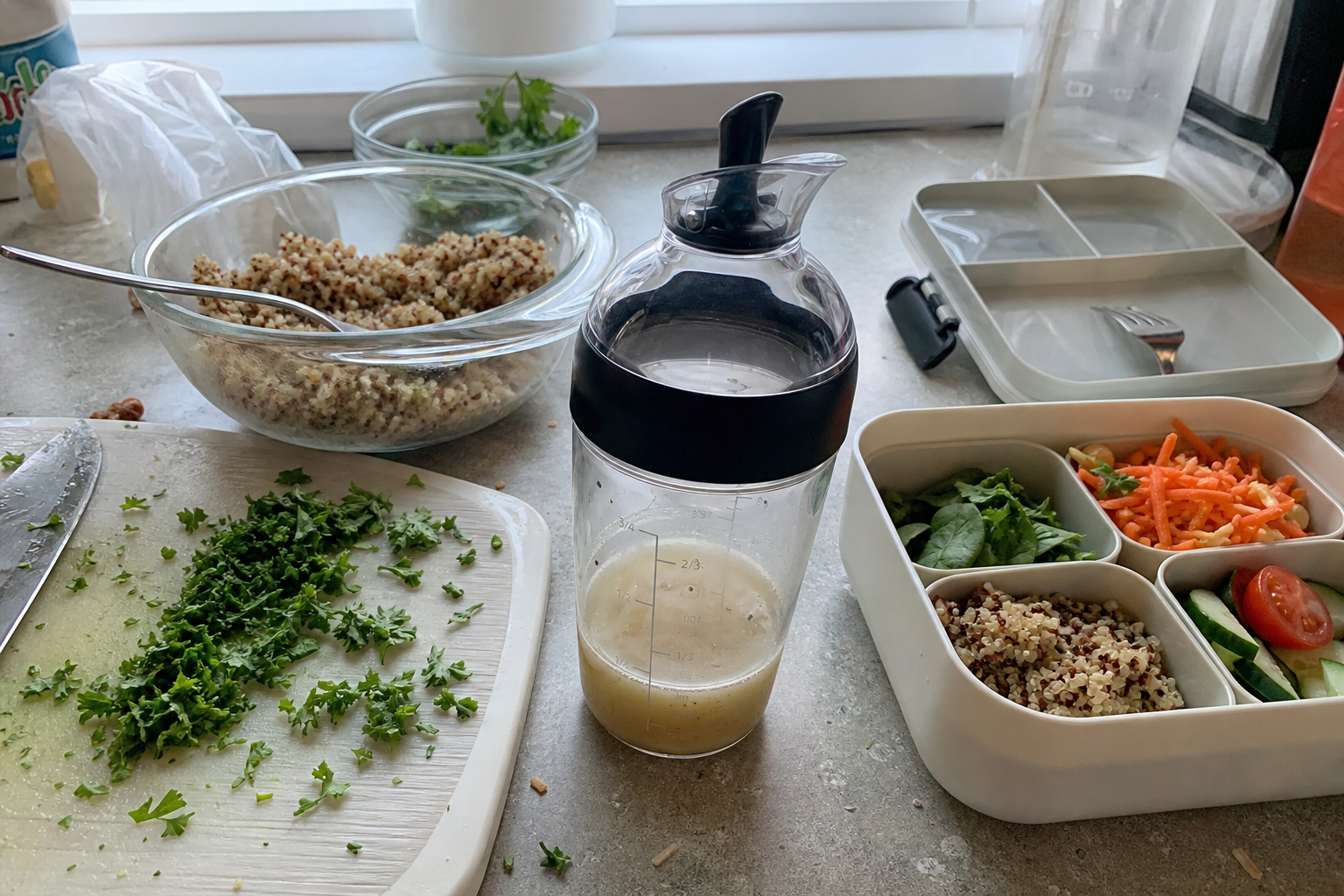
A divided container helps keep wet and dry ingredients from turning into a sad, soggy mash. I like a stainless steel bento box for exactly that reason.
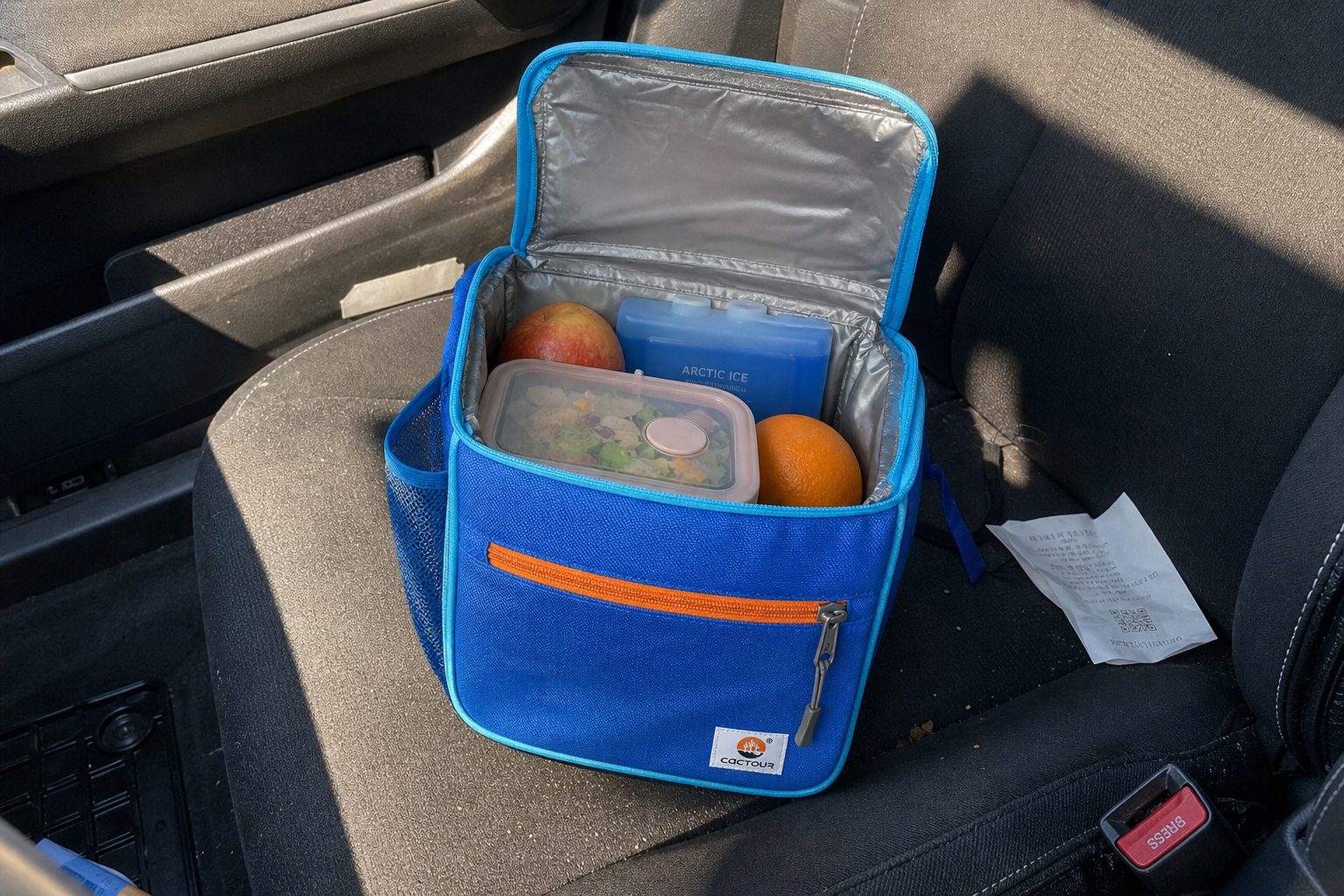
For commuting or long days out, a compact cooler matters more than most people realize. A small mini insulated lunch bag keeps the whole kit more forgiving if you can’t get to a fridge right away.
And if you want salad, grain bowls, or chopped veg to stay edible by lunchtime, a tiny leakproof dressing bottle earns its place fast.
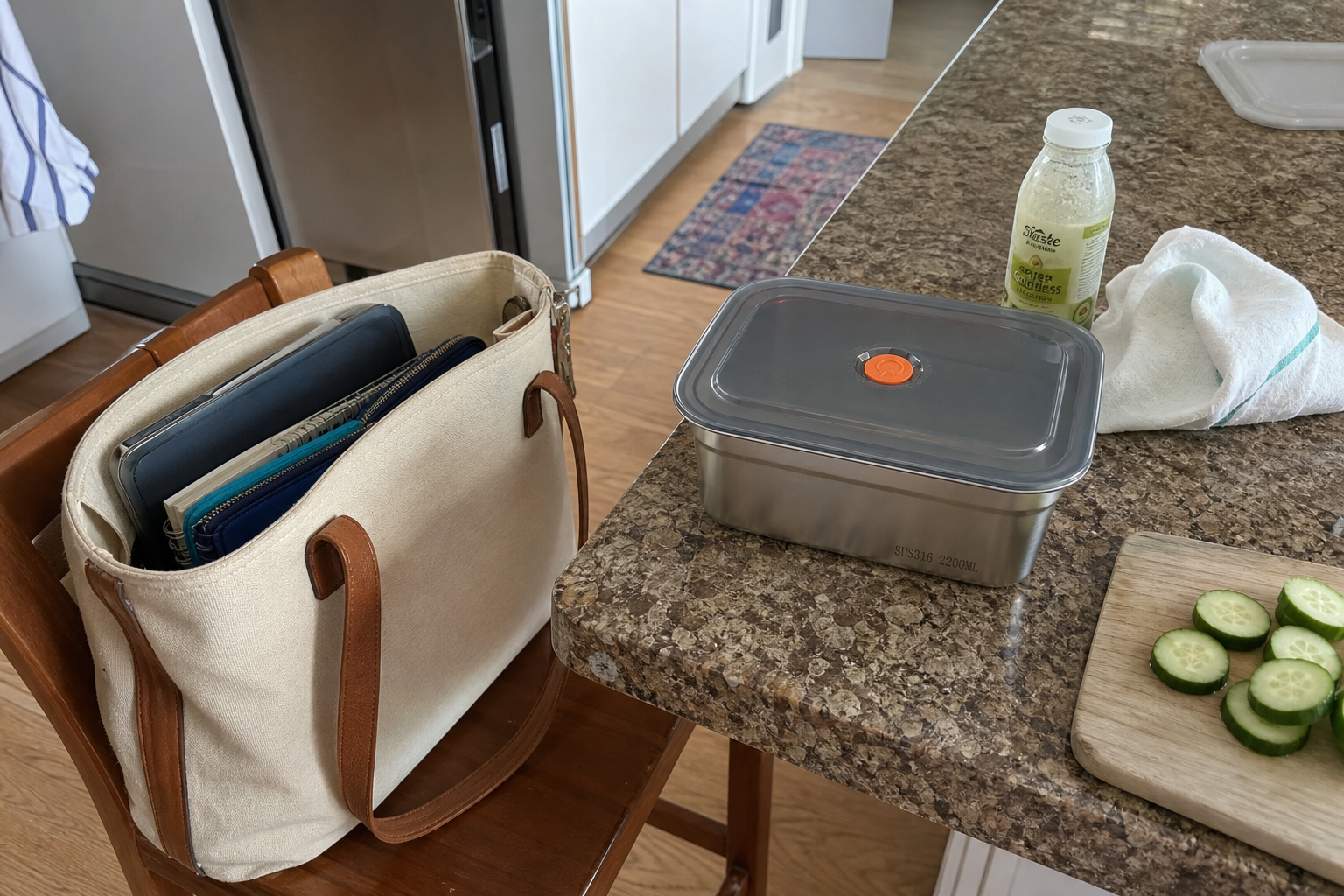
Two more items save me from the “I packed food but forgot how to eat it” problem: a compact utensil set and a couple of slim reusable ice packs. None of this is glamorous. That’s why it works.
Step 3: Build the five-part lunch kit
1. Choose one hydrating produce item
This is your built-in fluid support, especially helpful if you’re heading into an evening workout already a little behind on hydration.
- Cucumber slices
- Cherry tomatoes
- Orange wedges
- Watermelon cubes
- Strawberries
- Celery or snap peas
Farmers market produce shines here because the flavor is better, which means you’re more likely to eat it. The goal is not nutritional perfection. The goal is finishing your lunch and feeling more human after.
2. Add one protein that holds well
Stable, easy protein keeps the afternoon from becoming a blood-sugar roller coaster. You want something that survives a few hours in a chilled bag and still tastes good cold or room temp.
- Hard-boiled eggs
- Rotisserie chicken
- Baked tofu cubes
- Edamame
- Tuna or salmon pouch
- Greek yogurt, if you’ll keep it cold
If protein is where you tend to stall out, my lazy cook’s guide to hitting your protein goes deeper on options that don’t require a Sunday spreadsheet.
3. Add one carb that steadies energy
This is where a lot of “healthy lunches” fall apart. If you skip the carb and rely on vegetables plus protein alone, there’s a good chance you’ll feel virtuous at 1 p.m. and feral by 4.
- Cooked rice or farro
- Roasted potatoes
- Whole grain crackers
- Pita or wrap wedges
- Pasta salad base
- Beans or lentils, which can pull double duty as carb and protein
4. Include one salty element
If you sweat a lot, train in the heat, or tend to finish the day with headaches and cravings, a little sodium at lunch can help. Not in a magic way—just in a practical, body-likes-balance way.
- Olives
- Feta
- Pickles
- Salted pumpkin seeds
- A salted dressing or tahini sauce
- Lightly salted crackers
5. Finish with one texture or flavor booster
This is the piece people skip, and it matters. Crunch, acid, herbs, or creaminess make lunch feel satisfying enough that you’re not rummaging for cookies 45 minutes later.
- Toasted nuts or seeds
- Fresh herbs
- Lemony dressing
- Chili crisp
- Hummus
- Crunchy slaw
Step 4: Pack it so it still tastes good later
- Put the carb and protein in the larger compartment of your bento.
- Keep the hydrating produce separate if it releases water.
- Pack salty add-ons like olives or feta in a corner so they don’t overpower everything.
- Use the dressing bottle for sauces instead of pouring them on early.
- Slide the lunch into the insulated bag with an ice pack if it’ll be out for hours.
- Keep the utensil set in the bag full-time so you’re never depending on office plastic forks.
Caution: if your lunch includes dairy, eggs, meat, or seafood and you won’t have reliable refrigeration, use the insulated bag and ice packs. Food safety is not the place for optimism.
Step 5: Use these three mix-and-match examples
Here’s where this becomes an actual system instead of another “just prep bowls” suggestion.
Office day kit
Best for: desk days, predictable lunch breaks, access to a fridge.
- Hydrating produce: cucumber and tomato salad
- Protein: shredded rotisserie chicken
- Carb: farro or rice
- Salty element: feta
- Flavor booster: lemon-herb dressing in the dressing shaker
This one feels substantial but not heavy, which is exactly what I want before an evening lift or run.
Commuting day kit
Best for: trains, long drives, back-to-back stops, no microwave, no fridge confidence.
- Hydrating produce: orange wedges
- Protein: hard-boiled eggs or baked tofu
- Carb: whole grain crackers or roasted potatoes
- Salty element: pickles or olives
- Flavor booster: hummus
Pack it in the mini insulated lunch bag with one of the reusable ice packs, and leave the utensil set inside it permanently. That way the whole thing lives by the door, not in your mental to-do list.
Heat-heavy day kit
Best for: summer errands, outdoor jobs, humid commutes, or anyone who finishes afternoon workouts feeling wrung out.
- Hydrating produce: watermelon or strawberries
- Protein: chilled edamame or chicken
- Carb: cold rice noodles or rice
- Salty element: salted peanuts or feta
- Flavor booster: lime dressing with herbs
This is the kit I’d reach for when it’s hot enough that appetite gets weird. Cold, juicy, salty food is often easier to eat than a dense meal, and eating something balanced still beats waiting until post-workout desperation.
Step 6: Prep once, assemble fast all week
The easiest version of this is not full meal prep. It’s component prep.
- Wash and cut 2 to 3 produce options.
- Cook or buy 1 to 2 proteins that hold well.
- Make one batch of a steady carb like rice, potatoes, or farro.
- Keep a salty add-on ready in the fridge or pantry.
- Mix one dressing or dip and store it in your bottle.
That’s it. Then each night or morning, you build one box in about three minutes.
If you’re trying to do this on a budget, this same “components first” mindset is why I put together 7 budget recovery staples I’d stock first. Fancy ingredients are optional. Repeatability is not.
Step 7: Screenshot this build formula
| Kit Part | Pick One |
|---|---|
| Hydrating produce | Cucumber, tomatoes, oranges, watermelon, berries, snap peas |
| Protein | Eggs, chicken, tofu, edamame, tuna pouch, yogurt |
| Steady carb | Rice, farro, potatoes, crackers, pita, pasta, beans |
| Salty element | Feta, olives, pickles, salted seeds, crackers, dressing |
| Flavor or texture booster | Herbs, nuts, hummus, chili crisp, slaw, lemony dressing |
| Portable tools | Bento box, insulated bag, dressing bottle, utensil set, ice pack |
The Bottom Line
A recovery lunch kit works because it targets the part of the day most people ignore: that long stretch between late-morning energy dip and evening exercise. When you include hydration, protein, carbs, sodium, and a little real flavor, you’re much less likely to crash, over-snack, or limp into your workout under-fueled. The tools can stay simple and inexpensive, but they do need to make the routine easier, not fussier. If there’s a downside, it’s that this system only helps if you actually pack it—so keep the setup visible, boring, and ready to repeat.
Disclaimer: As an aliexpress Associate, I earn from qualifying purchases.