How to Build a Low-Stress Race-Day Pacing Kit
The mistake I see first is simple: a lot of beginners lose their pace before mile one because they start frazzled. It’s usually not fitness that trips them up in a crowded local 5K or 10K—it’s bib…
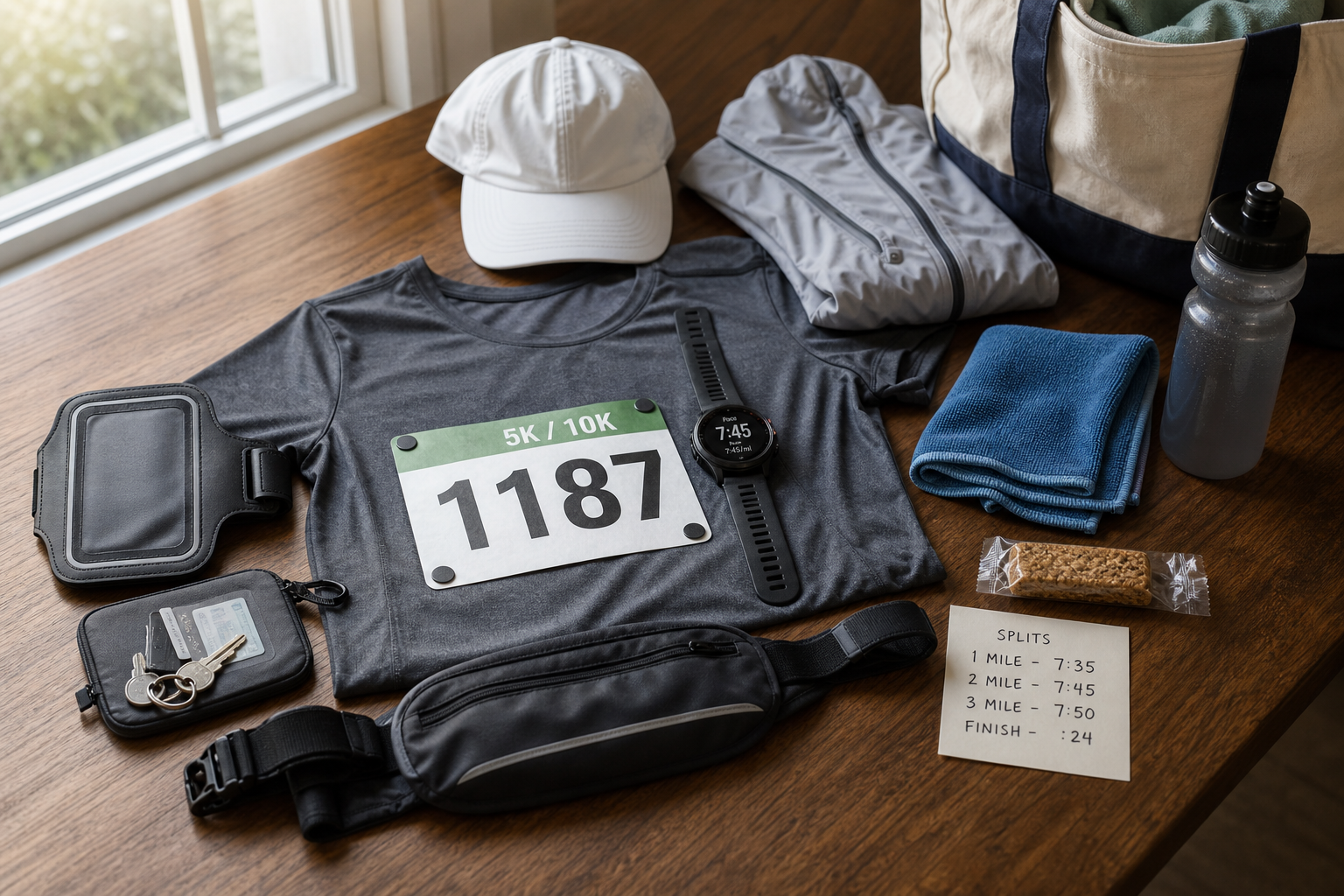
The mistake I see first is simple: a lot of beginners lose their pace before mile one because they start frazzled. It’s usually not fitness that trips them up in a crowded local 5K or 10K—it’s bib pins, a hard-to-read watch, weird weather, and nowhere good to stash the tiny things that suddenly feel important at the start line.
Pacing gets easier when your environment is controlled. If your kit removes little decisions, you can spend your attention on effort, splits, and staying out of trouble in the first half-mile. That’s the whole goal here.
I’m not talking about shoes or a training plan. This is a practical, low-cost setup for the runner who wants race morning to feel smooth instead of chaotic, especially at local events where the start corral is basically a sidewalk crowd with timing mats.
What this kit is supposed to do
Before you buy or pack anything, give every item one job. That rule saves money and keeps you from ending up with flashy gear that adds clutter instead of calm.
- Visibility gear: helps you check pace quickly and keep your bib secure.
- Sweat-resistant storage: carries one or two essentials without bouncing.
- Lightweight layers: handles weather swings without overcommitting.
- Cheap timing aids: gives you backup pacing cues if adrenaline scrambles your brain.
- Post-finish extras: helps you recover and get home without feeling wrecked.
AliExpress is actually useful for this kind of build because its strength is inexpensive accessories: organizers, caps, belts, bib holders, and little weather-flexible add-ons that solve a specific problem without blowing your race budget.
Build the kit over one week
If you try to assemble everything the night before a race, you’ll miss something. Here’s the easier approach.
- Pick one category each day.
- Choose the cheapest item that clearly solves your problem.
- Test it on one short run or brisk walk.
- Keep it only if it disappears into the background.
- Pack all approved items in one spot by the end of the week.
If you notice the gear during the race, it probably wasn’t the right gear.
Step 1: Fix bib stress before it starts
Bib pins are tiny, but they create outsized race-morning chaos. They poke, they wrinkle your shirt, and they always seem to vanish when you’re already late.
For crowded local races, I like using magnetic race bib clips because they turn one more fiddly task into a 20-second job. That matters when you’re trying to breathe, warm up, find the start, and not lose your place in the bathroom line.
Why this helps pacing: a secure, flat bib means less shirt tugging and less pre-race scrambling. It sounds minor, but calm hands usually lead to a calmer first quarter-mile.
- Choose bib holders if you hate pins or tend to dress in a rush.
- Keep the extras in your race bag so you’re never hunting for safety pins.
- Attach your bib the night before, not in the parking lot.
Caution: test magnetic bib clips on the exact race top you plan to wear. Some thin or slick fabrics shift more than others, and you want to know that before race morning.
Step 2: Make your pace readable at a glance
In a local 5K or 10K, the first half-mile is crowded enough already. You should not have to fight your phone, dig into a pocket, or squint through sweat just to confirm whether you’ve gone out too hard.
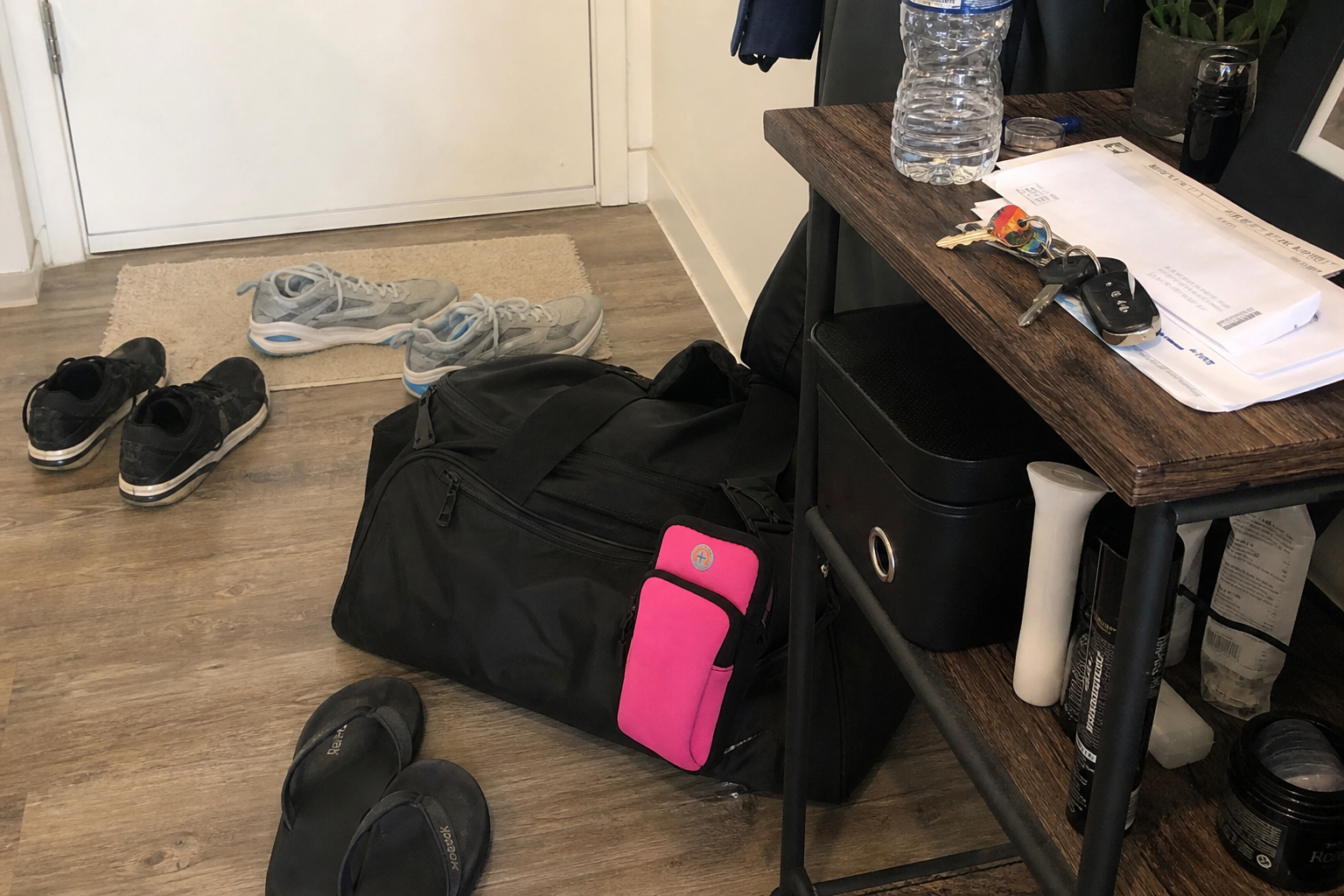
If you carry a phone, a basic running arm band phone holder is a better choice than shoving it into your hand or hoping a loose pocket behaves. I only like this if you truly need your phone for tracking, emergency contact, or music; otherwise, less is better. But if the phone is coming, it needs a stable home.
Why this helps pacing: you eliminate bounce, you stop checking and rechecking your storage, and you can focus on rhythm. The point isn’t access for constant screen staring—it’s removing the stress of “where did I put the thing I might need?”
- Pick an arm band that fits your actual phone size.
- Wear it on the arm that feels least disruptive to your swing.
- Test it with sweat, not just standing in your kitchen.
If you want a cleaner race setup, a small belt or organizer can also work well, especially if you’ve read my piece on what I carry for a café-to-track training day. Same principle: every item needs a home, or it starts rattling around in your head.
Step 3: Build sweat-resistant storage for just the essentials
Newer runners often overpack because race day feels uncertain. Then the overpacking becomes its own problem.
For a 5K or 10K, your carrying list should usually stay this short:
- Phone, if necessary
- Key or card
- One gel only if the event timing and your routine call for it
- Tissue or small wipe if you know you’ll want it
Do not turn your race into a portable junk drawer. The right accessory is the one that lets you forget you’re carrying anything at all.
Budget-friendly matters here. Skip the “multi-sport tactical” stuff with six zippers and mystery straps. For local races, cheap and functional usually wins.
Step 4: Prep for weather changes without over-layering
Weather is one of the fastest ways to wreck good pacing. If you’re too cold at the start, you surge to warm up. If you overdress, you cook by mile two and pace starts slipping for the opposite reason.
Your lightweight layer strategy should cover these situations:
- Cool morning, warming fast after sunrise
- Cloudy and damp, where sweat makes everything feel colder
- Sunny and warm, where heat builds before you notice it
That doesn’t mean buying a pile of gear. It means choosing simple pieces that are easy to remove, carry, or leave in a gear-check bag. A light cap, thin throwaway top, or simple arm coverage can do more for pacing than some expensive gadget that promises miracle performance.
And if heat is your main issue, a cooling towel is one of those cheap extras that earns its spot before and after the race. I wouldn’t carry it during most 5Ks, but I absolutely like having one in the car or gear bag for warm conditions.

Step 5: Add one cheap timing aid
Adrenaline makes honest runners bad at self-measuring. The fix doesn’t have to be fancy.
Your pacing backup can be as simple as:
- A watch screen set to show only elapsed time and pace
- A handwritten split note tucked into a pocket or arm band
- A basic wrist cue: “first mile easy, settle by mile two”
For crowded races, simpler is better because you won’t always get perfect GPS right away. If you tend to bolt from the line, this is where I’d pair your kit with a smarter strategy like the one I laid out in Why Walking Breaks Make You a Faster Runner. Even short intentional resets can keep a race from becoming a panic sprint.
Caution: do not add a brand-new data screen, app, or alert system on race week. Race day is the worst time to learn tech.
Step 6: Pack post-finish recovery extras on purpose
A lot of runners think the kit ends at the finish line. I think that’s backwards. Knowing you have what you need afterward keeps you calmer before the gun goes off.
Your post-finish pocket or bag should include:
- A dry shirt if you’re staying around
- A drink plan you already know works for you
- A small snack
- Your cooling towel for hot days
- Phone and keys already organized where you can find them fast
That last point matters more than people think. Finishing hard and then digging through a chaotic bag is a sneaky way to turn a good race into a cranky rest of the day.
A simple weeklong checklist
Here’s how I’d assemble the whole thing without overthinking it.
- Day 1: Lay out your race clothes and identify friction points: bib attachment, storage, weather, recovery.
- Day 2: Solve bib attachment with magnetic bib clips or another no-fuss method.
- Day 3: Test your storage setup with the running arm band phone holder if you’ll carry your phone.
- Day 4: Set your timing aid—watch screen, split note, or one simple cue.
- Day 5: Check the weather and pick one flexible layer plan.
- Day 6: Pack post-finish extras, including a cooling towel if it’ll be warm.
- Day 7: Do a full dress rehearsal at home so race morning stays boring—in the best way.
Night-before and morning-of system
This is the part that removes decision fatigue.
Night before
- Attach bib to race top.
- Charge watch and phone.
- Set out clothes in order from top to bottom.
- Put keys, ID, and any card in the same pocket or pouch.
- Pack post-finish shirt, snack, and towel in one bag.
- Check the forecast once, then stop checking it.
Morning of
- Get dressed without making new gear decisions.
- Turn on your watch early enough to settle GPS.
- Do one final check: bib, storage, timing cue, layer plan.
- Arrive early enough that you’re not jogging stressed to the start.
- Use your first few minutes of the race to settle, not to prove anything.
The Bottom Line
A good race-day pacing kit is really a stress-control kit. Secure your bib, make essentials easy to carry, prepare for weather shifts, and give yourself one simple timing backup. None of that has to be expensive, and that’s where budget-friendly accessories from places like AliExpress can genuinely help newer runners build a complete setup without overspending. The downside is that cheap gear still needs testing, so don’t let race day be the first time you use any of it.
Disclaimer: As an aliexpress Associate, I earn from qualifying purchases.