How to Build a 15-Minute Work-to-Rest Ritual
The laptop is closed, but somehow your brain still has twelve tabs open. Your jaw is clenched, your hips feel folded into the shape of your chair, and even the idea of a “quick workout” sounds a…
The laptop is closed, but somehow your brain still has twelve tabs open. Your jaw is clenched, your hips feel folded into the shape of your chair, and even the idea of a “quick workout” sounds a little offensive.
That in-between window is exactly where a transition ritual helps. Not because you need more discipline, and not because your body needs to perform. You just need a repeatable way to tell your nervous system, “we are not doing that part of the day anymore.”
I think of this as threshold design: a tiny sequence that helps your body cross from work mode into rest mode. If you tend to resist formal exercise at the end of the day, this is often a much better starting point than trying to force motivation out of thin air.
The good news: it can take less than 15 minutes, work in a small apartment, and happen in regular clothes.
What makes a good transition ritual?
A useful ritual has three parts:
- One tactile cue in your environment
- One short mobility sequence for your desk-shaped body
- One closing signal like breathwork or a journaling prompt
That structure matters because rituals work best when they are easy to recognize and easy to repeat. You are not chasing a perfect evening routine. You are building a doorway.
Sustainable movement habits often begin with a threshold moment, not a workout plan.
Step 1: Pick one object that tells your body “the day is changing”
The first step is not stretching. It is choosing something physical that marks the shift.
Your cue should be simple, visible, and a little pleasing to use. I like objects that feel grounded rather than optimized. A small timer, a softer lamp, a floor cushion, a favorite cup, or a compact strap can all do the job because they create a sensory break from screen mode.
Here are a few low-stakes anchors I’d use:
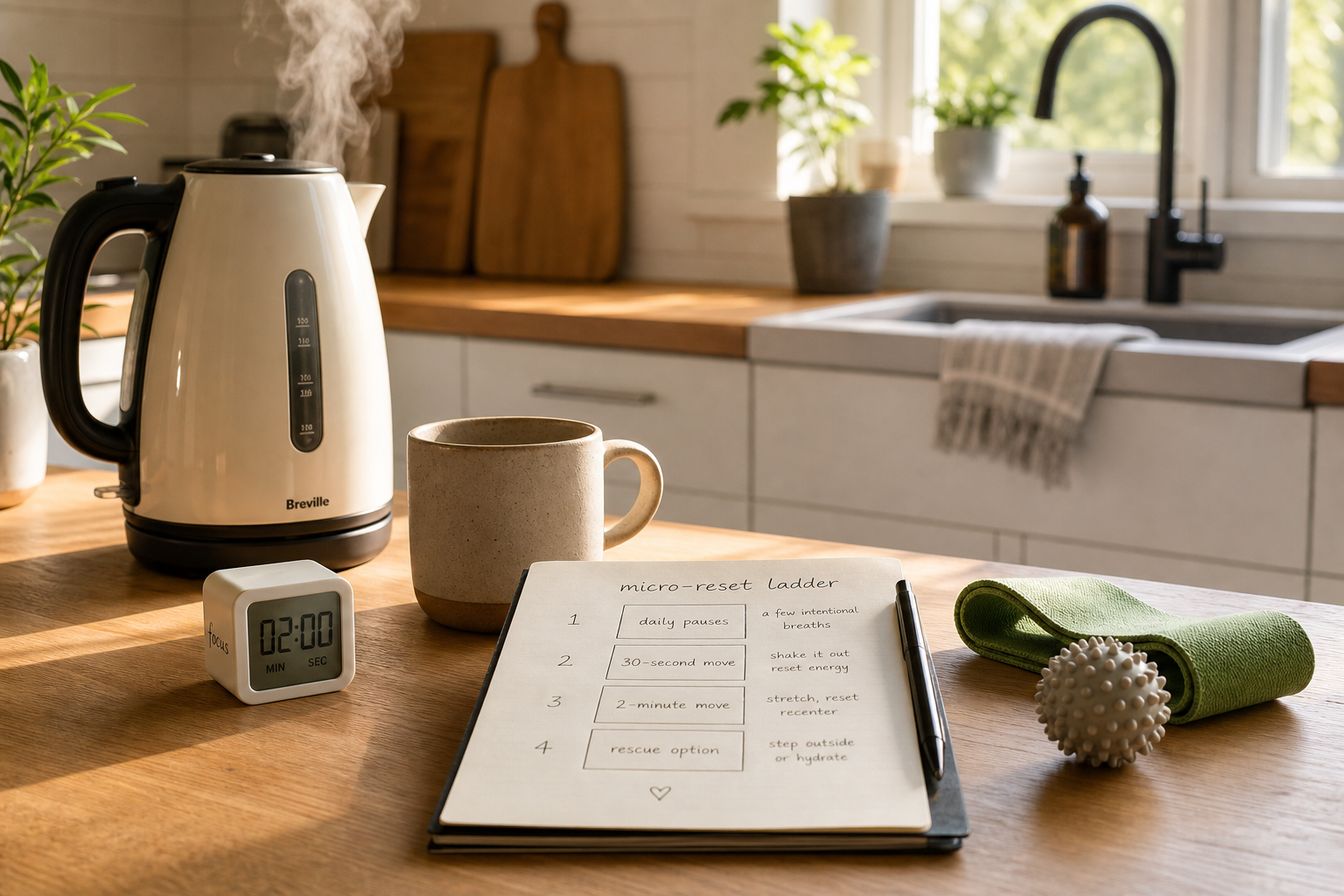
- A flip timer if you want the ritual to feel contained and finite
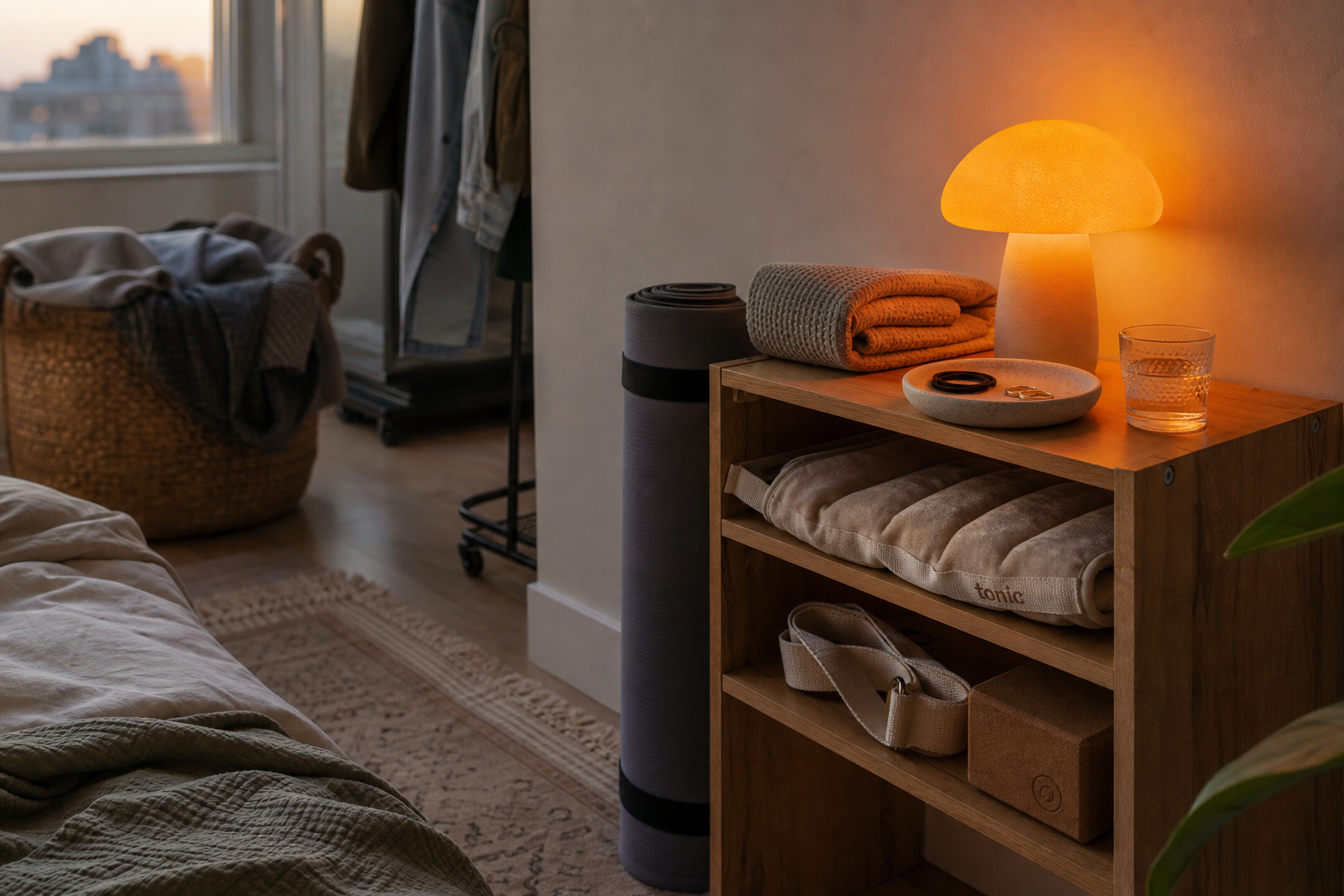
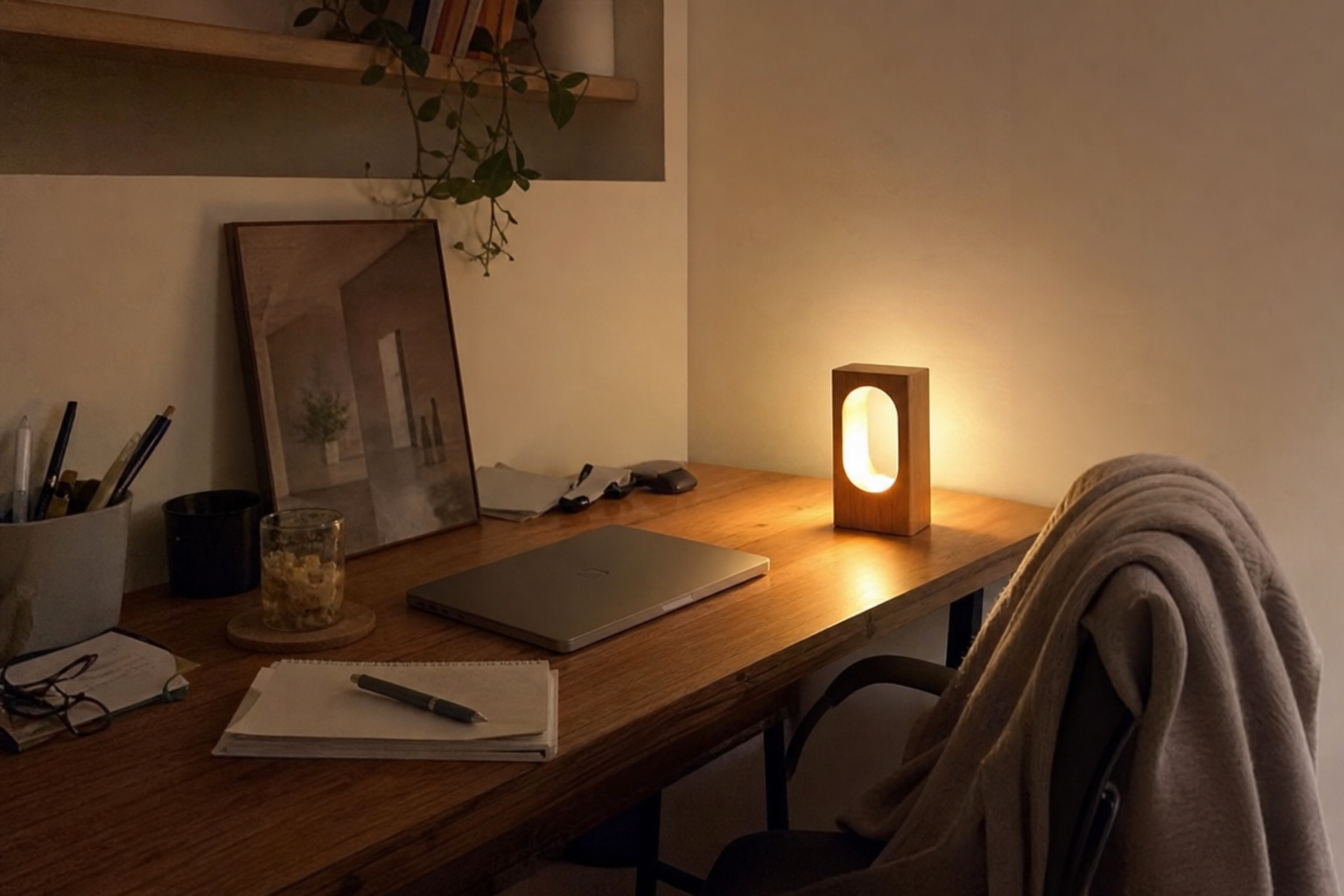
- A warm wood desk lamp if overhead lighting keeps your body feeling alert
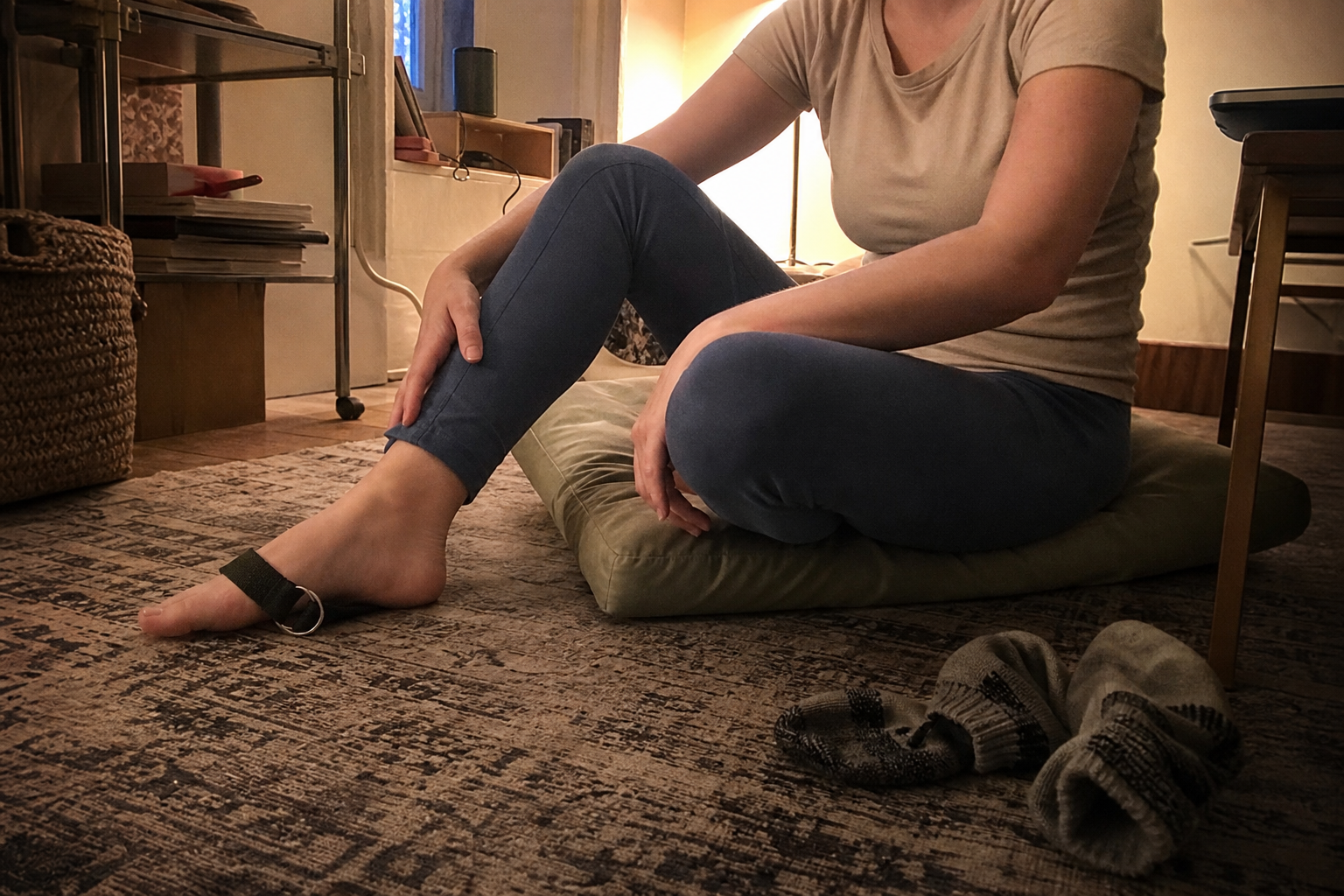
- A floor cushion cover if sitting lower to the ground helps you literally leave desk posture
- A matte ceramic cup set if holding something warm helps your shoulders and jaw soften
- A compact cotton yoga strap if you want one object that makes tight shoulders and hips easier to access
You only need one anchor to start. Two is fine. Five is a decor plan, not a ritual.
How to choose your cue
- Pick the object you’re most likely to keep visible.
- Place it where work ends, not where an ideal routine would happen.
- Use it in the same order every evening.
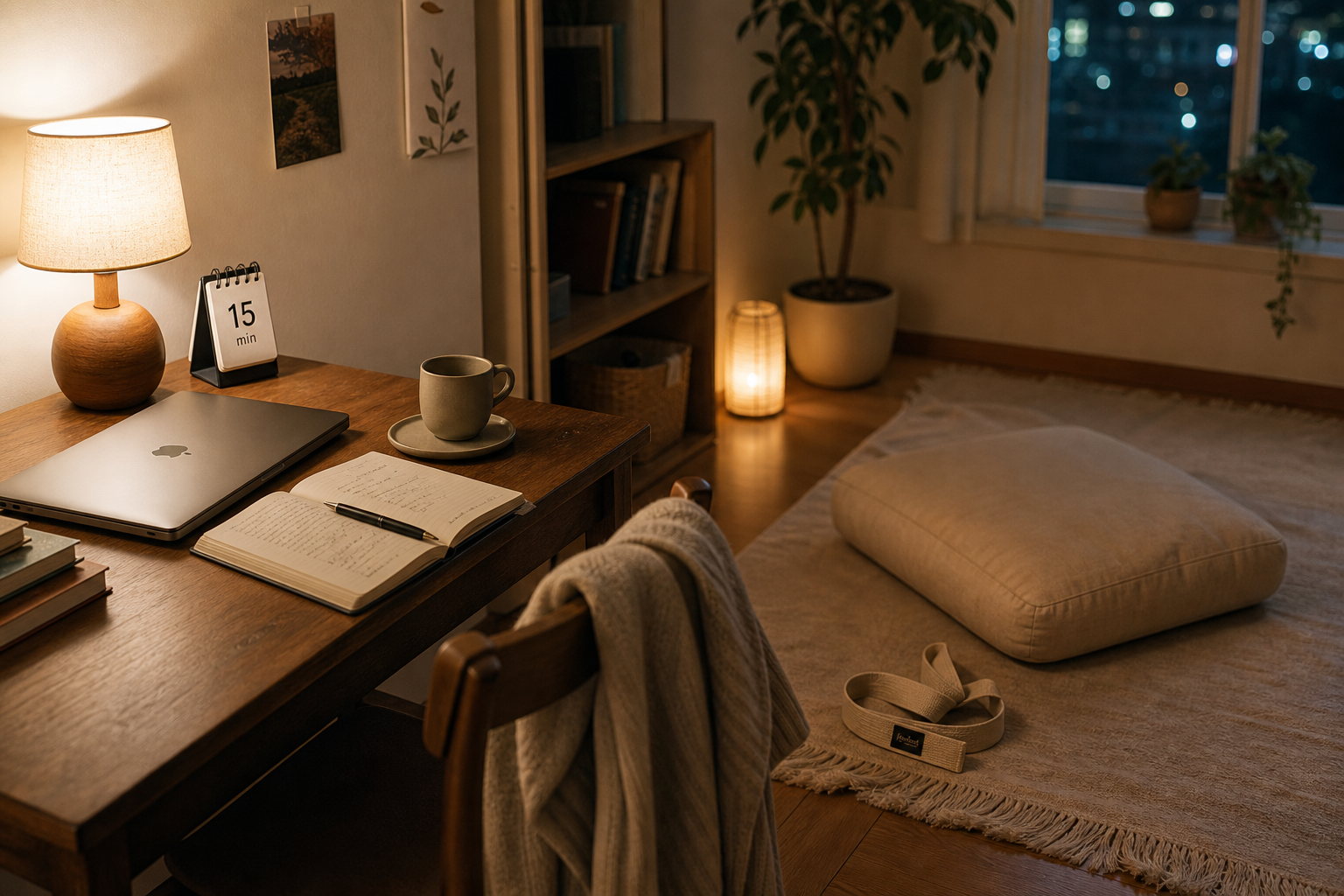
For example: flip the timer, turn on the lamp, sit on the cushion, then move.
If you liked my breakdown of friction-reducing props in 5 Underrated Mobility Tools That Make Showing Up Easier, this is the same principle applied to the end of the day: make the next state easier to enter.
Step 2: Use a 6-minute mobility sequence that undoes chair posture
Now that your environment has changed, give your body a short sequence that addresses the usual end-of-day suspects: hips compressed, chest collapsed, neck forward, jaw gripping.
This is not a flexibility test. Think of it as gentle repositioning.
The 6-minute sequence
-
Stand and reach for one minute.
Stand up, interlace your hands or hold a adjustable yoga strap overhead with a wide grip. Inhale as you reach up, exhale as you lean gently side to side.
-
Chest opener for one minute.
Bring the strap behind your back or simply clasp your hands. Broaden across the collarbones without forcing a huge lift. The goal is to reverse the rounded-screen shape, not crank your shoulders.
-
Hip fold-out for two minutes.
Step one foot back into a small lunge while holding a wall or chair. Tuck your pelvis slightly and soften the front of the back hip. Switch sides after a minute.
-
Supported fold or floor sit for one minute.
Sit on a cushion or the edge of your sofa and fold forward a little, elbows on thighs. If the floor feels better, sit on your floor cushion and let your spine round a little.
-
Jaw and neck reset for one minute.
Unclench your teeth. Rest your tongue on the roof of your mouth. Turn your head slowly right and left, then nod once or twice like you are finally agreeing to be done for the day.
If you want a slightly longer unwind, I wrote about that in I Tried a 10-Minute Late-Night Mobility Ritual. But for this post, I’d keep it shorter and more repeatable.
Caution: none of this should feel sharp, pinchy, or performative. If your lower back grabs during folds or lunges, make the range smaller, use more support, or stay standing. The ritual should leave you feeling more inhabitable, not more worked over.
Step 3: End with one closing signal
This is the part many people skip, and it is usually the part that makes the whole thing stick.
You need one tiny signal that says, clearly, the day is changing shape now. That can be breath, writing, or a sensory cue like tea. The key is to keep it brief enough that you will still do it on tired Tuesdays.
Choose one of these 2-minute closers
- Breath: Inhale for 4, exhale for 6, for five rounds. Longer exhales are a simple way to encourage downshifting without making it feel too ceremonial.
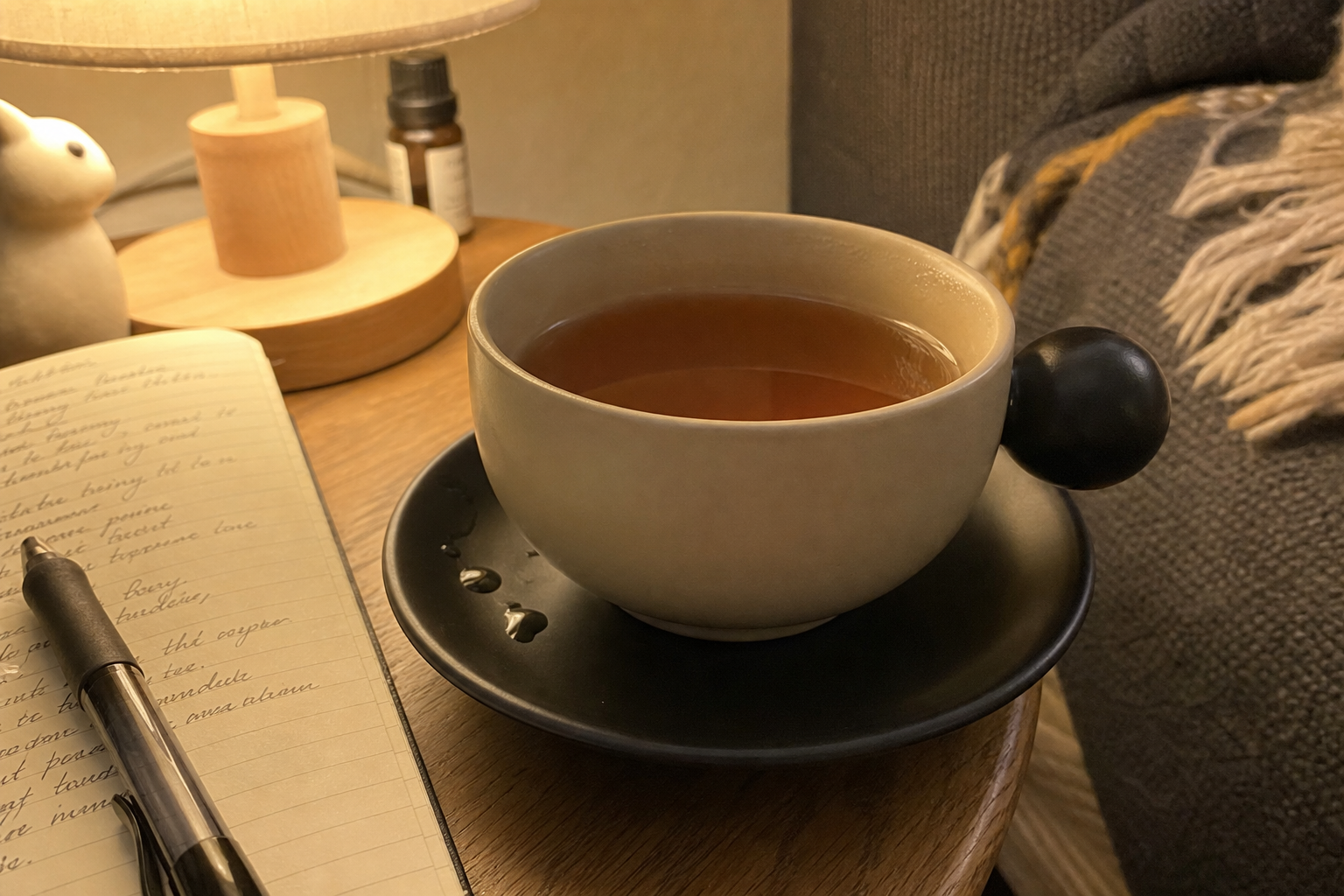
- Journal: Write, “What am I done carrying tonight?” Then answer in one or two lines.
- Tea cue: Pour something warm into a ceramic tea cup and stand still while you take the first few sips. This works especially well for people who need the ritual to feel cozy rather than corrective.
If all-or-nothing thinking tends to make you abandon routines the moment they stop being ideal, my piece on How to Stop "All or Nothing" Thinking About Fitness pairs well with this. A transition ritual works best when it is allowed to be small.
How to assemble your version in under 15 minutes
Here is the easiest formula I know:
| Part | Time | Example |
|---|---|---|
| Environment cue | 1 minute | Turn on lamp, flip timer, put phone down |
| Mobility reset | 6-8 minutes | Reach, chest opener, hip release, supported fold, neck reset |
| Closing signal | 2-3 minutes | Long exhale breathing, one journal line, or tea |
That leaves buffer time for walking from your desk to the corner of the room, filling the kettle, or doing absolutely nothing for thirty seconds in between. Real rituals need that little bit of slack.
Three ready-made versions
-
Low energy, tiny space
- Turn on the lamp
- Sit on a cushion and do a forward fold plus neck turns
- Take five slow exhale-focused breaths
-
Physically stiff, mentally wired
- Flip the timer for 10 minutes
- Do the full standing sequence with a stretch strap
- End with one line of journaling
-
Emotionally fried, craving comfort
- Dim the lights
- Do two supported hip stretches on the floor cushion
- Make tea in your favorite cup and breathe while it cools
Common mistakes that make the ritual harder
- Making it too long on day one
- Putting your cue object in a drawer or closet
- Treating the mobility part like a miniature workout
- Switching the sequence every night before it has a chance to become familiar
The more recognizable the ritual becomes, the less negotiating you have to do with yourself. That is the whole point.
How to customize it without overthinking
If you want your own version, use this quick framework:
- Energy level: low energy means fewer steps and more support; medium energy can handle a full 8-10 minute sequence.
- Available space: if you only have one square of floor, choose standing lunges, a wall chest opener, and seated folding on a cushion.
- Type of downshift needed: if you feel emotionally buzzy, emphasize lighting, breath, and tea; if you feel physically stuck, emphasize hips, chest, and neck.
You do not need the most impressive ritual. You need the one your body recognizes after a long day.
The Bottom Line
A practical transition ritual is less about motivation and more about sequence. One cue in the environment, one short mobility reset, and one closing signal can be enough to help your body leave work mode without asking you to “work out” at the exact moment you least want to. The affordable objects here only help if they reduce friction and make the threshold feel inviting. If a ritual gets too elaborate, it stops being a doorway and starts becoming another task.
Disclaimer: As an aliexpress Associate, I earn from qualifying purchases.