How I Build a 48-Hour Reset Menu
My rings feel tight, my mouth feels dry, and somehow I’m both hungry and unimpressed by every snack in the house. That’s usually how I feel after a weekend away or three nights in a row of eating…
My rings feel tight, my mouth feels dry, and somehow I’m both hungry and unimpressed by every snack in the house. That’s usually how I feel after a weekend away or three nights in a row of eating late, sleeping badly, and calling crackers a “plan.”
What helps most is not a detox, a cleanse, or an overly ambitious meal-prep session. It’s a 48-hour reset menu: two days of very ordinary food that nudges my body back toward steady energy, better hydration, and calmer evenings with almost no decision-making.
This is the version I use when recovery feels off for normal-life reasons, not just after hard training. If your routine got scrambled, here’s how to build a repeatable reset menu that covers fluids, potassium-rich foods, fiber, adequate protein, and meal timing without turning food into a punishment.
Step 1: Pick one anchor breakfast and repeat it
The fastest way to make the next two days easier is to remove one decision immediately. I like one breakfast that is hydrating, fiber-rich, and protein-forward enough to keep the “snacky but unsatisfied” feeling from running the day.
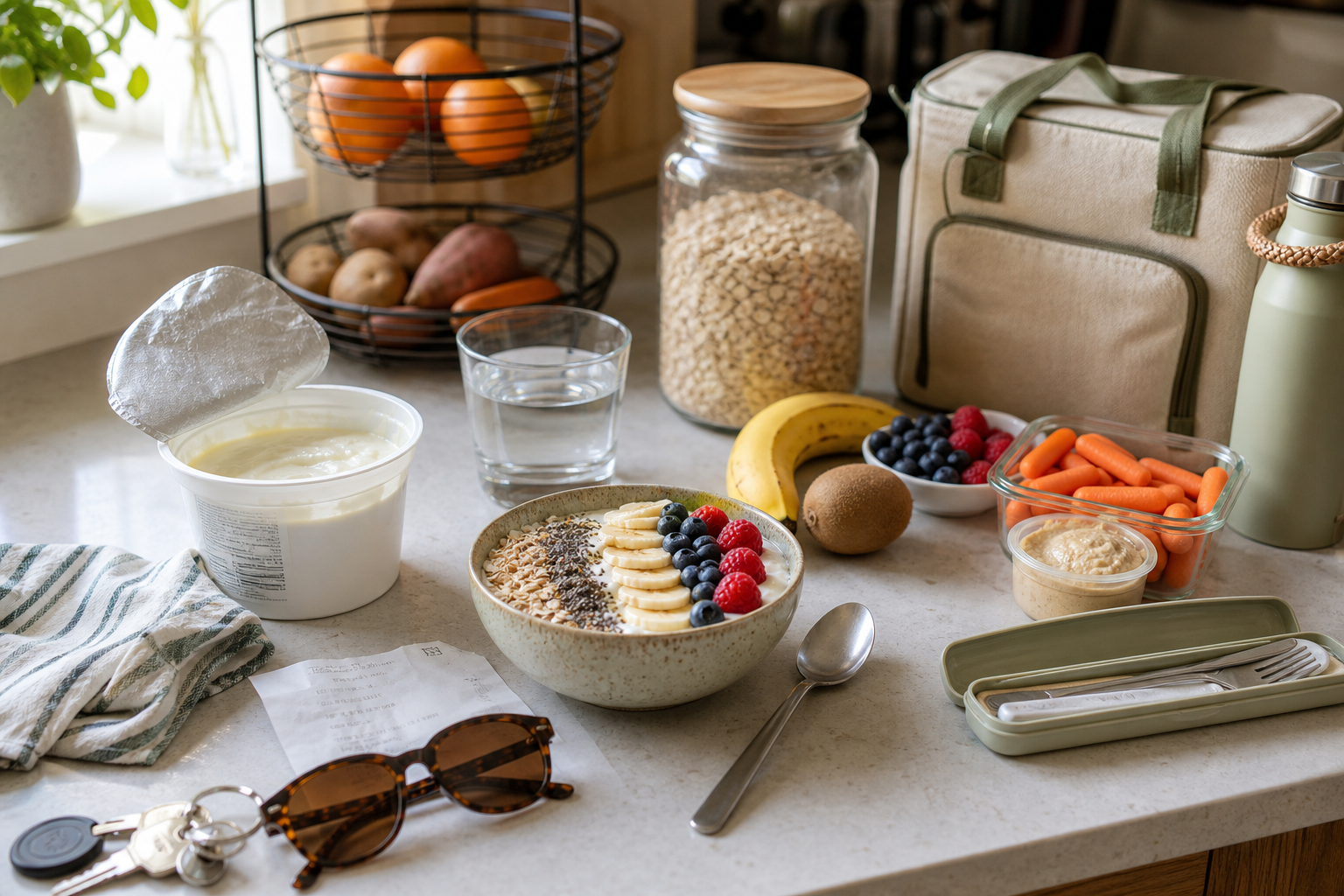
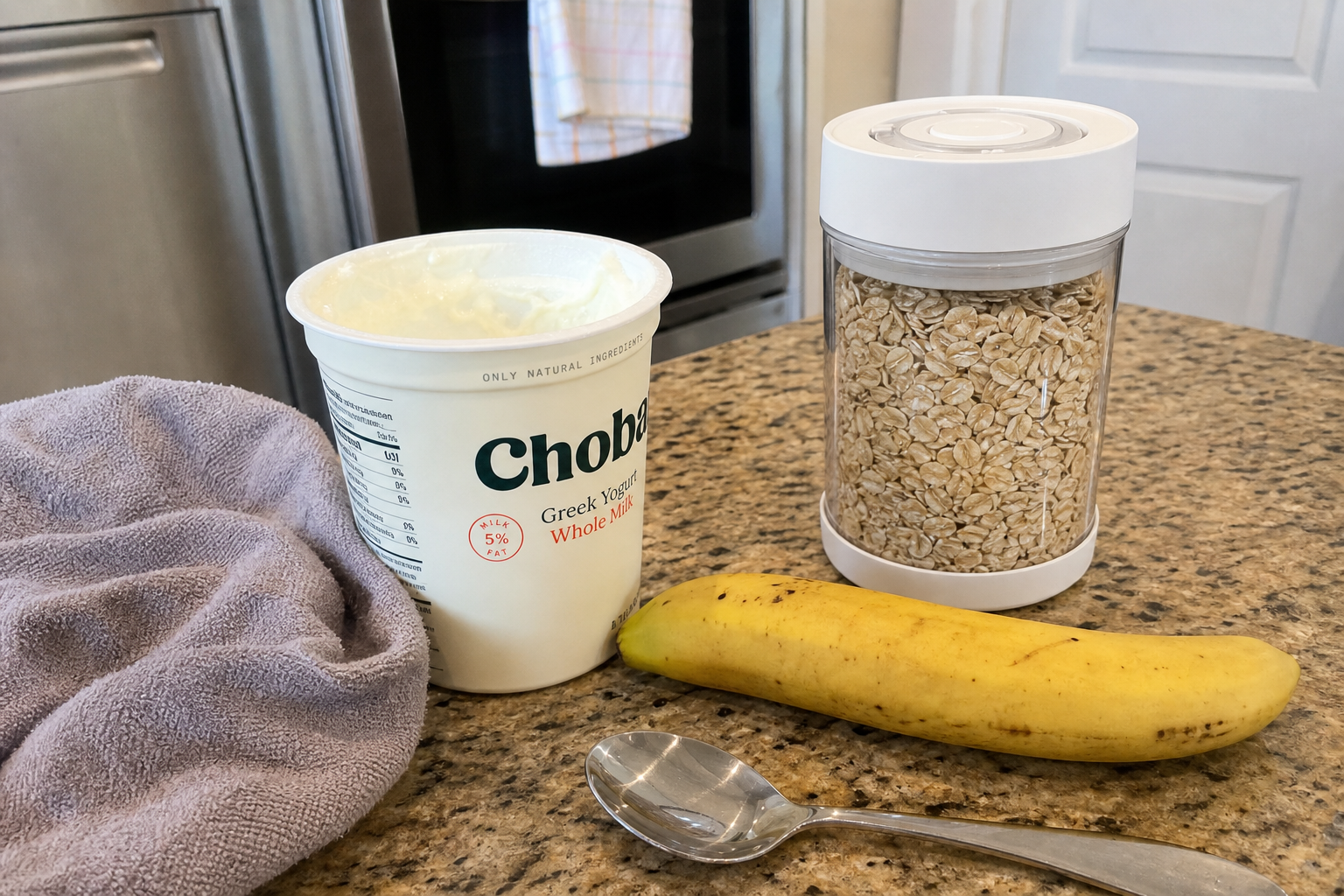
My favorite reset breakfast is a simple yogurt-oats-fruit bowl:
- Start with Greek yogurt or skyr.
- Add oats or a high-fiber cereal.
- Top with banana, berries, or kiwi.
- Add chia seeds or ground flax if you have them.
- Pair it with water and, if you want, coffee after a few sips of fluid.
Why this works: yogurt brings protein, oats and fruit bring fiber, and banana or kiwi adds potassium. That combination tends to feel much steadier than grabbing pastries, leftover takeout, or eating nothing until you’re ravenous.
If mornings are chaotic, storing oats or cereal in a sealed container makes the whole thing less annoying. I like keeping dry staples visible in something like this vacuum sealed storage jar so the default breakfast is the easy breakfast.
Step 2: Use one hydration strategy for both days
After travel, salty restaurant meals, poor sleep, or long days on the go, fluids are usually the first thing I tighten up. Not in a chug-a-gallon way—just in a calm, consistent way.
My 48-hour hydration plan is simple:
- Drink a full glass of water soon after waking.
- Have fluid with every meal and snack.
- Include one water-rich produce food twice a day, like cucumber, oranges, berries, tomatoes, or soup.
- If you’ve been sweating a lot or flying, add something with sodium and potassium, like broth, yogurt, milk, fruit, or a simple meal instead of plain water alone.
I know it sounds small, but using a designated bottle or cup removes friction. If sipping is easier than remembering, even a simple straw water bottle can make fluids more automatic when your brain is tired.
The goal is not to “flush out” your body. The goal is to stop being accidentally dehydrated.
Step 3: Build two produce-forward meals you can repeat
For this kind of reset, I want lunch and dinner to feel almost pre-decided. That usually means one bowl or salad-adjacent meal and one soup-or-plate meal, both anchored by produce and protein.
Meal 1: The bean-and-grain bowl
This is my favorite midday reset meal because it covers a lot with very little effort.
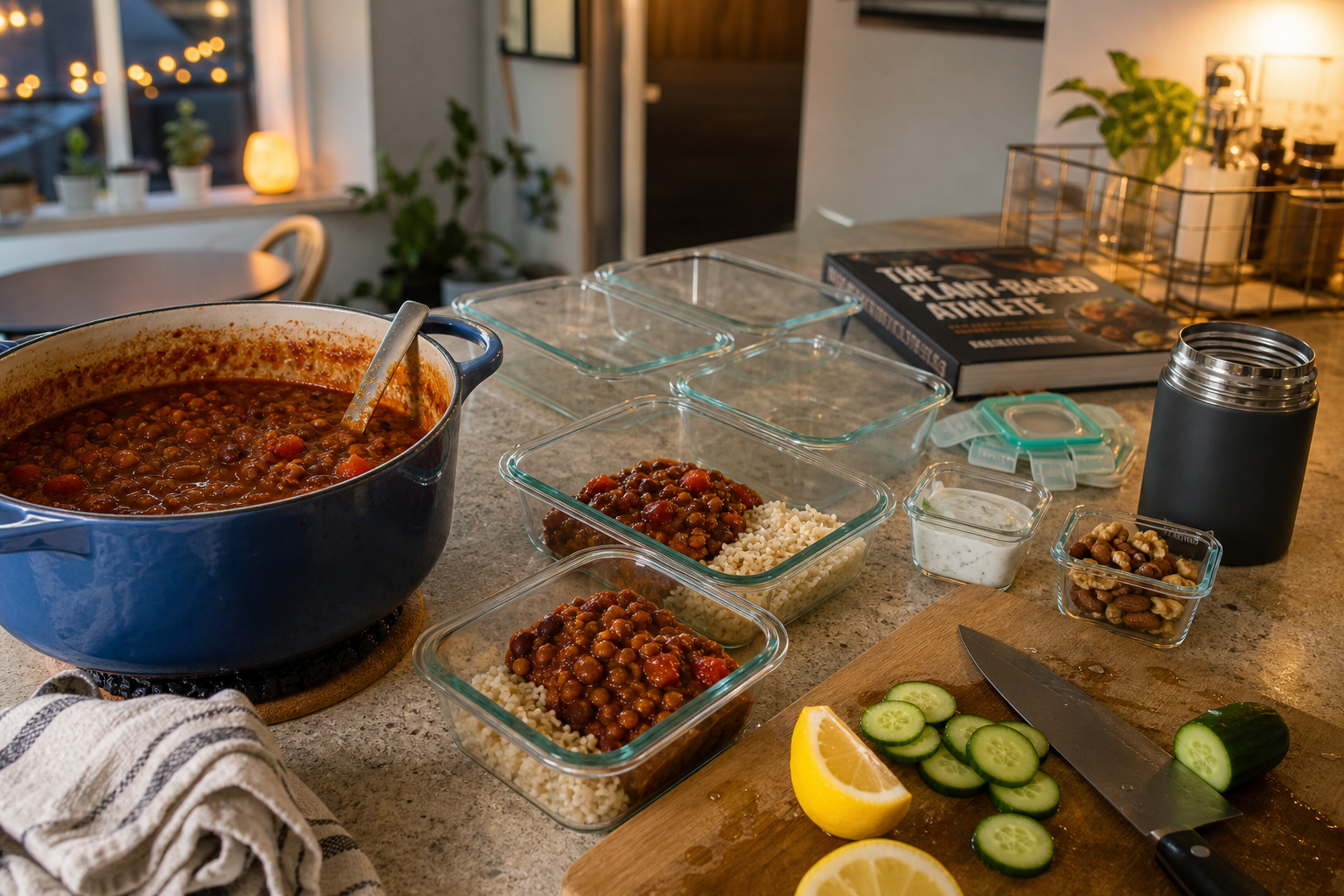
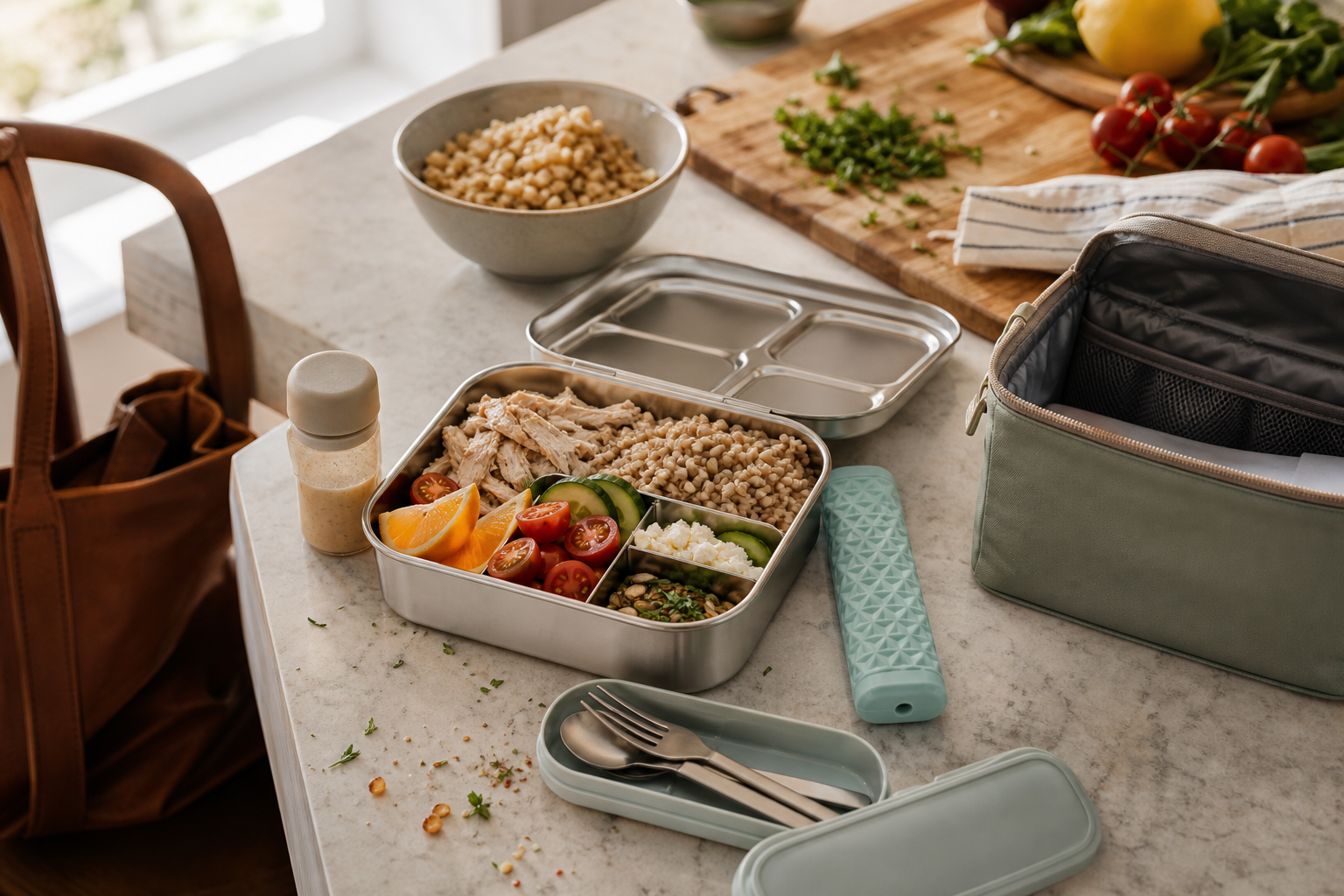
- Base: microwave rice, quinoa, or leftover potatoes
- Protein: beans, lentils, rotisserie chicken, tofu, or edamame
- Produce: cucumber, tomatoes, bagged greens, shredded carrots, or frozen vegetables
- Extras: olive oil, lemon, salsa, or hummus
Nutritionally, this gives you fiber, potassium, fluid from produce, and enough protein to make the meal actually land. If you want more help making protein easy without cooking theatrics, my lazy cook’s guide to hitting protein pairs well with this exact kind of week.
Meal 2: Soup, toast, and fruit or a simple egg plate
At night, I usually want warm food and less effort. A low-drama dinner might be lentil soup with toast and fruit, or eggs with sautéed spinach and potatoes, or a turkey sandwich with baby carrots and an orange.
I’m not chasing “clean eating” here. I’m trying to make dinner easy enough that I eat a balanced meal before I get overtired and start rummaging for random snack combinations.
Meal timing matters more than people think on these two days. Aim to eat every 3 to 5 hours, because being underfed all day tends to backfire into late-night grazing and worse sleep.
Step 4: Add one calming evening snack
The best reset menus include a planned bedtime snack, especially if your appetite has been erratic. This is not a failure of willpower; it’s often just your body trying to catch up.
My favorite evening snack options:
- Greek yogurt with kiwi or berries
- Cottage cheese with pineapple
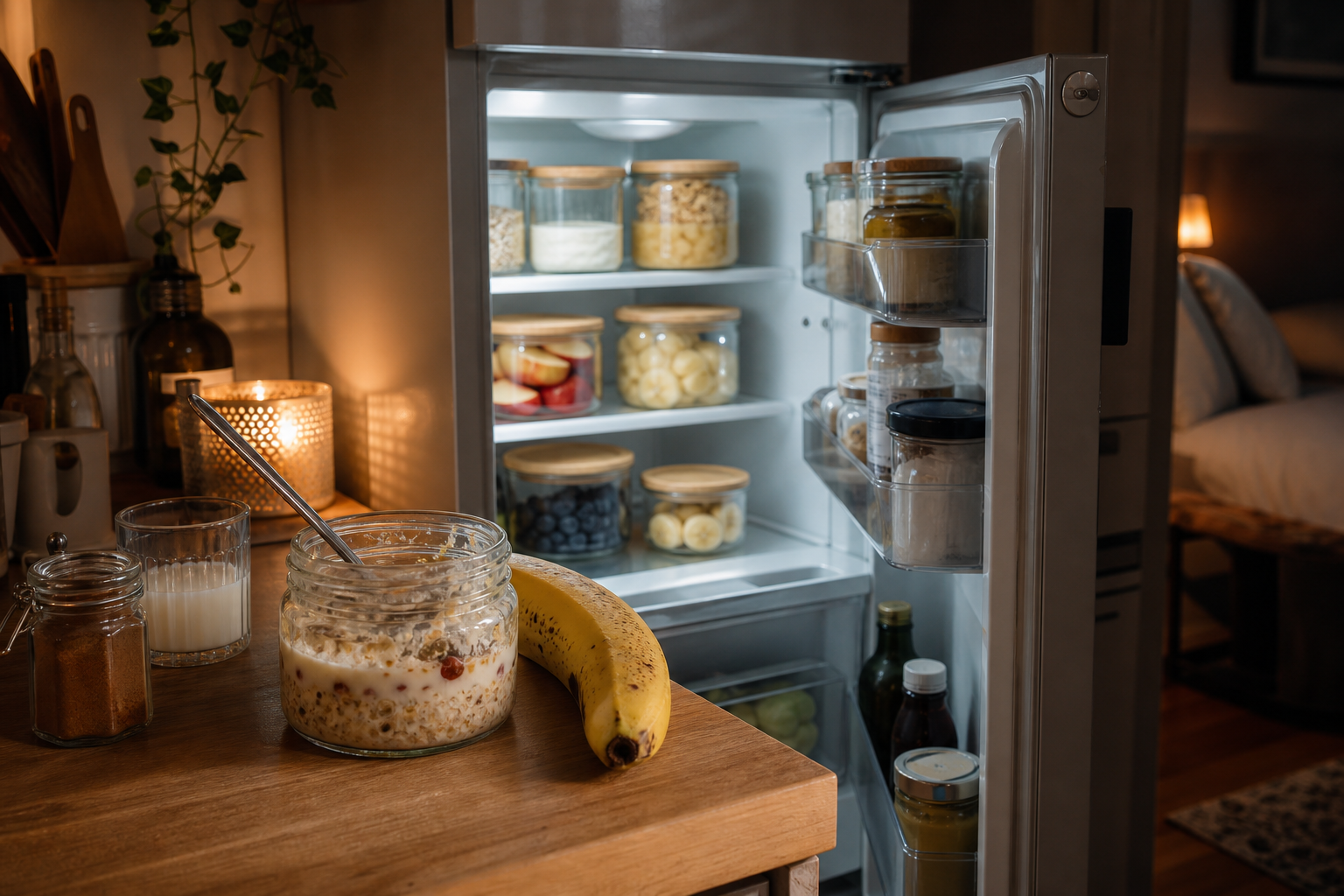
- Oatmeal with milk and banana
- Toast with peanut butter and sliced banana
I like these because they combine carbs and protein in a way that feels grounding, and they’re easy on a tired brain. For some people, a small carb-plus-protein snack in the evening helps take the edge off that wired-but-hungry feeling that shows up after stressful weeks.
Caution: if reflux is an issue for you, keep the evening snack modest and give yourself a little time before lying down. Huge late-night meals usually do sleep no favors.
Step 5: Shop the reset in 10 minutes
If I’m doing this right, the grocery trip is short and slightly boring. Boring is good here. You need enough structure to get through 48 hours, not a wellness identity overhaul.
Here’s the quick shopping list I’d use:
- Greek yogurt or cottage cheese
- Oats or high-fiber cereal
- Bananas
- Berries, kiwi, or oranges
- Bagged greens
- Cucumbers and tomatoes
- Microwave rice or small potatoes
- Beans, lentils, eggs, tofu, or rotisserie chicken
- Soup
- Whole grain bread
- Baby carrots or another easy crunchy vegetable
- Hummus, lemon, or salsa for flavor
If you tend to forget produce exists once it enters your kitchen, visible storage helps. I like something like these stackable wire pantry baskets for potatoes, onions, citrus, or snackable produce because you can see what needs eating.
Step 6: Keep the accessories minimal but useful
This part is not glamorous, but it’s what keeps the plan alive when life is chaotic. If your reset food only works at home with a fully functioning brain, it’s not really a system.
These are the few tools I think earn their keep:
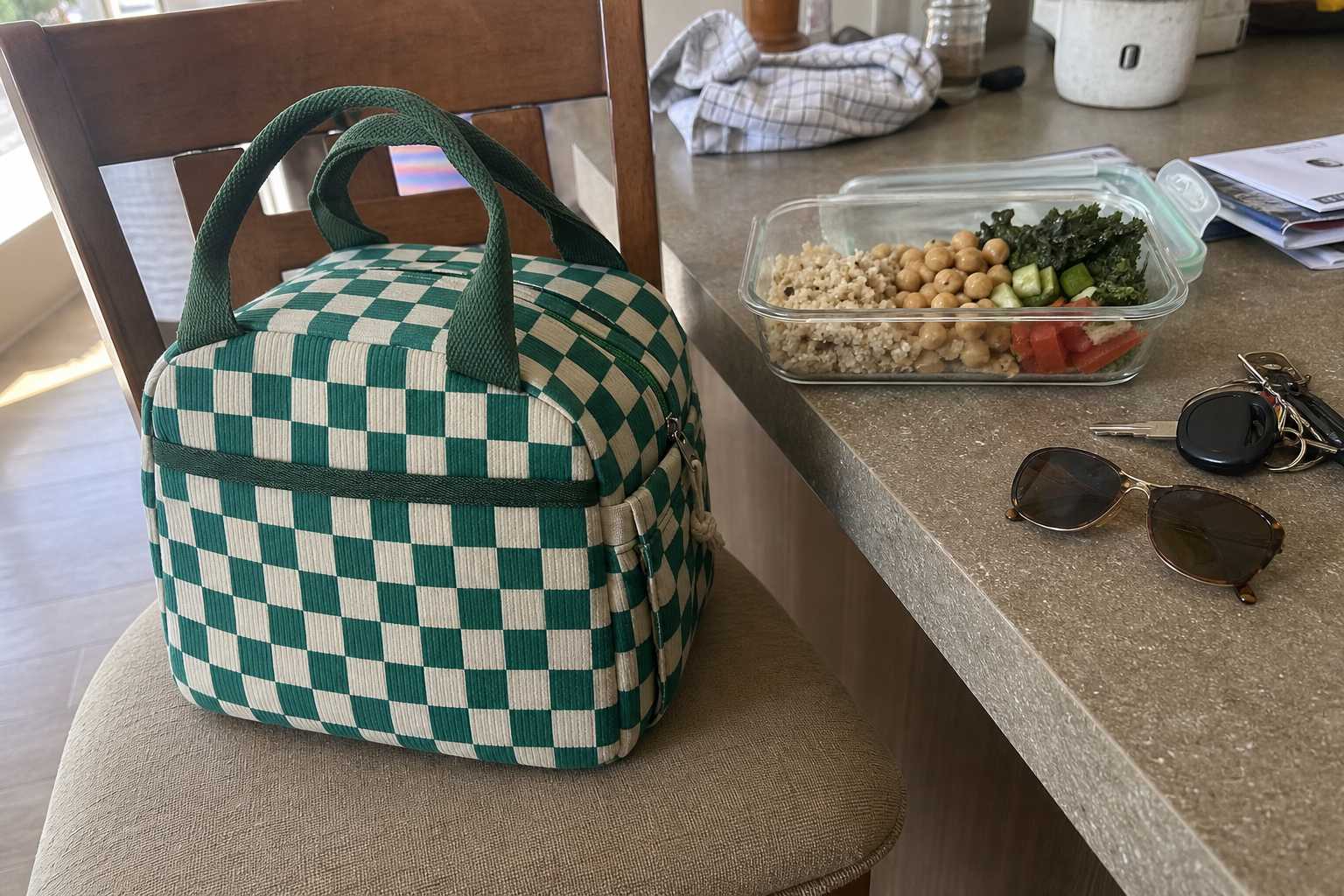
- An insulated lunch tote for the days you need the bowl, yogurt, or fruit to leave the house with you
- A portable cutlery set so a packed meal is actually usable
- A few containers or jars that make breakfast and snacks visible instead of hidden behind takeout leftovers
If you want the broader home setup behind this, I wrote more about building defaults in how to build a recovery station that actually gets used. The idea is the same: fewer obstacles, better follow-through.
Step 7: Follow this simple 2-day template
If you want the shortest possible version, this is the structure I’d repeat for 48 hours:
| Time | What to do | Why it helps |
|---|---|---|
| Morning | Water + yogurt, oats, and fruit breakfast | Fluids, protein, fiber, potassium |
| Midday | Bean-and-grain bowl + water | Steady energy, produce, fiber, protein |
| Afternoon | Fruit, yogurt, or carrots with hummus | Prevents the late-day crash-and-graze cycle |
| Evening | Soup-and-toast dinner or eggs, potatoes, and greens | Warm, balanced, easy to digest |
| Before bed if hungry | Small calming snack | Supports overnight recovery and steadier sleep |
That’s it. Not thrilling, but deeply useful.
Step 8: Avoid turning this into a restrictive “reset”
This part matters. A practical reset menu should leave you feeling more cared for, not more controlled.
- Do not slash portions just because you feel puffy.
- Do not cut carbs to “undo” travel food.
- Do not use this as punishment for late nights, restaurant meals, or missed workouts.
When I say reset, I mean re-regulate. Regular meals, enough fluids, enough potassium, enough fiber, enough protein, and an earlier, calmer dinner do a lot more for how your body feels than any dramatic food rule.
Closing Thoughts
A 48-hour reset menu is really just a low-effort template for the moments when life gets noisy and your body starts sending the usual signals: puffy, thirsty, snacky, off. One repeatable breakfast, one hydration strategy, two produce-forward meals, and a calming evening snack can carry you surprisingly far. The accessories only matter if they reduce friction, and a few affordable tools can help when your schedule is messy. Recovery nutrition isn’t only for training blocks; it’s also for ordinary stressful weeks when you want your body to feel like home again.
Disclaimer: As an aliexpress Associate, I earn from qualifying purchases.