From Too Many Options to Daily Mobility
A reader told me she had saved so many “good mobility routines” that, by Thursday, she was doing none of them. Her tabs were full, her intentions were solid, and her body was still stiff from sitting…
A reader told me she had saved so many “good mobility routines” that, by Thursday, she was doing none of them. Her tabs were full, her intentions were solid, and her body was still stiff from sitting all day.
That problem is more common than people think. Sometimes the barrier is not laziness, stress, or lack of discipline. It is too many decent choices, all asking you to decide in real time what your body needs.
On decision-fatigued days, overplanning often backfires. A rigid routine can feel too specific to fit the moment, but a giant library of movement ideas feels too open-ended to use. What helps is choice architecture: setting up a few pre-decided options so you can pick quickly and move on.
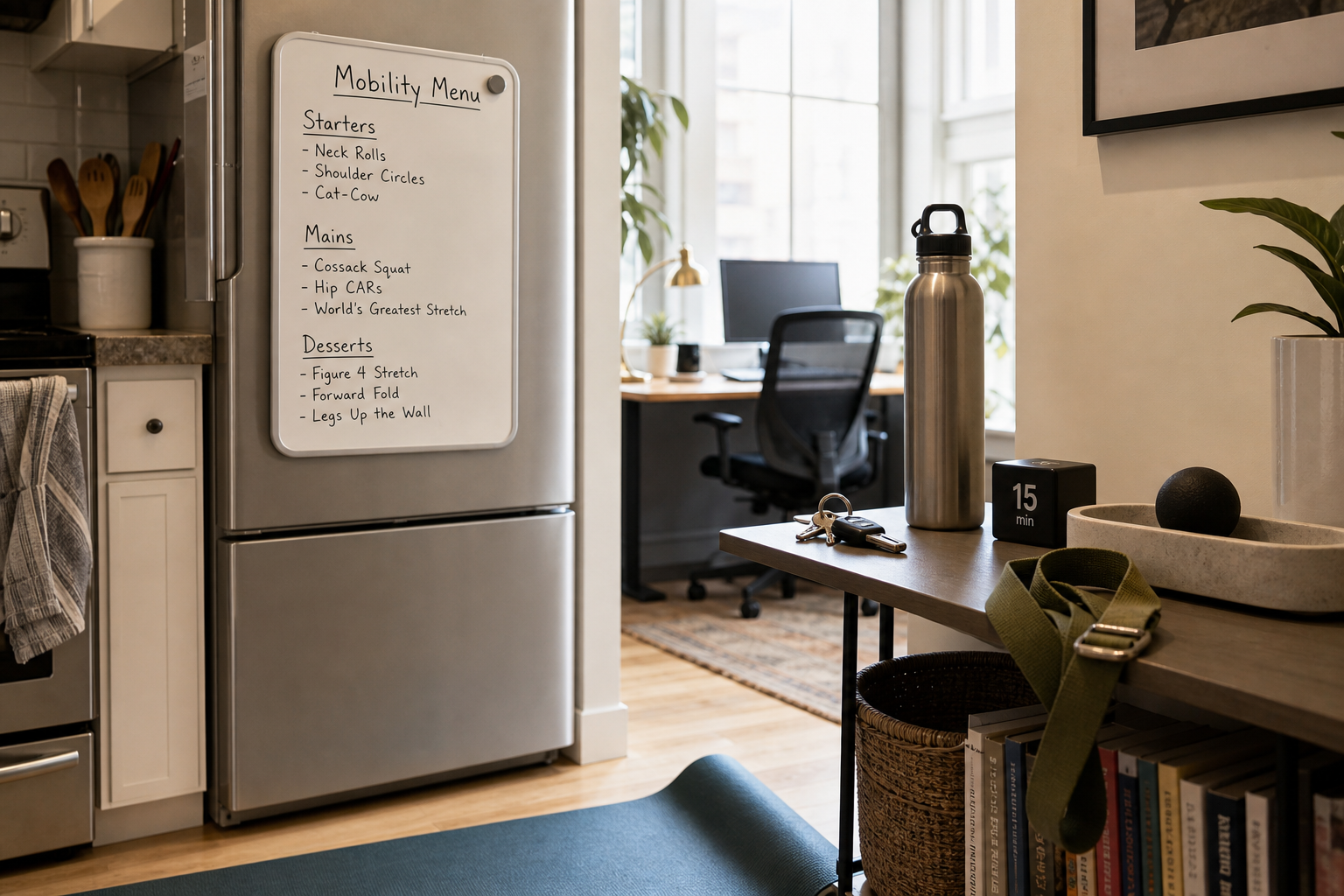
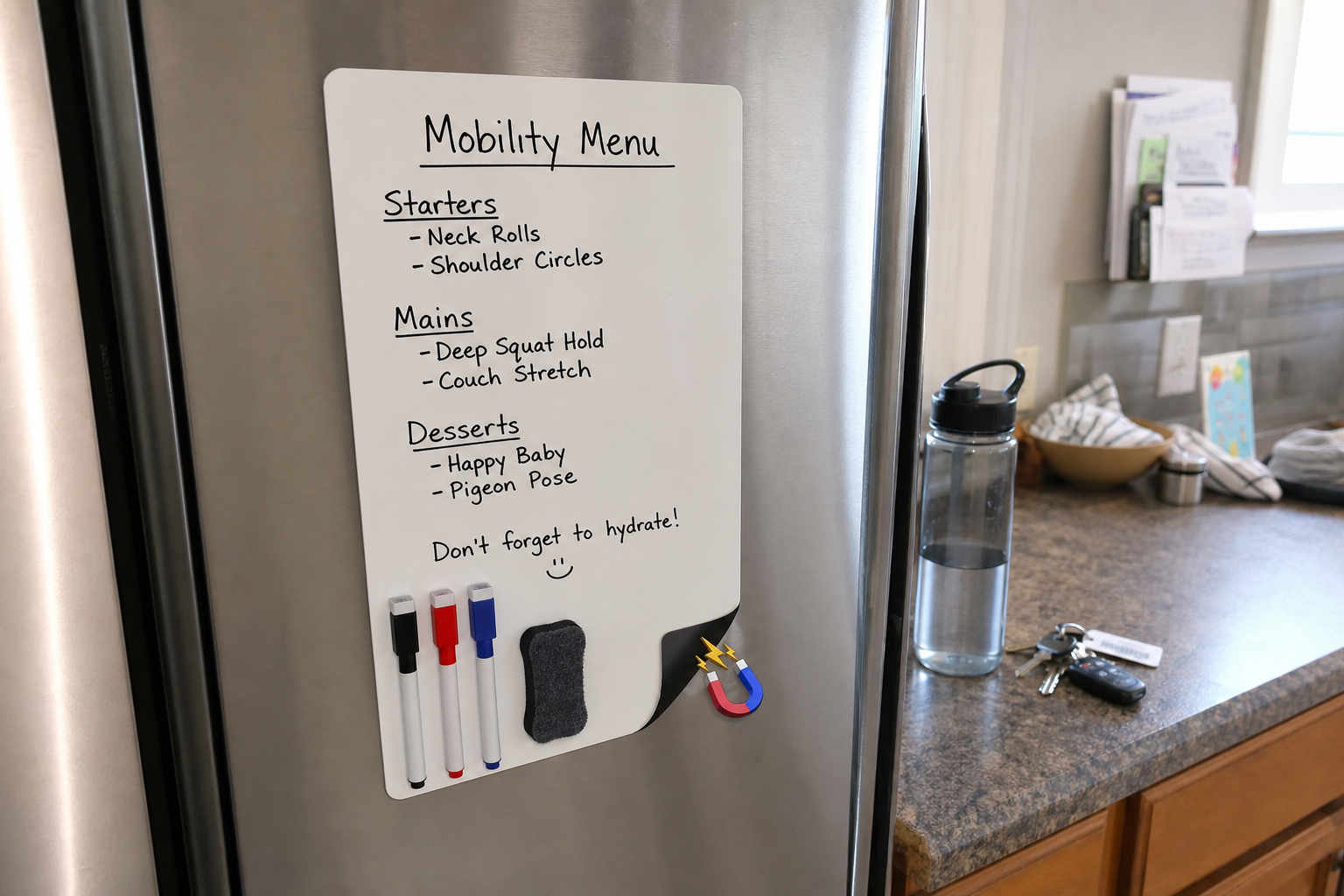
That is where a mobility menu comes in. Instead of a single routine you either follow perfectly or skip, you create a restaurant-style menu with starters, mains, and desserts. You keep the options small, familiar, and repeatable, so showing up feels less like passing a test and more like ordering something you already know you like.
If you want the physical setup to feel even easier, this pairs well with the visible-home-cue approach I wrote about in Build a Tiny Home Movement Corner That Gets Used. And if you tend to spiral when a plan stops being perfect, my piece on all-or-nothing thinking about fitness fits neatly here too.
Step 1: Audit your real-life energy for one week
Before you build the menu, notice when you actually need it. Not your ideal self. Your real self on a workday, travel day, distracted day, and low-sleep day.
For one week, jot down the times when movement sounds appealing, possible, or especially needed. I like to keep this simple.
- Pick 3-5 recurring points in your day when you often feel physically stuck or mentally fried.
- Write what your energy feels like at each point: low, buzzy, stiff, scattered, restless, heavy, or focused.
- Note how much time you realistically have: 3 minutes, 5 minutes, 10 minutes, or more.
- Look for patterns by the end of the week.
Your notes might reveal things like:
- Five minutes before back-to-back meetings, you need something brief and upright.
- After travel, your hips and upper back feel locked up.
- At 4 p.m., you are not exactly tired, but mentally scattered and unable to choose.
This matters because a good mobility menu is built around recurring moments, not random inspiration.
Step 2: Divide your menu into starters, mains, and desserts
Think of your menu like a restaurant with a short, reliable selection. You are not trying to represent every mobility drill you have ever seen online. You are creating a flexible system that works when your brain is busy.
- Starters: 1-3 minute breathwork or joint wake-ups.
- Mains: 8-12 minute focused mobility blocks.
- Desserts: calming floor poses that downshift your system.
The magic is in the limit. Give yourself just 2-3 choices per category. That is enough variety to keep things useful, without recreating the original problem of too many options.
Step 3: Choose 2-3 starters you can do almost anywhere
Starters should be easy to begin and hard to overthink. These are the movements that help you cross the line from “I should move” into actually moving.
Here is a practical starter section:
- Box breathing plus reach: 4 slow breaths while reaching arms wide, then overhead.
- Neck, wrist, and ankle circles: a fast joint wake-up for desk days.
- Cat-cow at a desk or wall: good when getting to the floor feels like too much.
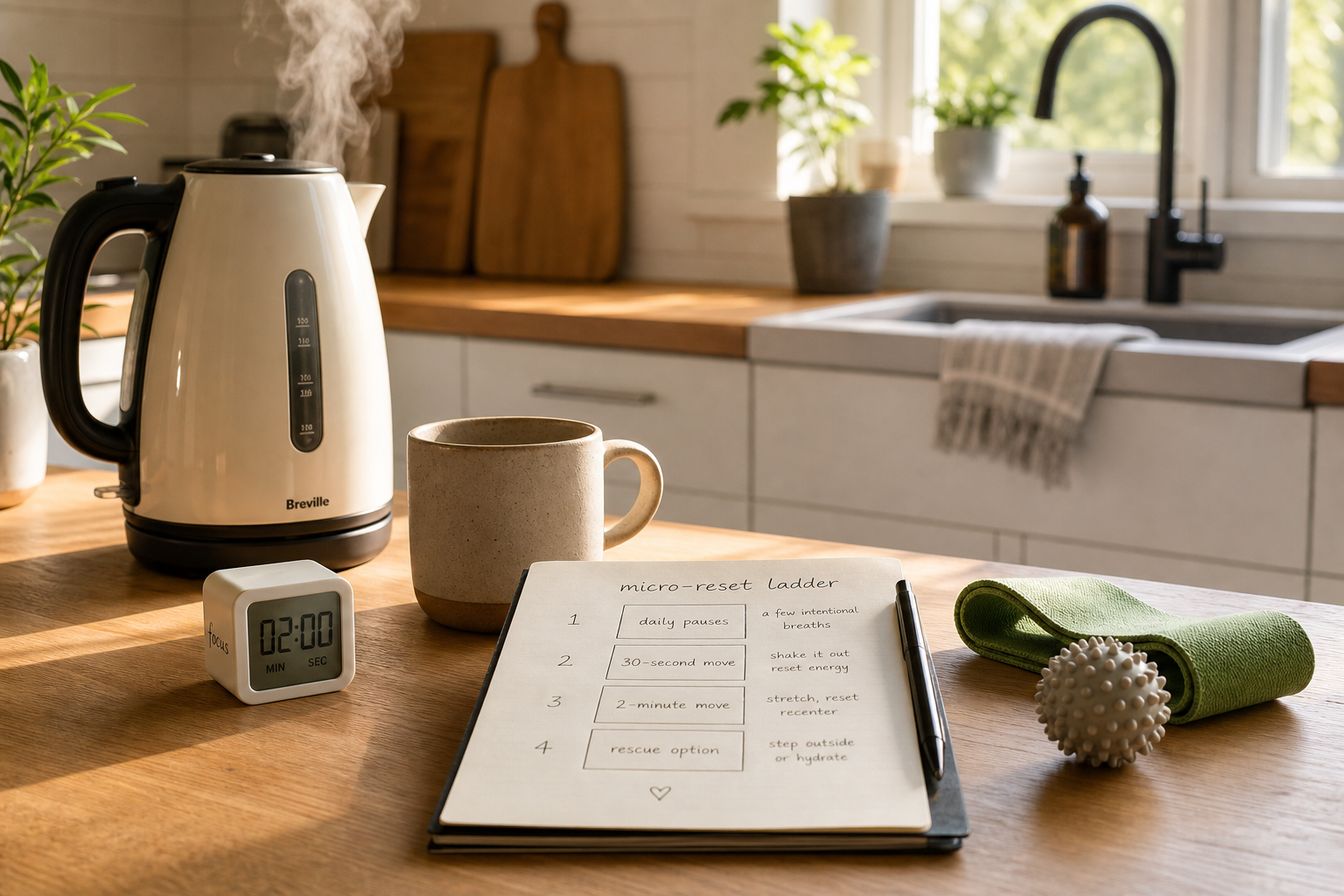
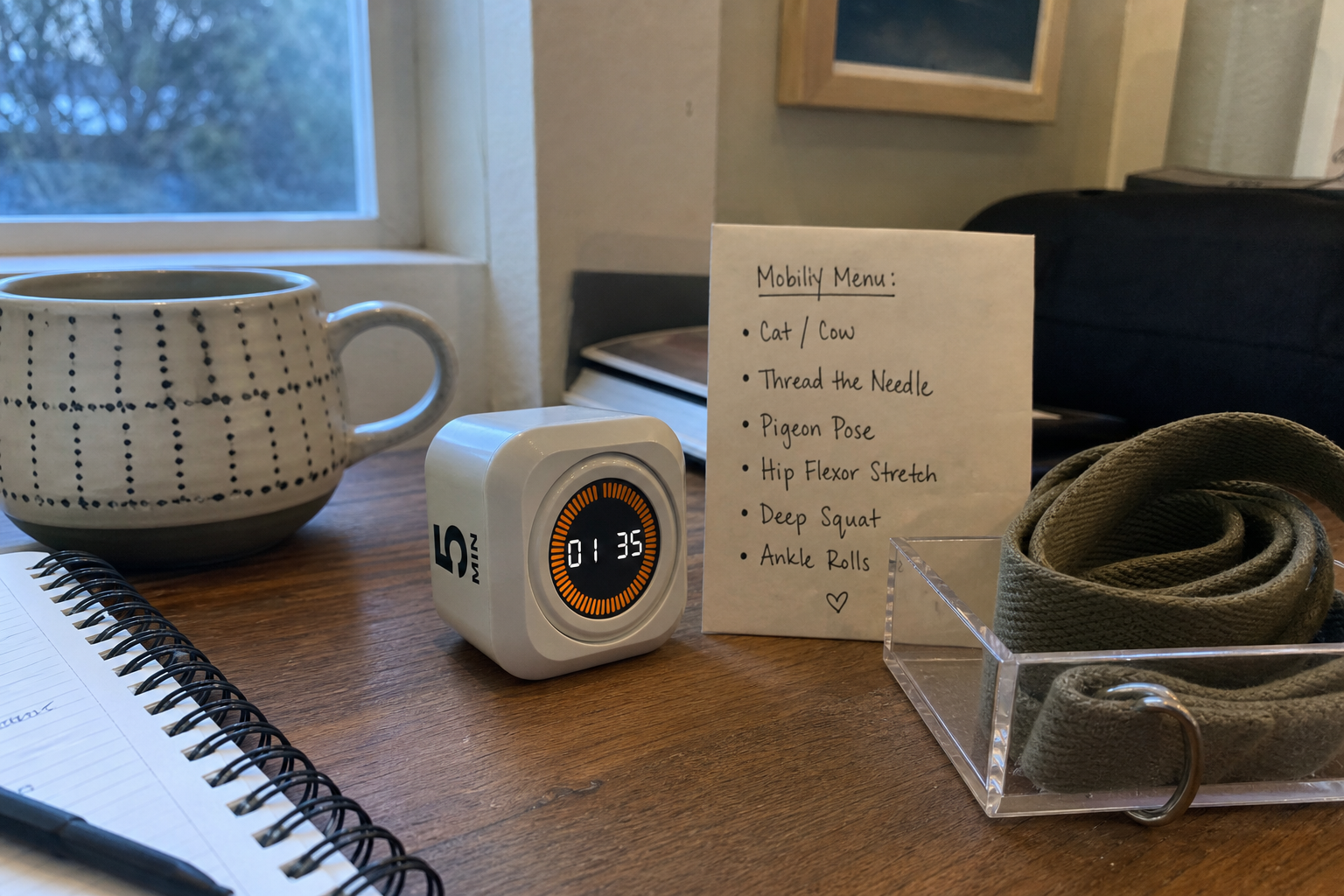
If you like tactile cues, a small visible timer helps a lot here. I like a flip timer cube because you can just set it down and start instead of fiddling with your phone.
Step 4: Build 2-3 mains around common body complaints
Mains are the heart of your menu: short, focused mobility blocks that solve a familiar problem. Keep them in the 8-12 minute range and organize them by situation, not body-part perfectionism.
Here are three solid examples:
- Desk reset: thoracic rotations, low lunge hip opener, calf stretch at the wall.
- Travel stiffness reset: standing forward fold with bent knees, 90/90 hip switches, gentle chest opener.
- Scattered mind reset: slow squat hold supported by a doorframe, side bends, long exhale child’s pose.
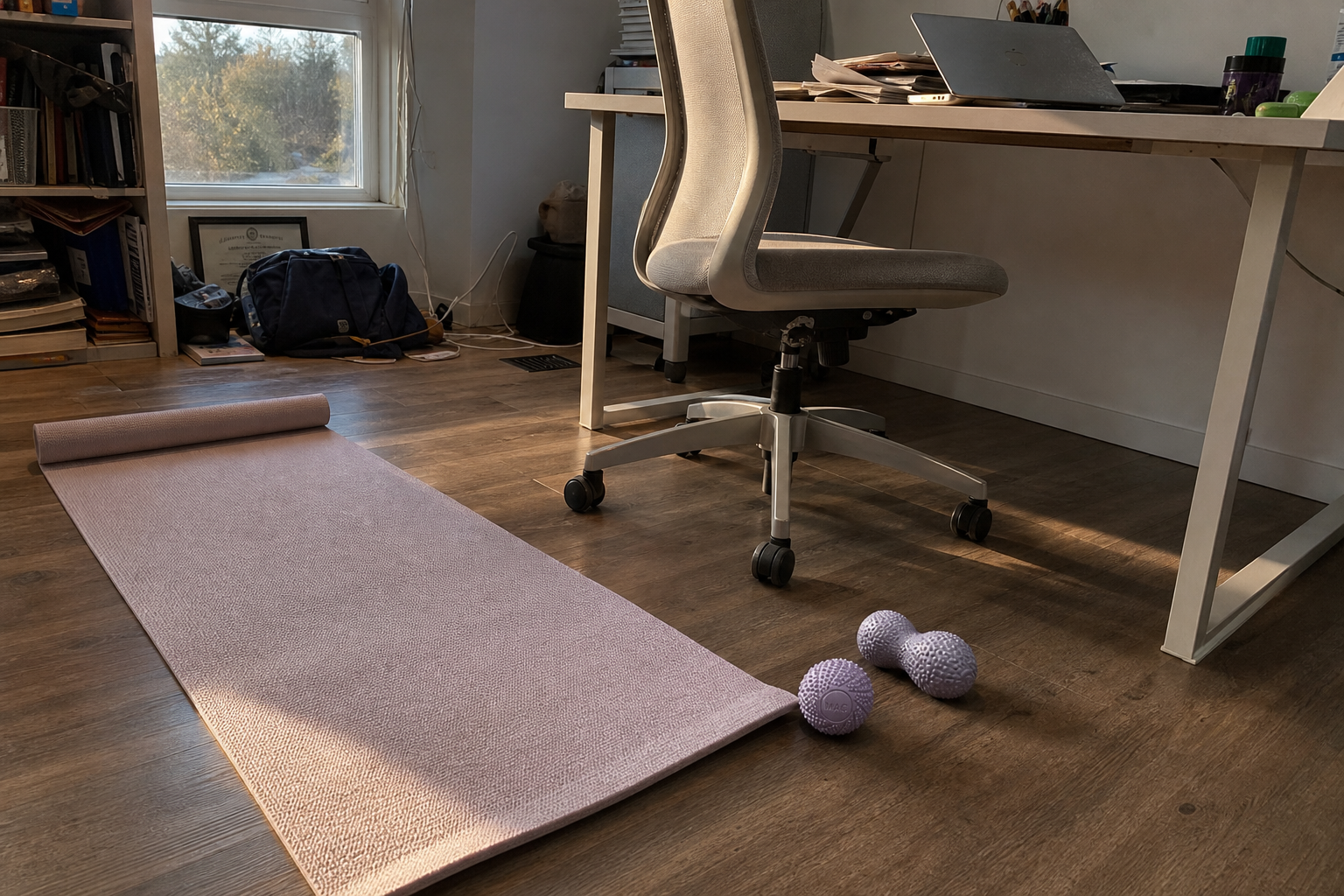
If a stretch feels better with support, an yoga strap can make hamstring and shoulder work feel much less fussy. And if your feet, glutes, or upper back tend to lock up, a massage ball set is one of the simplest ways to turn a short block into something more relieving.
Step 5: Add 2-3 desserts that help you land
Desserts are not mandatory, but they are often the reason a mobility practice feels complete instead of abruptly abandoned. These are the calming floor poses that help your nervous system catch up with your body.
- Supported child’s pose: 1-2 minutes.
- Supine twist: 3-5 breaths each side.
- Legs on a chair: especially nice after travel or long standing days.
If you already know you enjoy evening resets, you could borrow a few ideas from my 10-minute late-night mobility ritual and slot them into your dessert section instead of copying an entire routine.
A mobility menu works because you decide the options once, then stop negotiating with yourself every day.
Step 6: Match your menu to real scenarios
This is the part that makes the menu useful beyond morning flows and bedtime routines. Pair your categories into combinations for situations you actually face.
Five minutes before a meeting
- Starter: neck, wrist, and ankle circles
- Main: skip it, or do 2 minutes of wall cat-cow
- Dessert: one long forward fold with bent knees
Stiff after travel
- Starter: box breathing plus reach
- Main: travel stiffness reset
- Dessert: legs on a chair
Restless but mentally scattered
- Starter: 4 slow breaths with arms overhead
- Main: scattered mind reset
- Dessert: supported child’s pose
Notice how each option is already chosen from your own list. You are not searching, comparing, or trying to be inventive. You are assembling a meal.
Step 7: Put the menu somewhere visible
If the menu lives in a notes app you forget exists, it will not reduce friction much. The best mobility menu is one you can see at the exact moment you are tempted to do nothing.
A few affordable setup ideas from AliExpress can help:
- A small magnetic whiteboard on the fridge or filing cabinet works beautifully for a weekly menu.
- printable card holders or badge holders can work as tiny movement cards if you like swapping options in and out.
- mini organizer trays are handy if you want one visible bin for your strap, ball, and timer instead of hunting for props.
The exact supplies matter less than the principle: visible, reachable, and easy to reset.
Step 8: Keep only movements you genuinely like repeating
This is where many people accidentally sabotage themselves. They build a mobility menu out of worthy movements instead of usable ones.
Ask yourself:
- Which movements make me feel better within a minute or two?
- Which ones am I willing to do even when I am distracted?
- Which ones fit my actual clothes, floor space, and schedule?
If you hate a movement, it does not belong on your everyday menu just because it is technically effective. Sustainable habits are built from repeatable favorites, not idealized suffering.
A cautionary note
Do not turn your menu into a hidden rigid routine. If every starter “should” be followed by a main and a dessert, you have recreated the same all-or-nothing trap in nicer language. Some days a starter is enough. Some days one main is plenty.
Step 9: Update the menu once a month
A mobility menu should be a living system. Keep the structure, but swap out items monthly based on season, schedule, aches, or plain boredom.
- Review what you actually used.
- Keep the top 1-2 movements from each category.
- Replace only one item at a time if you want novelty.
This keeps the system fresh without making it complicated again. I love this approach because it supports consistency without asking you to pretend your body feels the same every day.
Closing Thoughts
A mobility menu works best when the goal is not discipline, but reduced decision load. By pre-deciding a few starters, mains, and desserts you actually enjoy, you make it easier to move on days when mood and willpower are unreliable. The downside is that it takes a little setup at first, and you may need to edit out options that looked good on paper but never get used. Still, as a monthly-updated system, it makes mobility feel more like an inviting choice and less like a self-improvement test.
Disclaimer: As an aliexpress Associate, I earn from qualifying purchases.