Build a Tiny Home Movement Corner That Gets Used
Researchers who study environment and behavior often find that tiny cues shape a huge share of what we do each day. In real life, that means something simple: where your mat lives, where the light…
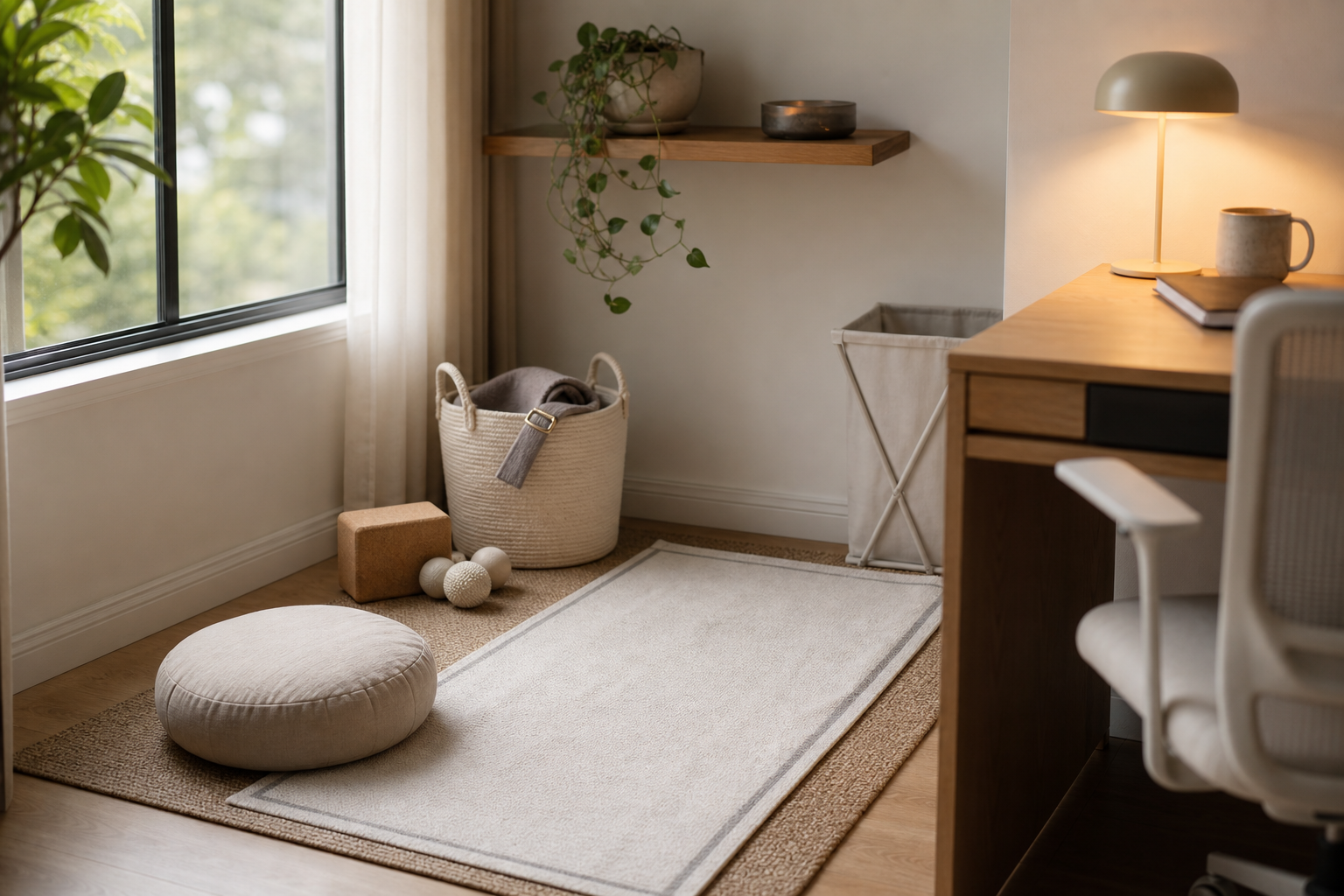
Researchers who study environment and behavior often find that tiny cues shape a huge share of what we do each day. In real life, that means something simple: where your mat lives, where the light falls, and what sits at eye level can quietly decide whether a movement break happens at all.
I think of this as layout psychology. Before motivation enters the chat, the room has already made an argument. A clear, inviting corner says “step here for two minutes,” while a cluttered one says “maybe later,” and later usually means never.
If you work from home, or just spend a lot of time orbiting one desk or sofa, creating a tiny micro-studio corner can make the switch from work mode to body mode much smoother. Not because the setup is fancy, but because the space lowers the number of decisions between “I should move” and actually moving.
What a micro-studio corner actually needs
This is not a full home gym. It is one overlooked nook that becomes a movement invitation.
Your corner only needs a few jobs:
- Make movement visible
- Make starting feel friction-light
- Make the space feel pleasant enough to return to
I’ve written before about how tools can reduce startup resistance in 5 underrated mobility tools that make showing up easier, and the same idea applies to rooms. The right object helps, but the bigger shift is often where that object lives.
How to reset one overlooked corner, step by step
-
Choose the corner you already pass by
The best location is rarely the most spacious one. It is usually the patch of floor you already see several times a day: beside your desk, near a window, at the edge of the bedroom, or between the living room chair and bookshelf.
Look for a corner with enough room to stand, sit, or get on hands and knees. You do not need full sun salutations if your real goal is smoother transitions; you need enough space for a hip opener, a forward fold, a few cat-cows, or five deep breaths on the floor.
When I set these spaces up for myself, I ask one question first: Will I see it before I talk myself out of it?
-
Reduce visual clutter aggressively
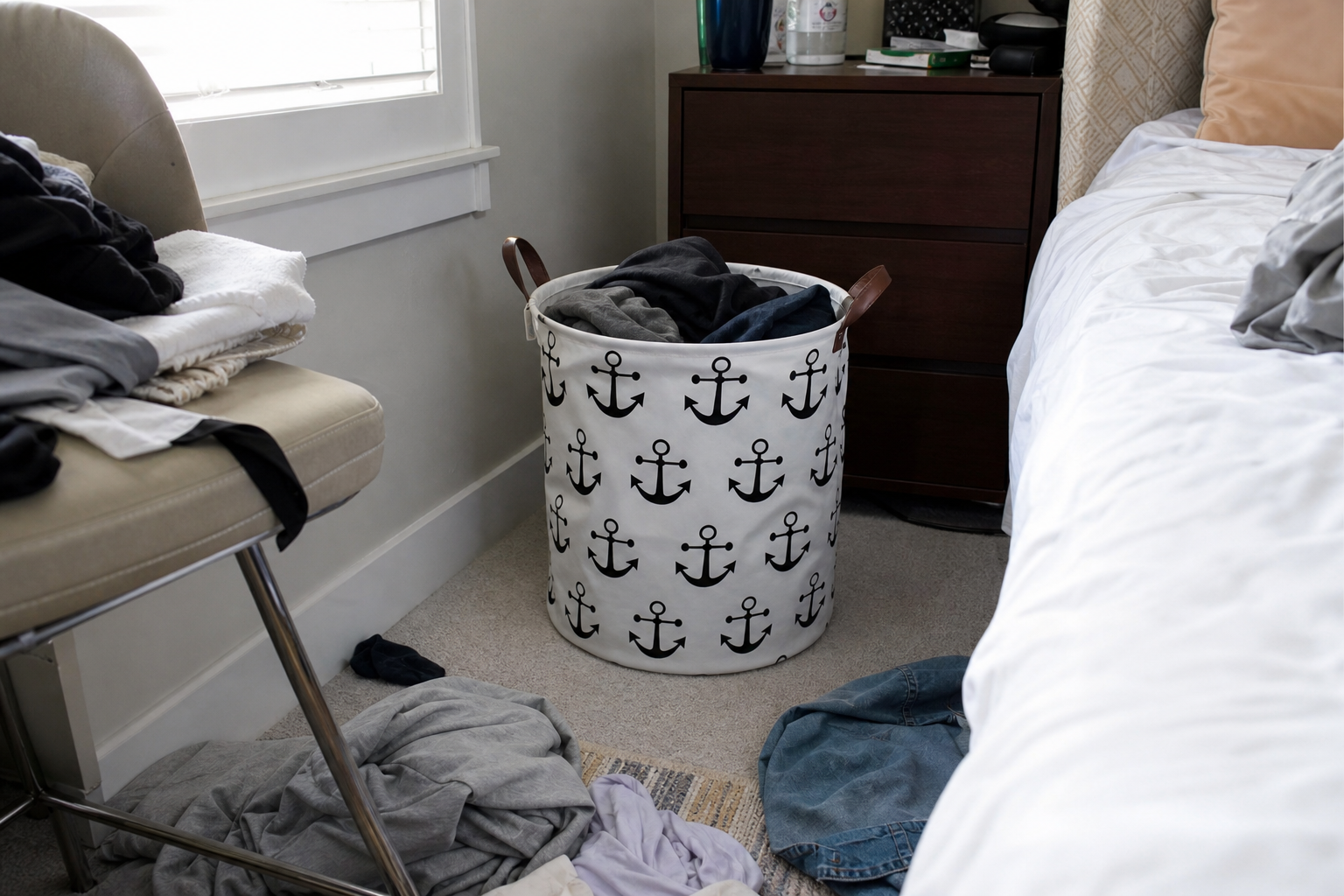
Visual noise creates mental drag. If the corner is currently holding cables, unfolded laundry, random packaging, or “I’ll deal with it later” objects, it is not neutral. It is actively making movement harder to begin.
Start by removing everything that does not support the function of the space. Then give the leftover clutter somewhere else to go. A simple collapsible laundry hamper works well here because it catches the floating mess without asking for a whole furniture commitment.
The less your eye has to edit, the easier it is for your body to enter the space.
-
Add one mobility-friendly surface
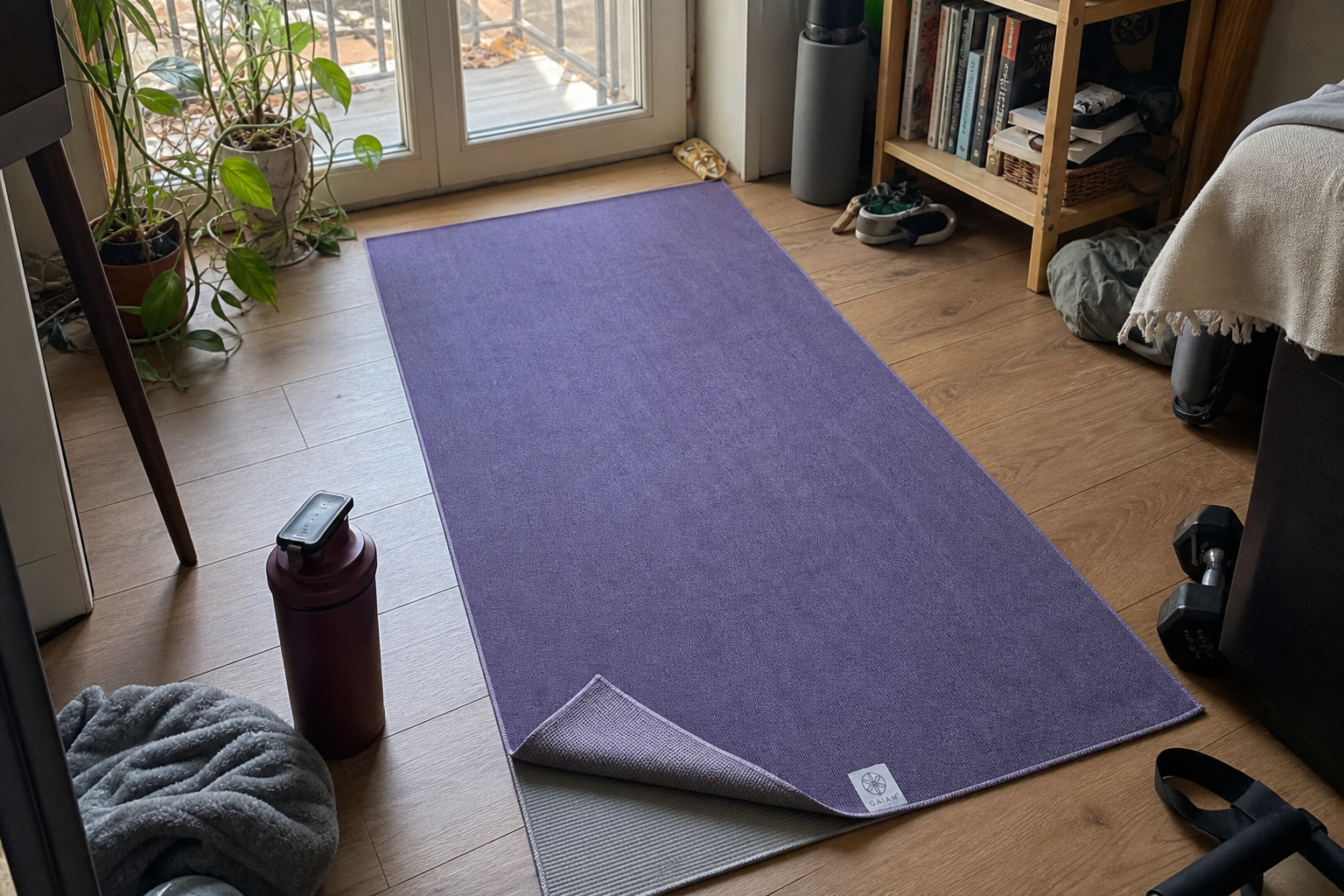
Every movement corner needs one obvious landing spot. This can be a mat, a folded blanket, or a towel layered over a rug. The key is that it is already there, or close enough that setting it up takes about ten seconds.
If you want something low-profile and easy to leave out, I like a microfiber yoga towel. It folds small, dries quickly, and can live draped over a chair or basket without making the room look like a sports aisle.
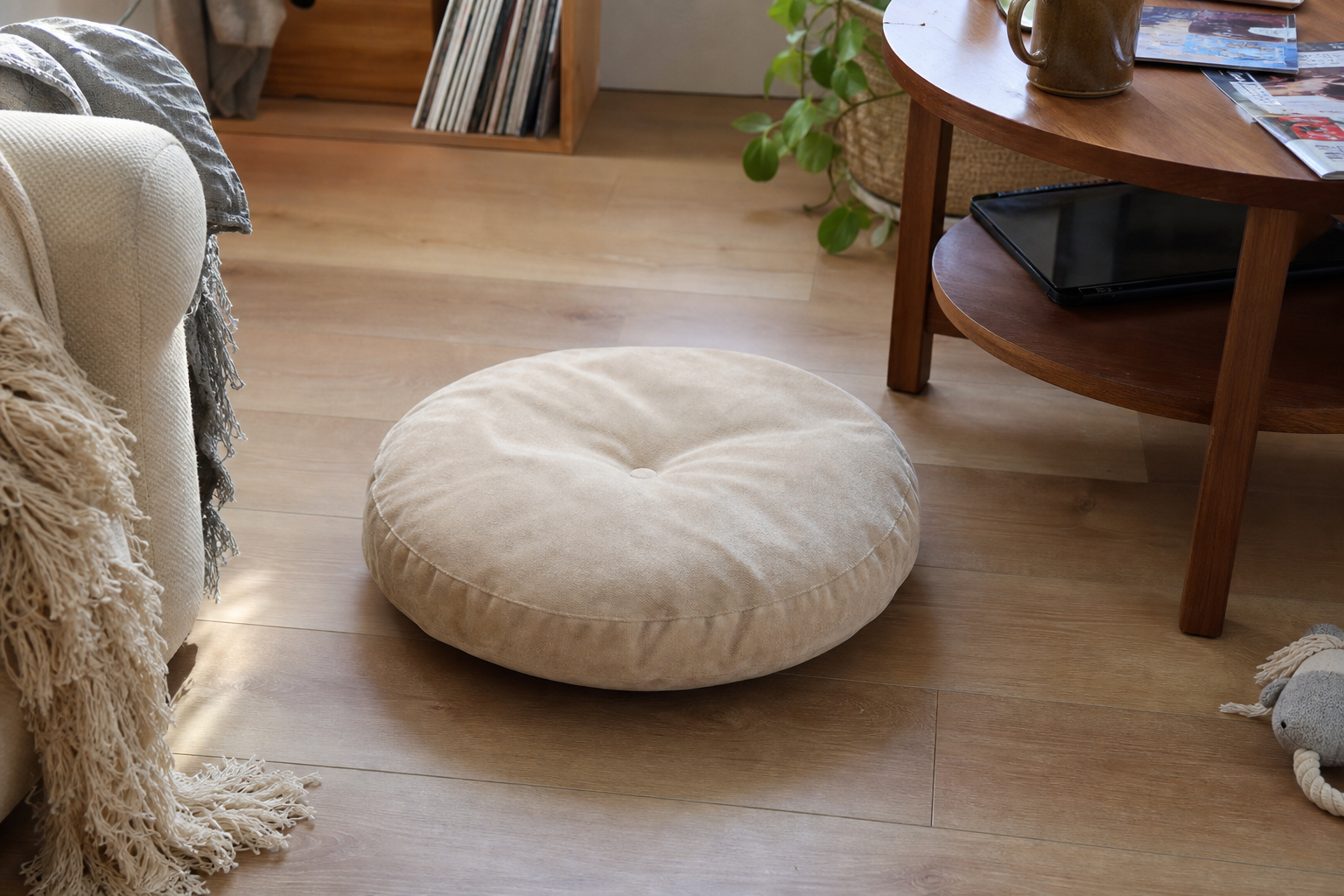
If your knees or hips appreciate a softer base, a round floor cushion can do double duty for seated breathwork, hip support, or a place to land after a long screen-heavy day.
-
Add one calming sensory cue
The space should feel different from your work zone within a second or two. That shift does not need to be dramatic. A softer lamp, warmer light near a window, or even a different texture under your hands can signal “we are not emailing right now.”
I prefer cues that are subtle and aesthetically simple. If an item is too loud, too neon, or too obviously “fitness equipment,” I’m less likely to keep it visible. And if I store it away, I use it less.
This is where affordable home wellness pieces can help: a neutral cushion, a simple basket, a folded towel, a soft lamp already nearby. The point is not décor for décor’s sake; it is creating a sensory exhale.
When the room feels calmer, the body usually stops negotiating quite so hard.
-
Add one grab-without-thinking accessory
This is your bridge object: the thing you can reach for without opening a drawer, moving a chair, or making a plan. One accessory is enough.
Good options include:
- a towel already folded in view
- a floor cushion for seated stretches
- a water bottle you keep nearby
- a strap or small prop resting in the basket
The accessory should be visible at a glance and pleasant enough to leave out daily. That “leave it out” part matters more than people think. I touched on this in 5 low-effort props that help: if the setup asks too much of you before you begin, the session often dies before it starts.
-
Make the transition path obvious
Now test the route from work mode to body mode. Stand at your desk or usual seat and notice what happens next. Can you get to the corner in one smooth motion, or do you need to sidestep piles, unplug chargers, or hunt for something first?
Ideally, the sequence looks like this:
- Stand up
- See the corner
- Step onto the surface or sit on the cushion
- Start with one familiar shape or breath pattern
If any part of that chain feels annoying, edit the room again before assuming you need more discipline.
How to choose items that actually stay out
I’m picky about what earns visible space in my home. If something feels flimsy, visually busy, or weirdly unpleasant to touch, I end up hiding it, and hidden tools rarely help spontaneous movement.
When you browse affordable accessories, look for items with these qualities:
- Neutral colors that blend into your room rather than shout at it
- Soft textures that make floor time feel less abrupt
- Simple shapes that can sit out without making the space feel crowded
- Lightweight storage so cleanup stays easy if needed
- Multi-use function like a cushion that works for mobility, reading, or journaling
This is one reason I end up browsing minimalist yoga props, storage pieces, soft lighting, and floor seating more than high-energy workout gear. A movement corner works best when it feels integrated into the room, not taped awkwardly onto it.
A practical tiny-space blueprint
If you want the quickest possible version, here is the formula I’d use in a small apartment nook:
| Element | What to add | Why it helps |
|---|---|---|
| Surface | A folded mat-sized yoga towel over a rug | Creates an immediate landing spot without a bulky setup |
| Seat | A soft round floor cushion | Makes seated mobility, journaling, or breathwork easier to begin |
| Storage | A waterproof storage basket | Hides clutter fast and keeps the corner visually clean |
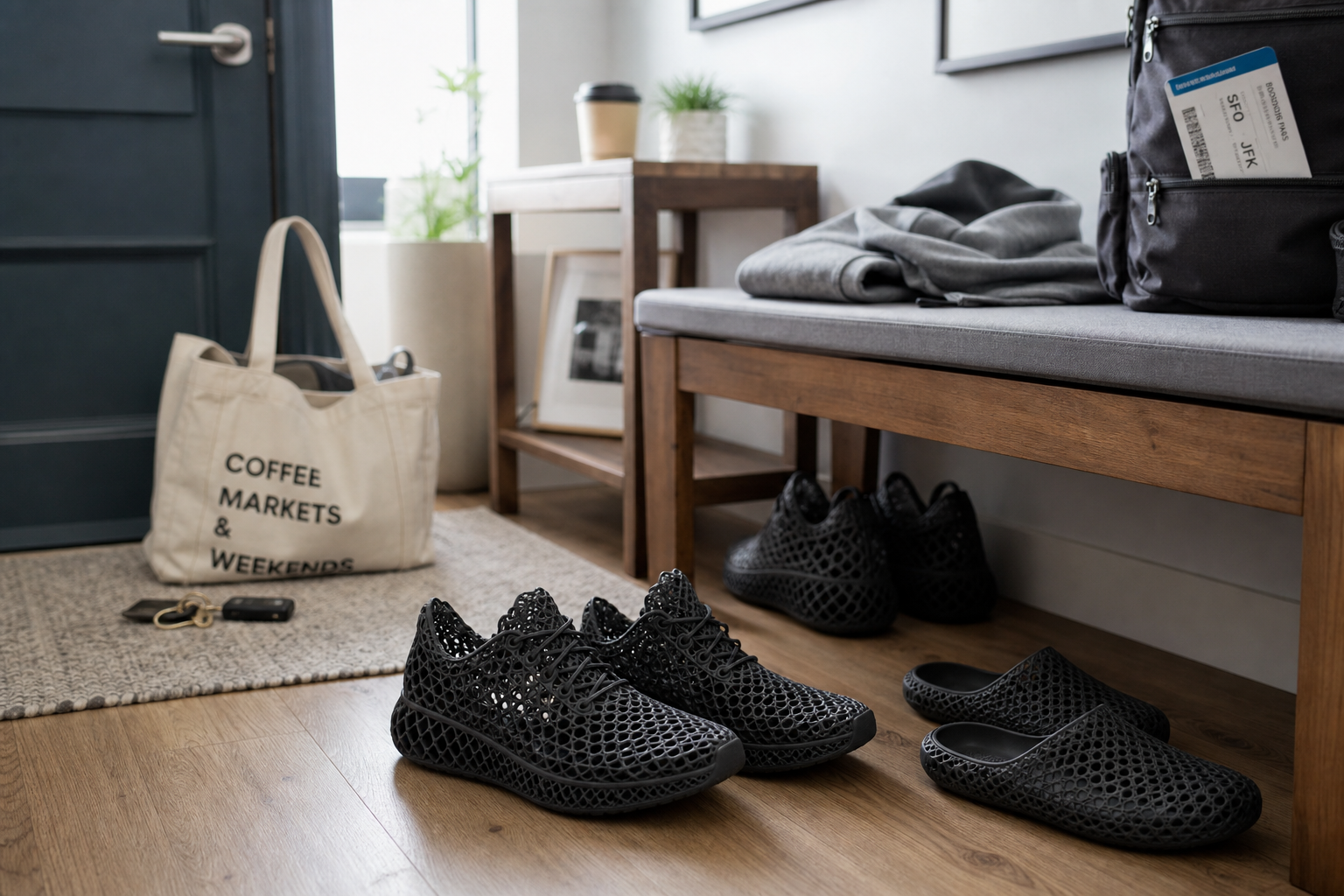
You do not need dedicated shoes for this setup, but if your transition ritual includes stepping out of stiff work shoes and into something lighter before a short walk or standing reset, a simple pair of minimalist slingback sandals near the door can support that “I’m changing modes now” feeling. I would only add them if they genuinely fit your routine, not as décor.
A quick caution before you overdo it
Caution: do not turn this into a weekend makeover project with twelve products and a perfect mood board. If the setup becomes too elaborate, you accidentally build a new form of resistance.
Start with:
- one clear corner
- one surface
- one sensory cue
- one easy-to-grab accessory
That is enough to change the behavior of a room.
If you want a gentle way to test the corner once it is set up, my 10-minute late-night mobility ritual can easily be borrowed for any time of day. The point is not the hour; it is having a short sequence ready when the space nudges you toward it.
Closing Thoughts
A home micro-studio works best when it feels like part movement design, part habit architecture. Clear the corner, soften the sensory feel, and leave out only the few items that make beginning obvious. You do not need much space, but you do need the room to signal the right next step. As you look at your own setup, ask: what makes movement visible, what makes it easy to begin, and what makes it feel good to return to tomorrow?
Disclaimer: As an aliexpress Associate, I earn from qualifying purchases.